
Solenopsis emiliae
- Nama Ilmiah
- Solenopsis emiliae
- Tribe
- Solenopsidini
- Subfamili
- Myrmicinae
- Penulis
- Santschi, 1912
- Distribusi
- Ditemukan di 0 negara
Pendahuluan
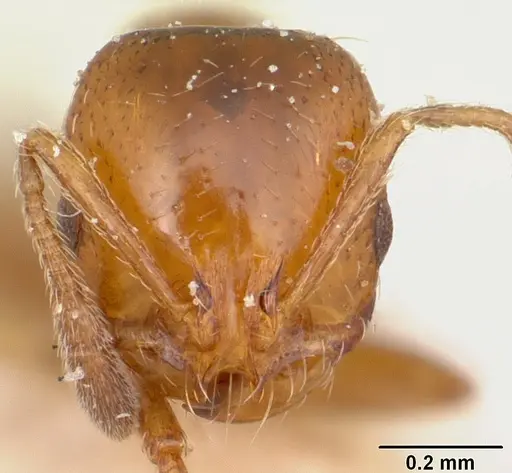
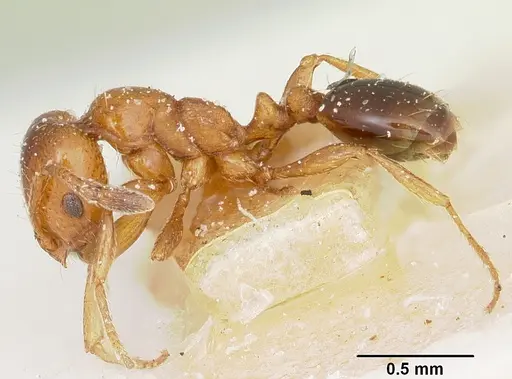
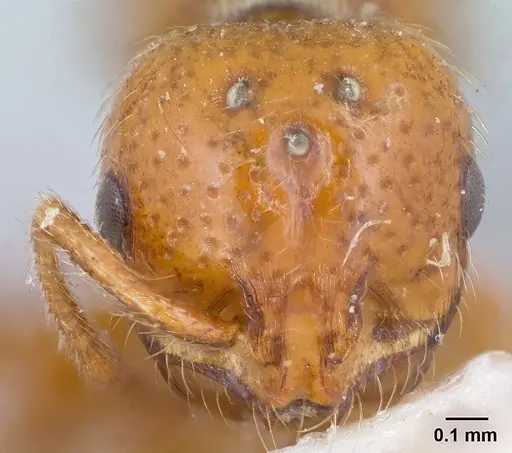
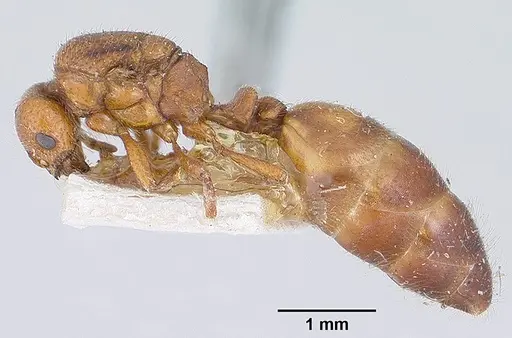
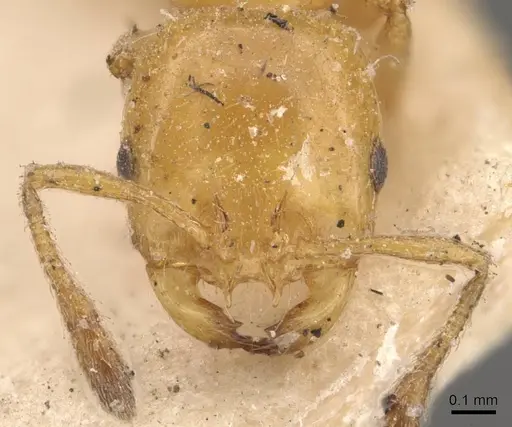
Solenopsis emiliae is a small thief ant native to Argentina, Brazil, and Uruguay . Workers measure 1.92-2.16mm and are bicolored: the head and mesosoma are golden brown to reddish, while the gaster is dark brown. Queens are much larger, reaching about 6mm, and are uniform red-orange . This species belongs to the nigella complex and is identified by its consistent eye structure (about 50 ommatidia) and horizontal stripes covering the whole mesosoma . As a member of the Solenopsidini tribe, it has a functional sting, but workers are too small to cause noticeable pain to humans.
Quick Summary
- Difficulty: Medium
- Origin & Habitat: Native to the Neotropical region of South America, specifically Argentina, Brazil, and Uruguay. Recorded in Santa Fe province, Argentina [2][3]. Based on its classification as a Tropical Climate Specialist (TCS), it likely inhabits warm, relatively humid environments typical of the region [3].
- Colony Type: Colony structure is unconfirmed. No specific data exists on whether colonies are single-queen or multiple-queen.
- Size & Growth:
- Queen: ~6mm [1]
- Worker: 1.92-2.16mm [1]
- Colony: Unknown, no colony size data has been documented
- Growth: Unknown, no development data exists
- Development: Unknown, no data available (No direct development data exists for this species. Estimates from related small Solenopsis suggest roughly 6-8 weeks at optimal temperature, but this is unconfirmed.)
- Antkeeping:
- Temperature: As a Tropical Climate Specialist from southern South America, keep nest temperatures around 22-26°C [3]. Avoid prolonged temperatures below 18°C or above 30°C. Room temperature within this range is suitable most of the year.
- Humidity: Maintain moderate to high humidity in the nest. Keep the substrate consistently moist but not waterlogged. Provide a water source in the outworld.
- Diapause: Unconfirmed, this subtropical species may slow activity in cooler months but likely does not require true hibernation. If the colony shows reduced activity in winter, consider a cool period (15-18°C) for 2-3 months, but this is not mandatory.
- Nesting: Use a small nest with narrow chambers, such as a Y-tong (AAC), plaster, or soil nest. Test tubes work for founding. Due to their tiny size, they can exploit very small spaces.
- Behavior: Solenopsis emiliae is a thief ant: it preys on small invertebrates and also scavenges. Workers are active foragers but are shy and will try to escape rather than fight. Their tiny size (2mm) makes escape prevention critical. Use fine mesh and seal all openings. The sting is functional but too small to harm humans.
- Common Issues: escape prevention is critical due to 2mm worker size, they slip through standard barriers, lack of species-specific biological data means most care is based on genus-level assumptions, small founding colonies are vulnerable to stress, disturb them as little as possible, predatory diet requires regular supply of small live or freshly killed prey, humidity balance is tricky, too dry desiccates brood, too wet causes mold
Housing and Nest Setup
Use a nest scaled to the tiny worker size (~2mm). A Y-tong (AAC) nest with narrow chambers, a plaster nest, or a naturalistic soil setup all work well. Test tubes (10-12mm diameter) are fine for founding. Escape prevention is critical: these ants can squeeze through gaps that larger ants cannot. Cover all ventilation holes with fine mesh and seal lid edges. Apply fluon or petroleum jelly around the rim of the outworld to prevent escapes. [1]
Feeding and Diet
This species is predatory and needs small live prey like springtails, fruit flies, or tiny insect pieces. It will also scavenge protein sources. Offer small pieces of mealworm or other insects. A drop of diluted honey or sugar water can be given occasionally, but protein should be the main food. Feed small amounts 2-3 times per week, adjusting based on consumption. Remove leftovers promptly to prevent mold. [1]
Temperature and Seasonal Care
Keep your colony at 22-26°C, matching its native subtropical habitat. It is classified as a Tropical Climate Specialist [3], so sustained temperatures below 18°C or above 30°C should be avoided. If your room cools significantly in winter, provide gentle heating on one side of the nest to create a gradient. If the colony becomes sluggish, they may need more warmth.
Colony Founding
The founding behavior of Solenopsis emiliae has not been documented. Many Solenopsis queens are claustral (seal themselves in a chamber and raise the first brood without foraging), but this is unconfirmed for this species. If you have a mated queen, place her in a test tube with water and a cotton plug, and keep her in darkness and undisturbed for several weeks. Check minimally to avoid stress. [1]
Growth and Development
No specific development timeline is known. Based on related small Solenopsis species, the first workers may emerge after about 6-8 weeks at optimal temperature, but this is estimated. Queens measure ~6mm, workers 1.92-2.16mm [1]. Expect slow growth early on. Be patient and avoid disturbing the founding colony.
Frequently Asked Questions
How long does it take for Solenopsis emiliae to produce first workers?
Exact timing is unknown. Based on related Solenopsis, it might take 6-8 weeks at 22-26°C, but this is only an estimate. No direct data exists.
What do Solenopsis emiliae ants eat?
They need small live or freshly killed prey such as springtails, fruit flies, or tiny insect pieces. They may accept diluted honey occasionally, but protein is essential.
Can I keep Solenopsis emiliae in a test tube?
Yes, a test tube works well for founding. Use a small diameter tube (10-12mm) to maintain humidity. Beware that the tiny workers can escape through standard cotton plugs, use a tight plug and monitor. Upgrade to a larger nest when the colony outgrows the tube.
Are Solenopsis emiliae good for beginners?
This species is rated Medium difficulty. The lack of species-specific data means you must rely on guesswork, and their tiny size requires excellent escape prevention. Not the best choice for absolute beginners.
How big do Solenopsis emiliae colonies get?
Colony size is unknown. Related small Solenopsis species usually stay under a few hundred workers, but this is not confirmed for S. emiliae.
Do Solenopsis emiliae need hibernation?
True hibernation is unconfirmed. As a subtropical species, they likely slow down but don't need a cold period. If you keep them in a cool room in winter, a period at 15-18°C for 2-3 months may be beneficial, but it's not required.
When should I move my colony to a formicarium?
Move to a larger nest when the test tube seems crowded. For a small species like this, that might be when the colony has 20-30 workers. Use a Y-tong, plaster, or soil nest with small chambers.
Why are my Solenopsis emiliae dying?
Common issues: escaped through tiny gaps (check barriers), humidity too low (brood desiccates) or too high (mold), temperature stress (below 18°C or above 30°C), or poor nutrition. Make sure prey is small enough for them to handle.
Can I keep multiple Solenopsis emiliae queens together?
The colony structure is unconfirmed. It is not recommended to combine unrelated queens unless the species is known to be polygynous. With no data, keep one queen per colony.
Report an Issue
The current care sheet is based fully on literature. See inconsistencies, or something that's incorrect? Please , it will be resolved after review from an admin. Contributing to the blogs tab also helps providing information, to make us be able to further improve the caresheets. Thank you for your support!
References

Lembar perawatan ini dilisensikan di bawah CC BY-SA 4.0 .
Blog Komunitas
CASENT0103200
Lihat di AntWeb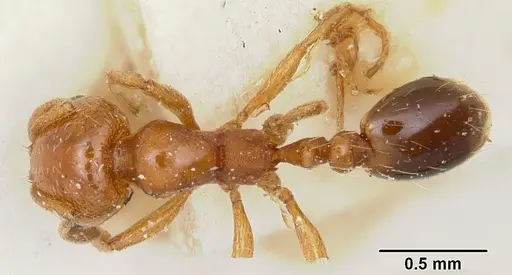
CASENT0103201
Lihat di AntWeb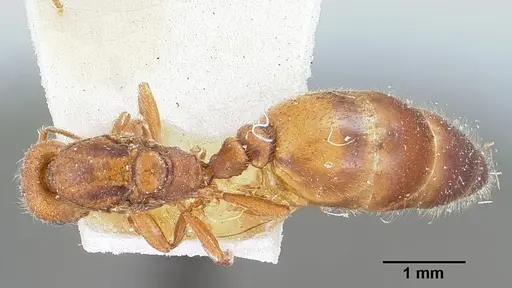
CASENT0908840
Lihat di AntWeb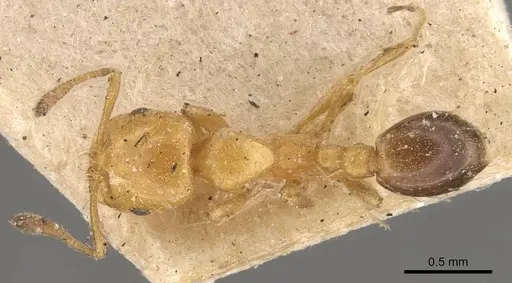
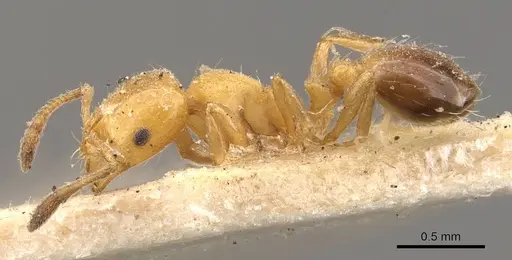
CASENT0913910
Lihat di AntWeb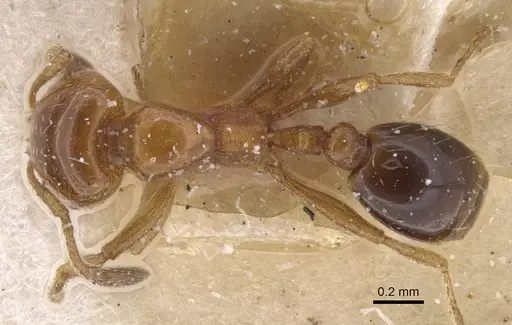
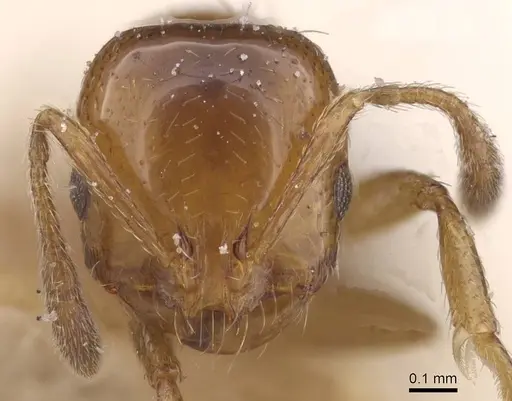
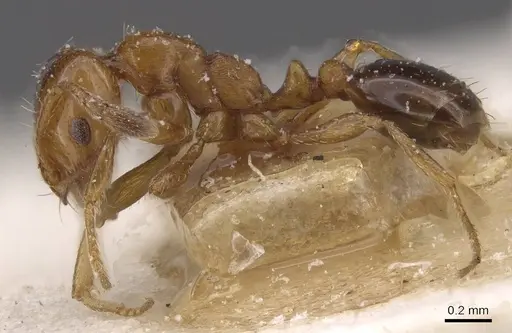
Literatur
Memuat peta distribusi...Memuat produk...