
Rossomyrmex proformicarum
- Nama Ilmiah
- Rossomyrmex proformicarum
- Tribe
- Formicini
- Subfamili
- Formicinae
- Penulis
- Arnol'di, 1928
- Distribusi
- Ditemukan di 0 negara
Pendahuluan
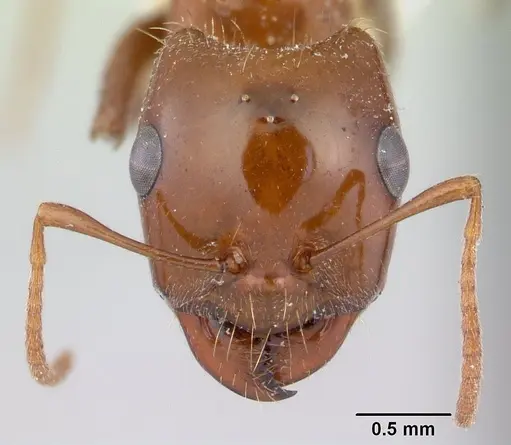
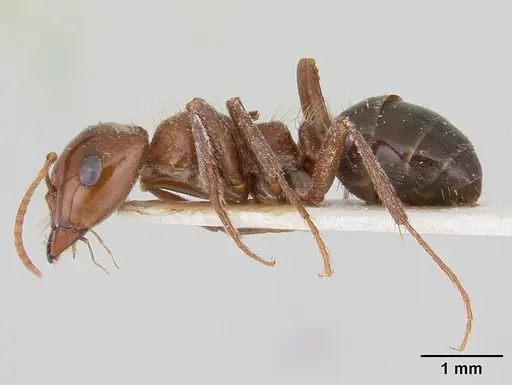
Rossomyrmex proformicarum is a rare slave-making ant found across the arid steppe regions of Central Asia, from southern Russia through Kazakhstan to Kyrgyzstan. Workers are small (size data unavailable - inferred from the Rossomyrmex genus at around 4-5 mm), with the typical reddish-brown coloration common to Formicinae ants. This genus specializes in parasitizing ants of the genus Proformica - specifically Proformica nasuta and Proformica epinotalis . It is one of the rarest ants in its range, limited to isolated steppe pockets where its host species thrives. The first reliable record in Dagestan (southern Russia) was documented in 2017,nearly 90 years after the previous sighting, highlighting how elusive this species is . Like other Formicinae ants, they lack a stinger and spray formic acid as a chemical defense. The species is listed as Vulnerable on the IUCN Red List .
Quick Summary
- Difficulty: Expert
- Origin & Habitat: Arid steppe environments of Central Asia, specifically semi-desert regions of southern Russia (North Caucasus, Dagestan), Kazakhstan, and Kyrgyzstan. They inhabit dry, stony clay desert areas and steppe landscapes where their Proformica host colonies are established [2][4].
- Colony Type: This is a permanent social parasite (dulotic species). Unlike temporary social parasites, Rossomyrmex queens never establish their own colonies, they invade an established Proformica nest, kill or replace the host queen, and use the host workers to raise their own brood. Queens are wingless and rarely fly [2]. The colony structure depends entirely on the host colony [1][5].
- Size & Growth:
- Queen: Size data unavailable, inferred from the Rossomyrmex genus (~5-6 mm). Queens are wingless [2].
- Worker: Size data unavailable, inferred from the Rossomyrmex genus (4-5 mm).
- Colony: Unknown, colony size is entirely dependent on the host colony and not well documented.
- Growth: Slow
- Development: Unknown, development depends entirely on host workers (No specific data available for this species.)
- Antkeeping:
- Temperature: Room temperature (20-24°C) is reasonable if maintaining a host colony. The species occurs in steppe regions with warm summers [2].
- Humidity: Low to moderate, arid steppe species. Keep the nest setup dry. No specific data available.
- Diapause: Likely required as a temperate steppe species, following the host colony's cycle [2].
- Nesting: Cannot be kept independently. Requires an established Proformica host colony (P. nasuta or P. epinotalis) [1][5].
- Behavior: As a specialized social parasite, R. proformicarum shows no foraging behavior of its own, all colony maintenance is performed by the enslaved Proformica workers. The parasite workers are typically smaller than host workers and serve primarily as reproductive individuals within the mixed colony. This species is extremely rare and difficult to locate in the wild due to its specialized lifestyle and dependence on specific host colonies [2]. They lack a stinger and spray formic acid defensively.
- Common Issues: this species cannot be kept in captivity without a living Proformica host colony, they are obligate social parasites., finding Proformica nasuta or P. epinotalis as host colonies is extremely difficult outside their natural range., the species is listed as Vulnerable on the IUCN Red List, collecting from the wild is ethically questionable and may harm already small populations [3]., mixed colonies may be unstable if the host queen is not properly replaced., this is not a species for beginners, even expert antkeepers cannot maintain dulotic species long-term.
Understanding Slave-Making Ants
Rossomyrmex proformicarum belongs to a rare group of ants called dulotic or slave-making ants. Unlike typical ant colonies where the queen raises the first workers alone, R. proformicarum queens cannot found colonies independently. Instead, a newly mated queen must find an established colony of its host species (Proformica nasuta or Proformica epinotalis), infiltrate the nest, and kill or replace the host queen [1]. Once established, the host workers are essentially enslaved, they continue all colony tasks including foraging, nursing brood, and maintaining the nest, but now they raise the parasite's brood instead of their own. The slave-maker workers that emerge are smaller than typical ants and serve primarily as additional reproductive females within the mixed colony [5]. This lifestyle makes Rossomyrmex extremely difficult to study and nearly impossible to keep in captivity.
Distribution and Habitat
R. proformicarum has a scattered distribution across the arid steppe belt of Central Asia. The species was originally described from the Kuma-Manytsch plain in southern Russia in 1928 [6]. Known populations exist in the European part of Russia (particularly the North Caucasus and Dagestan regions), Kazakhstan, and Kyrgyzstan [4][7]. They inhabit arid steppe and semi-desert environments with hot, dry summers and cold winters. The species is considered rare throughout its range due to its specialized lifestyle, it can only survive where its Proformica host colonies exist in sufficient numbers. The 2017 discovery in Dagestan confirmed the species is still present in these isolated pockets but is rarely detected because researchers rarely encounter the necessary host colonies [2].
Why This Species Cannot Be Kept in Captivity
Rossomyrmex proformicarum cannot be kept as a pet ant. This is an obligate social parasite that cannot survive without a living Proformica host colony. Even if you could locate a wild colony (which is exceptionally rare), you would also need to locate and maintain a compatible Proformica colony as a host, and Proformica species themselves are not common in the antkeeping hobby. Unlike typical ants where you can start with a single queen, this species requires an established mixed colony to function. Additionally, the species is listed as Vulnerable on the IUCN Red List, meaning collecting from the wild would harm already small populations [3]. For antkeepers interested in interesting species, we strongly recommend considering common, non-parasitic ants that can be kept successfully without these extreme complications.
Identification and Distinction from Hosts
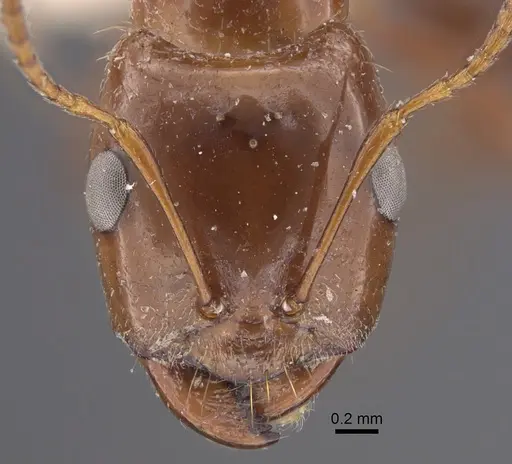
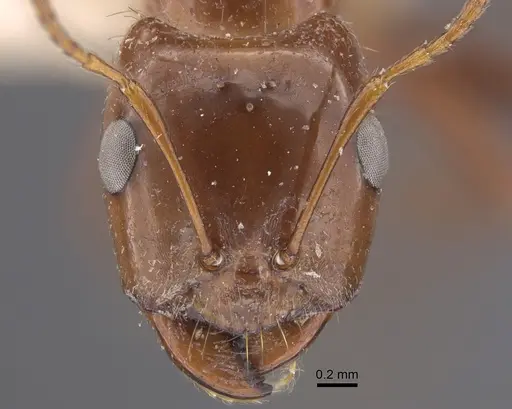
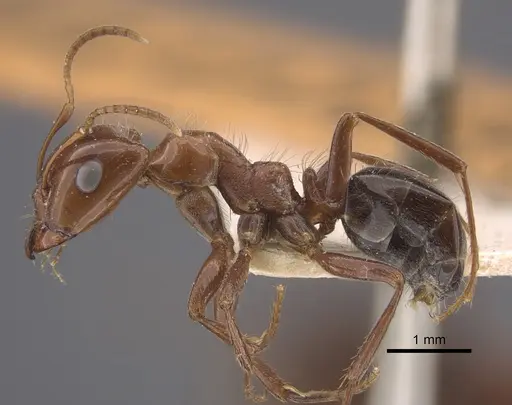
Distinguishing R. proformicarum from its Proformica hosts requires careful examination. Worker size is not well documented, but they are slightly smaller than typical Proformica workers. The genus Rossomyrmex can be identified by its distinctive petiole (the narrow segment between the thorax and abdomen) which is cylindrical and truncated in profile, unlike the gradually narrowing petiole seen in some related species [5]. The head is nearly triangular with the posterior width greater than the anterior width [8]. Compared to other Rossomyrmex species like R. quandratinodum (found in China), R. proformicarum has a more triangular head shape and a slightly convex mesonotum [8]. Females (queens) are wingless, which is unusual, they are rarely found flying and are typically discovered crawling on dirt roads near host colonies, usually in the morning or evening hours [2].
Frequently Asked Questions
Can I keep Rossomyrmex proformicarum as a pet ant?
No. This species is an obligate social parasite that cannot survive without a living Proformica host colony. Even expert antkeepers cannot maintain dulotic species long-term. Additionally, the species is Vulnerable in the wild, and collecting would harm already rare populations. We recommend keeping common, non-parasitic ant species instead.
What do Rossomyrmex proformicarum eat?
They do not forage for themselves. The enslaved Proformica workers do all foraging, and they feed the entire mixed colony. In the wild, Proformica species typically eat honeydew, small insects, and seeds, but the slave-maker itself does not directly consume these resources.
How do Rossomyrmex proformicarum colonies form?
A newly mated queen cannot found a colony alone. She must locate an established Proformica nest, infiltrate it, and kill or replace the host queen. The host workers then become enslaved and raise the parasite's brood. This is called permanent social parasitism or dulosis [1][5].
Where does Rossomyrmex proformicarum live?
They live only in Proformica nests across Central Asia, specifically in Russia (North Caucasus, Dagestan), Kazakhstan, and Kyrgyzstan. Their entire existence is tied to their host colonies [4][2].
What is the IUCN status of Rossomyrmex proformicarum?
The species is listed as Vulnerable (VU) on the IUCN Red List, reflecting its limited distribution and rarity throughout its range [3].
Can I find Rossomyrmex proformicarum in the wild?
Finding this species in the wild is extremely unlikely and not recommended. They are rare, their colonies are small and hidden within Proformica nests, and the species is protected in parts of its range. Even professional researchers struggle to locate them, the 2017 Dagestan record was the first confirmed sighting in nearly 90 years [2].
What is the closest species to Rossomyrmex proformicarum that I can keep?
If you are interested in Formicinae ants, consider keeping species like Lasius niger (black garden ant), Camponotus species (carpenter ants), or Formica species (field ants). These are common, fascinating, and readily available from reputable ant sellers. None of these are parasitic, and all can be kept successfully in captivity.
Do Rossomyrmex proformicarum need hibernation?
As a temperate species from Central Asian steppes, they likely follow the seasonal cycle of their Proformica hosts, which would include a winter dormancy period. However, since this species cannot be kept in captivity, this detail is only relevant for understanding their natural biology [2].
How big do Rossomyrmex proformicarum colonies get?
Colony size is entirely dependent on the host Proformica colony. Mixed colonies are typically smaller than pure Proformica colonies because the parasite reduces the host's reproductive output. Total colony size (both host and parasite workers) is not well documented, but likely under several hundred individuals.
Report an Issue
The current care sheet is based fully on literature. See inconsistencies, or something that's incorrect? Please , it will be resolved after review from an admin. Contributing to the blogs tab also helps providing information, to make us be able to further improve the caresheets. Thank you for your support!
References

Lembar perawatan ini dilisensikan di bawah CC BY-SA 4.0 .
Blog Komunitas
CASENT0178514
Lihat di AntWeb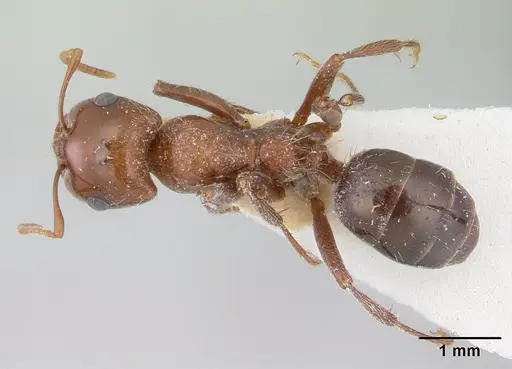
CASENT0917327
Lihat di AntWeb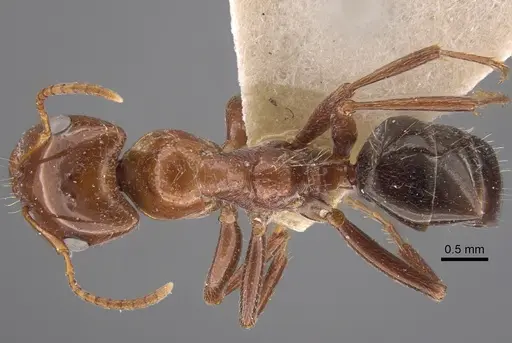
Literatur
Memuat peta distribusi...Memuat produk...