
Romblonella elysii
- Nama Ilmiah
- Romblonella elysii
- Tribe
- Crematogastrini
- Subfamili
- Myrmicinae
- Penulis
- Mann, 1919
- Distribusi
- Ditemukan di 0 negara
Pendahuluan
Romblonella elysii is a small Myrmicinae ant from the Solomon Islands, first described in 1919 . Workers are uniform yellow all over, with propodeal spines that spread outward along their full length . Originally described as a variety of Tetramorium scrobiferum, it was later moved to the genus Romblonella and raised to full species . Very little is known about its biology or captive care, making it a rare and poorly documented species.
Quick Summary
- Difficulty: Unknown
- Origin & Habitat: Solomon Islands (Makira, Guadalcanal, Three Sisters, Santa Anna) in Oceania [3][1]. Tropical island environment with warm, humid conditions year-round.
- Colony Type: Unconfirmed, colony structure has not been documented for this species.
- Size & Growth:
- Queen: Not recorded, no measurements available.
- Worker: Not recorded, no measurements available.
- Colony: Unknown.
- Growth: Unknown.
- Development: Not documented, inferred from similar small Myrmicinae, likely 6-8 weeks at warm temperatures. (Direct data absent, estimate based on genus-level patterns.)
- Antkeeping:
- Temperature: Keep at 24-28°C, this tropical species comes from warm Solomon Islands [3]. Use a heating cable on one side of the nest to offer a gradient.
- Humidity: High humidity. Keep the nest substrate consistently moist but not waterlogged, mimicking a damp forest floor.
- Diapause: No, as a tropical species, they probably do not need a winter dormancy. Maintain warm temperatures year-round.
- Nesting: Likely prefers small chambers in soil or rotting wood, based on typical Romblonella habitat. A Y-tong or naturalistic setup with moist substrate should work.
- Behavior: Behavior is poorly known. Based on the tribe (Crematogastrini), they have a modified stinger that smears venom rather than piercing, so caution with handling is wise. They are likely moderate foragers. Escape prevention is critical due to their small size.
- Common Issues: very limited care information available, making husbandry uncertain, small size increases escape risk, ensure tight sealing, humidity must be consistently high to prevent desiccation, temperature drops below 22°C may stress the colony
Origin and Distribution
Romblonella elysii is endemic to the Solomon Islands in the southwestern Pacific [3]. It was first collected and described in 1919 from Three Sisters and Santa Anna islands [1]. Later surveys also recorded it from Makira and Guadalcanal [3]. This suggests the species is restricted to specific islands. The Solomon Islands have a tropical climate with high year-round temperatures and humidity, conditions you should try to mimic in captivity.
Identification and Appearance
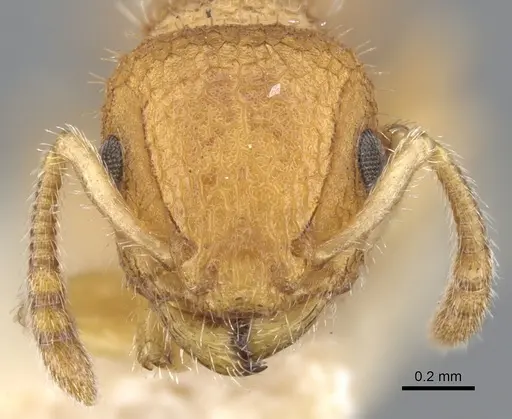
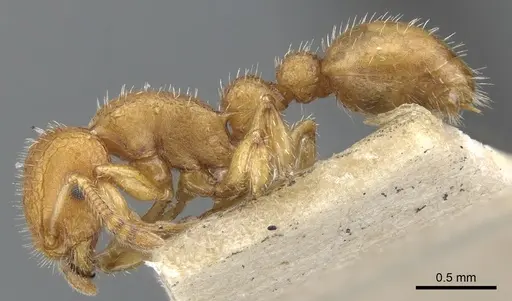
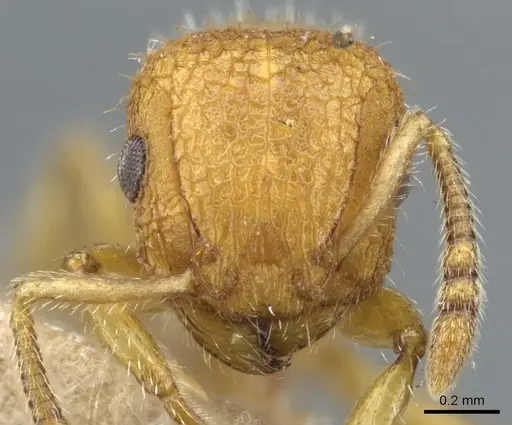
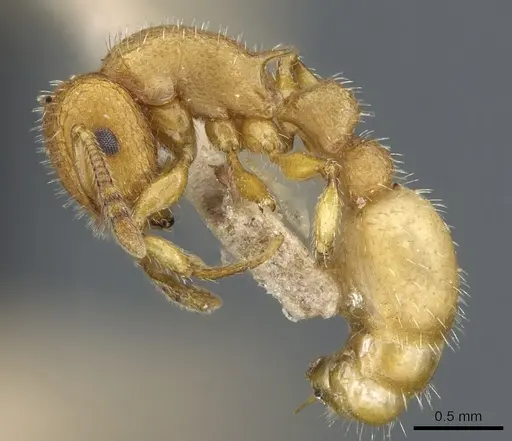
Workers are concolorous yellow, the whole body is a uniform yellow without markings [2]. They have propodeal spines that diverge along their entire length, a key feature [2]. The species was originally depicted in Mann’s 1919 figure (fig. 29) [1]. Queens and males have not been described in detail, but queens likely follow typical Myrmicinae morphology, larger than workers.
Temperature Requirements
Since Romblonella elysii comes from the tropical Solomon Islands [3], it needs warmth, keep the nest at 24-28°C. Place a heating cable on one side of the nest to create a gentle temperature gradient so the ants can choose their preferred spot. Avoid letting temperatures drop below 22°C for long periods, as this may stress the colony. Unlike temperate ants, they do not need a winter diapause, keep them warm all year.
Humidity Requirements
The Solomon Islands are humid, so this species likely needs high humidity in captivity. Keep the nesting substrate consistently damp (but not waterlogged) to create a moist microclimate. A water reservoir connected to the nest, like in a test tube setup, can help maintain humidity. Mist the outworld occasionally, but make sure there is good ventilation to prevent mold. Aim for conditions that feel like a damp forest floor.
Feeding and Diet
No specific dietary data exists for this species, but based on typical Myrmicinae behavior, they likely hunt small insects and collect honeydew. Offer a variety: small live prey like fruit flies, pinhead crickets, or small mealworms. Provide sugar water or diluted honey regularly. Feed protein prey 2-3 times per week and keep sugar water available at all times. Remove uneaten prey after 24-48 hours to prevent mold.
Nesting Preferences
Natural nesting sites for Romblonella elysii are unknown, but species in the genus are usually found in soil or rotten wood. For captivity, a Y-tong (AAC) nest or naturalistic setup with moist soil and hiding spots (flat stones, bark) should work. Make sure nest chambers are small, tight spaces help these ants feel secure. Include an outworld with foraging space and room for expansion as the colony grows.
Frequently Asked Questions
How long does it take for Romblonella elysii to produce first workers?
Development time has not been documented. Based on patterns in similar small tropical Myrmicinae, expect roughly 6-8 weeks from egg to worker at 25-28°C, but this is an estimate.
Do Romblonella elysii ants sting?
They belong to the subfamily Myrmicinae and tribe Crematogastrini, which have a modified stinger that smears venom rather than piercing. They can defend themselves, but their sting is not medically significant for humans. Handle gently.
Can I keep multiple queens together in one colony?
The colony structure is unstudied. Most Myrmicinae are monogyne (single queen), so it is safest to keep one queen per nest until more is known.
What is the best nest type for Romblonella elysii?
A Y-tong or plaster nest with good moisture control works for this small species. Chambers should be small. A naturalistic setup with moist soil and hiding places is also suitable.
Do Romblonella elysii need hibernation or diapause?
No, because they are tropical, they do not need a cold diapause. Keep temperatures at 24-28°C all year. Extended cold below 22°C may harm them.
How big do Romblonella elysii colonies get?
Maximum colony size is unknown. Based on similar small Myrmicinae, colonies may reach a few hundred workers at maturity, but this is speculation.
Are Romblonella elysii good for beginners?
No, there is too little known about their care to recommend them for beginners. Stick to well-documented species if you are new to antkeeping.
What do Romblonella elysii eat?
Based on typical Myrmicinae diet, they likely accept small live insects (fruit flies, pinhead crickets, small mealworms), sugar water, and honey. Offer protein 2-3 times a week and sugar water continuously. Remove leftovers after 24-48 hours to avoid mold.
Where is Romblonella elysii native to?
This species is native to the Solomon Islands in Oceania, recorded from Makira, Guadalcanal, Three Sisters, and Santa Anna [3][1].
Report an Issue
The current care sheet is based fully on literature. See inconsistencies, or something that's incorrect? Please , it will be resolved after review from an admin. Contributing to the blogs tab also helps providing information, to make us be able to further improve the caresheets. Thank you for your support!
References

Lembar perawatan ini dilisensikan di bawah CC BY-SA 4.0 .
Blog Komunitas
CASENT0901996
Lihat di AntWeb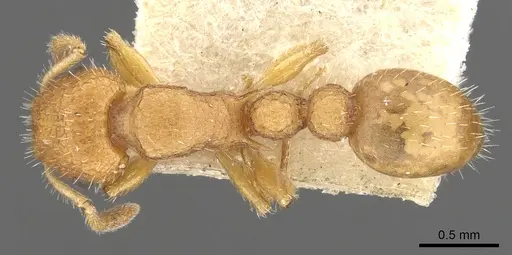
CASENT0904852
Lihat di AntWeb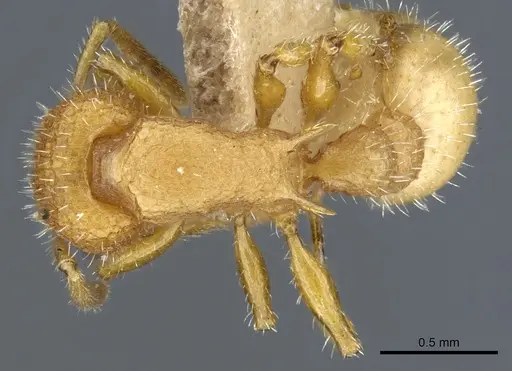
Literatur
Memuat peta distribusi...Memuat produk...