
Recurvidris hebe
- Nama Ilmiah
- Recurvidris hebe
- Tribe
- Crematogastrini
- Subfamili
- Myrmicinae
- Penulis
- Bolton, 1992
- Distribusi
- Ditemukan di 1 negara
Pendahuluan
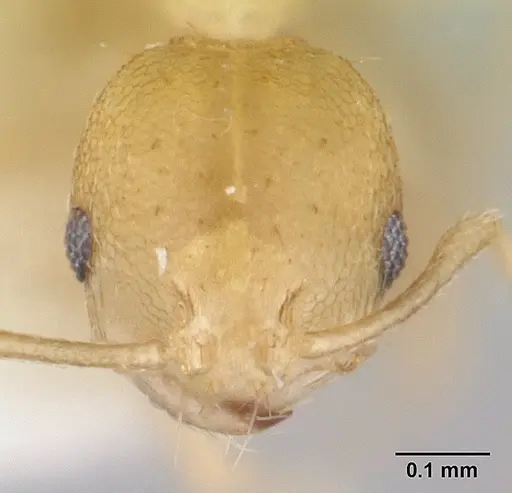
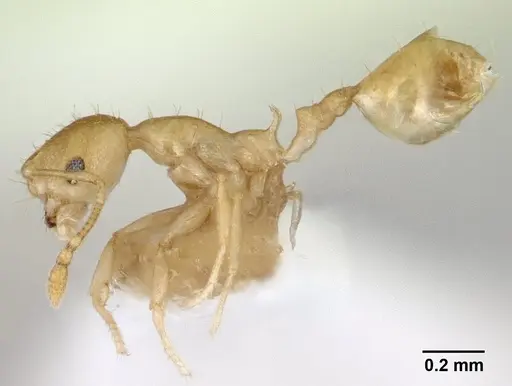
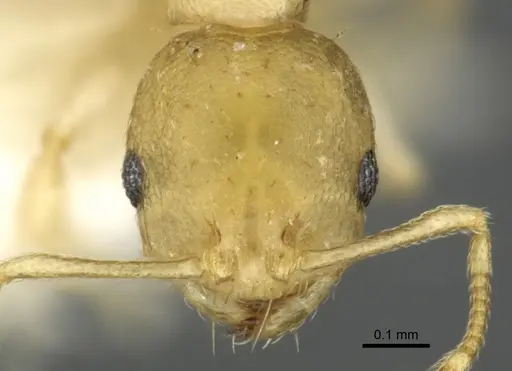
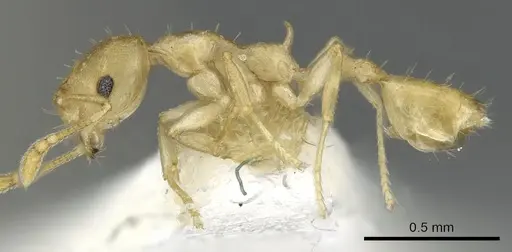
Recurvidris hebe is a small myrmicine ant from the lowland rainforests of Sulawesi, Indonesia. Workers have mandibles with four teeth, a bidenticulate basal tooth, and long, narrow propodeal spines. In dorsal view, the postpetiole is noticeably wider than the petiolar node . This species was described from leaf litter samples collected at 200–400 m elevation in Dumoga Bone National Park . Size data is unavailable for both queens and workers.
Quick Summary
- Difficulty: Medium
- Origin & Habitat: Native to Sulawesi, Indonesia (Indomalaya region). Found in lowland rainforest at 200–400 m elevation in Dumoga Bone National Park [2].
- Colony Type: Unconfirmed – no published data on colony structure.
- Size & Growth:
- Queen: size data unavailable
- Worker: size data unavailable
- Colony: Unknown – maximum colony size has not been documented.
- Growth: Unknown – no developmental data available for this species.
- Development: Unknown – not documented in the literature. (Development time is entirely unconfirmed for this species.)
- Antkeeping:
- Temperature: Maintain warm, stable conditions matching its tropical lowland rainforest habitat. Avoid temperatures below 22°C. A slight gradient is beneficial [2].
- Humidity: High humidity – keep the nest substrate consistently moist but not waterlogged, replicating damp rainforest floor conditions [2].
- Diapause: No – this tropical species does not require a winter rest period. Keep warm year-round [2].
- Nesting: In nature they inhabit leaf litter and rotting wood. In captivity, use a moist soil/peat mix or a Y-tong/plaster nest with small, humid chambers [2].
- Behavior: Like other members of the tribe Crematogastrini, Recurvidris hebe uses a modified flattened stinger to smear venom onto threats rather than piercing (defense mechanism: smear). They are small, active foragers that likely search leaf litter for tiny prey and honeydew. Their tiny size makes escape prevention critical – they can squeeze through extremely small gaps.
- Common Issues: escape prevention is critical due to their very small size – use fine mesh (≤0.5 mm) and seal all gaps., high humidity requirements can lead to mold if ventilation is poor., tropical species are sensitive to temperature drops – sudden cooling can be fatal., no specific dietary or colony data – care must be adjusted based on general myrmicine patterns.
Housing and Nest Setup
Recurvidris hebe lives in leaf litter and rotting wood in Sulawesi rainforests [2]. Replicate this with a naturalistic terrarium: use a moist soil/peat substrate, keep it consistently damp but not waterlogged, and provide tight, humid chambers. A Y-tong (AAC) or plaster nest with small cavities works well. Place the nest in a warm area (24–28°C is typical for tropical ants, though exact requirements are unconfirmed). Because they are so small, check all seams and connections for gaps – these ants can escape through openings you might not notice.
Feeding and Diet
Specific dietary data for Recurvidris hebe is lacking. Based on typical myrmicine omnivory, offer small live prey (fruit flies, pinhead crickets), diluted honey or sugar water, and occasional protein. Portion sizes should be tiny – a few drops of sugar water or a small insect piece. Feed every 2–3 days and remove uneaten food after 24 hours to prevent mold. Always provide fresh water.
Temperature and Seasonal Care
These ants come from a tropical lowland rainforest that stays warm year-round. Keep the nest consistently warm – a range of 24–28°C is often used for tropical species, but no exact data exists for this ant. Use a heat mat on one side to create a gradient. Avoid temperatures below 22°C. There is no diapause requirement, maintain stable warmth throughout the year. Sudden temperature drops can be fatal [2].
Humidity Management
High humidity is essential – these ants live in a damp rainforest environment. Keep the substrate moist to the touch but not waterlogged. Mist regularly and provide a water reservoir or moist chamber. Balance humidity with ventilation to prevent mold. If condensation builds up constantly, increase airflow. If the substrate dries out quickly, mist more often [2].
Colony Development and Growth
No information is available on colony founding or development for this species. Queens, workers, and colony size have not been described. Keepers must rely on general myrmicine patterns: if the queen follows typical claustral founding, she would seal herself in a chamber and raise the first brood without foraging. However, this is entirely unconfirmed. Be patient and avoid disturbing the nest until workers appear.
Handling and Observation
These tiny ants are best observed without disturbance. Their size makes them fragile and hard to handle. Open the enclosure only when necessary. Use a well-lit setup with red light for nighttime viewing to see natural foraging behavior without stressing them. They are not aggressive and use a smear-type chemical defense rather than stinging.
Frequently Asked Questions
How long does it take for Recurvidris hebe to produce first workers?
Development time has not been documented for this species. Estimates from related myrmicines suggest 6–8 weeks at warm temperatures, but this is speculative.
Can I keep Recurvidris hebe in a test tube setup?
A test tube setup may work for founding, as it provides high humidity and a small chamber. However, because specific needs are unknown, monitor moisture levels and consider modifying the setup to prevent escape.
Do Recurvidris hebe ants sting?
They belong to the tribe Crematogastrini, which uses
Report an Issue
The current care sheet is based fully on literature. See inconsistencies, or something that's incorrect? Please , it will be resolved after review from an admin. Contributing to the blogs tab also helps providing information, to make us be able to further improve the caresheets. Thank you for your support!
References

Lembar perawatan ini dilisensikan di bawah CC BY-SA 4.0 .
Blog Komunitas
CASENT0178522
Lihat di AntWeb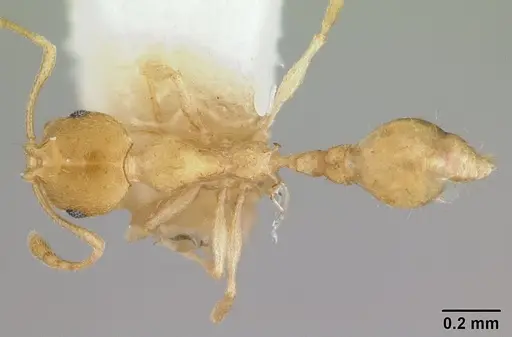
CASENT0902056
Lihat di AntWeb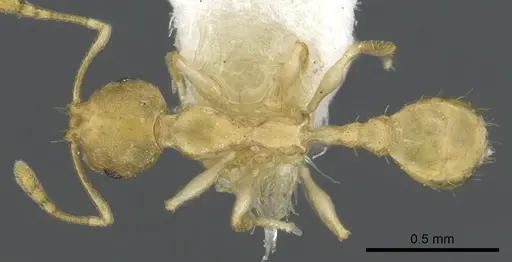
Literatur
Memuat peta distribusi...Memuat produk...