
Protanilla helenae
- Nama Ilmiah
- Protanilla helenae
- Tribe
- Leptanillini
- Subfamili
- Leptanillinae
- Penulis
- Borowiec <i>et al.</i>, 2011
- Distribusi
- Ditemukan di 0 negara
Pendahuluan
Protanilla helenae is a rare ant species from the Philippines, known only from two worker specimens collected on Palawan Island . This species belongs to the Leptanillinae subfamily, a group of cryptic ants that are rarely encountered. A key feature is its unique abdominal morphology where the petiole and postpetiole are rigidly fused, the first such case in worker ants . The species was originally described as Anomalomyrma helenae and recently transferred to Protanilla . Specimens were collected from leaf litter in seasonal dry primary forest near a waterfall at 200-450 meters elevation .
Quick Summary
- Difficulty: Expert
- Origin & Habitat: Palawan Island, Philippines, seasonal dry primary forest on steep slope near Bulalacao Waterfall,200-450m elevation [1]. Collected from leaf litter on wet forest floor using Winkler apparatus [1].
- Colony Type: Unknown, only two worker specimens have ever been collected, and neither queens nor colony structure have been documented [1][3].
- Size & Growth:
- Queen: size data unavailable [1]
- Worker: size data unavailable [1]
- Colony: Unknown, colony size data does not exist [1]
- Growth: Unknown
- Development: Unknown, development has never been observed [1] (No data exists on development timeline. Related Leptanillinae species typically develop over several months, but this is unconfirmed for Protanilla helenae.)
- Antkeeping:
- Temperature: Based on the tropical origin of Palawan, temperatures should be warm and stable, roughly 24-28°C [1]. No direct thermal data exists for this species.
- Humidity: Keep substrate consistently moist but not waterlogged, reflecting collection from wet forest floor [1].
- Diapause: Unknown, tropical species from Palawan may not require diapause, but this has never been studied [1].
- Nesting: No direct data exists. Based on collection from leaf litter, they likely nest in soil or rotting wood in humid microhabitats. A naturalistic setup with moist soil and small chambers would be appropriate [1].
- Behavior: Behavior is unstudied. Based on related Leptanillinae species like Opamyrma, they are likely predatory on small soil arthropods [4]. Workers have sickle-shaped mandibles with small teeth, suggesting specialized predatory behavior [1]. They lack eyes entirely, indicating navigation using chemical cues [1]. Escape risk is low given their tiny size, but they are likely fast-moving. Aggression level is unknown.
- Common Issues: this species has never been kept in captivity, and no husbandry information exists., only two workers have ever been collected, making wild colonies essentially unknown., no queen has ever been described, so founding behavior is completely unconfirmed., related Leptanillinae are extremely difficult to locate and study in the wild., tropical origin means temperature and humidity must be carefully maintained., no information on acceptable food items or feeding behavior.
Species Discovery and Rarity
Protanilla helenae represents one of the most poorly known ant species in the world. The entire scientific knowledge rests on just two worker specimens collected in 2009 from Palawan Island in the Philippines [1]. The species was originally described under the genus Anomalomyrma in 2011 and was recently transferred to Protanilla following a systematic revision of the Leptanillinae subfamily in 2024 [3]. The holotype worker is housed at the Staatliches Museum für Naturkunde Karlsruhe in Germany, while the paratype is in the Museum of Comparative Zoology at Harvard [1]. This extreme rarity makes any captive husbandry speculative, as no established protocols exist.
Unique Morphology
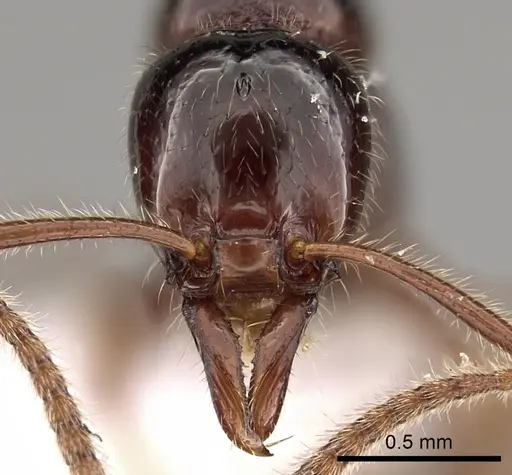
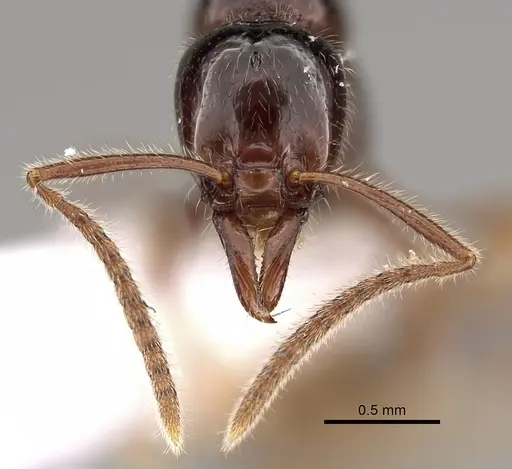
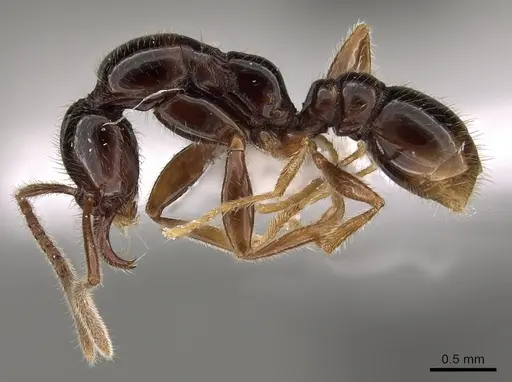
The most remarkable feature of Protanilla helenae is its unique abdominal morphology. Workers have abdominal segments II (petiole) and III (postpetiole) rigidly fused together across both the upper and lower surfaces, the first time such complete fusion has been documented in worker ants [2]. This fusion may provide structural rigidity for prey handling or defense. Other distinctive features include eyes completely absent, very long antennae extending beyond the head, and specialized mandibles shaped like curved sickles with small teeth [1]. The subpetiolar process is large and lobate with a visible fenestra [1]. The propodeal spiracle is positioned far from the metapleural gland, separated by about twice the spiracle diameter, a useful identification feature [1].
Natural Habitat
The only known specimens were collected in the El Nido region of Palawan, Philippines, near the Bulalacao Waterfall at coordinates 11°13'41" N 119°28'00" E at an elevation of 200-450 meters [1]. The habitat was described as a seasonal dry primary forest on a steep slope directly adjacent to the waterfall [1]. The ants were sifted from leaf litter on the wet forest floor and extracted using a Winkler apparatus [1]. This suggests they are cryptic leaf-litter dwellers living in humid microhabitats within the forest floor ecosystem.
Related Species and Biology
Protanilla helenae belongs to the Leptanillinae subfamily, a group of small, cryptic ants that are rarely encountered and poorly understood. The closely related Opamyrma hungvuong from Vietnam is one of the few Leptanillinae species with documented natural history, it has been observed preying on centipedes, suggesting a predatory lifestyle for the subfamily [4]. Other Leptanillinae genera like Yavnella and Anomalomyrma are similarly data-deficient [5]. The taylori species group, to which Protanilla helenae belongs, includes several obscure species known only from workers or queens. Nothing is known about the reproductive caste of Protanilla helenae [3].
Care Recommendations
Since Protanilla helenae has never been kept in captivity, all care recommendations are educated guesses based on related species and natural habitat data. Provide a naturalistic setup with moist soil substrate, think damp forest floor conditions similar to their collection microhabitat. A small test tube setup or moist plaster nest could work as a starting point. Temperature should be warm and stable, in the range of 24-28°C, reflecting their tropical Palawan origin. Humidity should be high, with the substrate kept consistently moist but not waterlogged. For feeding, offer small live prey items like springtails or fruit flies, based on related species' predatory behavior. Given their complete lack of eyes, they likely rely on chemical cues, so avoid unnecessary disturbance. This species is not recommended for beginners due to the complete lack of husbandry precedent. [1]
Frequently Asked Questions
Can I keep Protanilla helenae as a pet ant?
This species is not recommended for antkeeping. It has never been kept in captivity, and no husbandry protocols exist. Additionally, the species is known only from two specimens ever collected, meaning no colonies are available in the antkeeping hobby. Any Protanilla helenae offered for sale would almost certainly be misidentified or illegally collected from the wild.
What do Protanilla helenae ants eat?
This is unknown, no feeding observations exist. Based on related Leptanillinae like Opamyrma, which preys on centipedes, they are likely predatory on small soil arthropods [4]. In captivity, you could offer tiny live prey like springtails or fruit flies, but acceptance is completely unconfirmed.
How big do Protanilla helenae colonies get?
Unknown, colony size has never been documented. Only two workers have ever been collected, and no colony structure data exists. Related Leptanillinae species typically form small colonies, but this is purely speculative for Protanilla helenae.
Do Protanilla helenae queens need to be fertilized to found a colony?
This is completely unconfirmed. No queen of this species has ever been described, so founding behavior is unknown. Related Leptanillinae may vary in their founding strategy, but without any data on Protanilla helenae queens, claustral versus semi-claustral founding cannot be determined.
Do Protanilla helenae ants sting?
Stinging ability is not documented for this species. Leptanillinae are not known for having functional stingers like some other ant subfamilies. They likely rely on their specialized mandibles for defense and prey capture rather than stinging.
What temperature should I keep Protanilla helenae at?
No specific thermal data exists. Based on their tropical Palawan origin, aim for 24-28°C with stable conditions. Avoid temperature fluctuations and keep them warm year-round, similar to other tropical ant species.
How long does it take for Protanilla helenae eggs to become workers?
Unknown, development has never been observed or documented for this species. Related Leptanillinae species likely require several months, but no specific timeline exists for Protanilla helenae.
Are Protanilla helenae good for beginners?
Absolutely not. This is an expert-only species at best, and more accurately, a species that should not be kept at all given its extreme rarity and complete lack of captive husbandry data. There are many well-established ant species suitable for beginners.
Where is Protanilla helenae found in the wild?
Only from Palawan Island in the Philippines. The two known specimens came from the El Nido region, near Bulalacao Waterfall, at 200-450 meters elevation in seasonal dry primary forest [1].
Why is Protanilla helenae so rare?
Protanilla helenae appears to be genuinely uncommon in the wild, not just under-collected. Leptanillinae ants are cryptic leaf-litter dwellers that are difficult to detect even with intensive sampling. The specialized Winkler apparatus extraction method was required to find these two workers. Additionally, their specific microhabitat requirements near forest waterfalls may limit their distribution.
Report an Issue
The current care sheet is based fully on literature. See inconsistencies, or something that's incorrect? Please , it will be resolved after review from an admin. Contributing to the blogs tab also helps providing information, to make us be able to further improve the caresheets. Thank you for your support!
References

Lembar perawatan ini dilisensikan di bawah CC BY-SA 4.0 .
Blog Komunitas
CASENT0220221
Lihat di AntWeb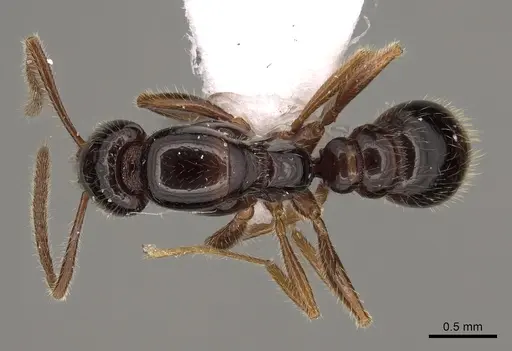
Literatur
Memuat peta distribusi...Memuat produk...