
Pristomyrmex curvulus
- Nama Ilmiah
- Pristomyrmex curvulus
- Tribe
- Crematogastrini
- Subfamili
- Myrmicinae
- Penulis
- Wang, 2003
- Distribusi
- Ditemukan di 0 negara
Pendahuluan
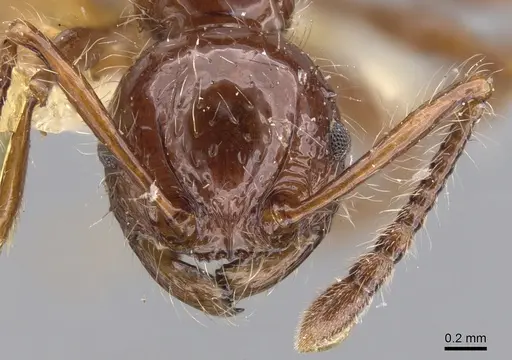
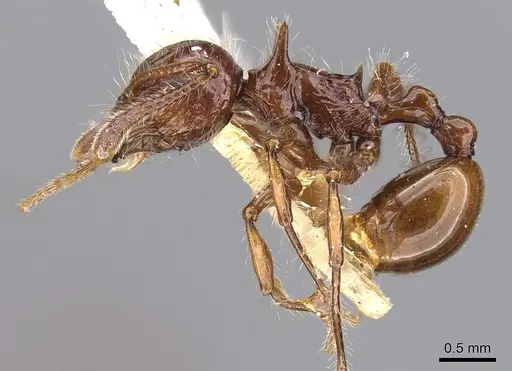
Pristomyrmex curvulus is a small ant species endemic to the Philippines, specifically found in Negros Oriental . Workers measure 4.6-5.3 mm in total length , and queens are larger at about 6.16 mm . They have exceptionally long pronotal spines and smooth dorsal surfaces . This species belongs to the Pristomyrmex quadridens group and is closely related to P. longispinus and P. bicolor, distinguished by its smooth body and spine characteristics . Little is known about their biology in the wild, making them a challenging species for antkeepers.
Quick Summary
- Difficulty: Expert
- Origin & Habitat: Endemic to Philippines, Negros Oriental, tropical forest habitats [1].
- Colony Type: Unconfirmed, colony structure has not been documented in scientific literature.
- Size & Growth:
- Antkeeping:
- Temperature: Keep warm, roughly 24-28°C. Based on tropical habitat.
- Humidity: Keep moderately humid. Based on humid tropical climate.
- Diapause: No, tropical species from Philippines.
- Nesting: No specific data on natural nesting preferences. Based on related species, likely prefer enclosed spaces.
- Behavior: Temperament is unknown but Pristomyrmex species are generally docile. Workers are moderate-sized (4.6-5.3 mm), so standard escape prevention is sufficient.
- Common Issues: lack of documented care requirements may lead to colony failure., unknown diet preferences require careful observation and experimentation., wild-caught colonies may have parasites with no known treatment., founding behavior is unstudied, making queen establishment challenging.
Housing and Nest Setup
No specific nesting data exists for Pristomyrmex curvulus. Provide a nest that maintains moderate humidity and warmth, such as a Y-tong or plaster nest [2]. Workers are 4.6-5.3 mm [1], so standard test tube setups work for founding colonies, and escape prevention with Fluon is sufficient.
Feeding and Diet
The diet of Pristomyrmex curvulus is completely unstudied. No information exists on what they eat in the wild or in captivity. You may need to experiment with standard ant foods like sugar water and dead insects.
Temperature and Seasonal Care
Keep Pristomyrmex curvulus at warm temperatures between 24-28°C. This is inferred from their tropical Philippine habitat [1]. Do not hibernate this species, as it is tropical.
Colony Establishment
Founding behavior is unconfirmed for Pristomyrmex curvulus. Assume claustral founding as typical for Myrmicinae, but this is not documented. Provide a quiet, dark setup for the queen [2].
Behavior and Observation
Pristomyrmex curvulus has distinctive long pronotal spines [1][3]. Temperament is unknown, but Pristomyrmex species are generally docile. Workers are moderate-sized, so observation is feasible.
Frequently Asked Questions
How long does it take for Pristomyrmex curvulus to have first workers?
The exact development time is unknown, no scientific data exists for this species.
What do Pristomyrmex curvulus ants eat?
Their diet is completely unstudied. You may need to experiment with standard ant foods.
Do Pristomyrmex curvulus ants need hibernation?
No, this is a tropical species from the Philippines.
Are Pristomyrmex curvulus good for beginners?
No, this is an expert-level species due to lack of biological data.
How big do Pristomyrmex curvulus colonies get?
The maximum colony size is unknown, no scientific data exists.
Can I keep multiple Pristomyrmex curvulus queens together?
The colony structure is unconfirmed. No data exists on whether they are monogyne or polygyne.
What temperature should I keep Pristomyrmex curvulus at?
Keep them warm at 24-28°C, based on their tropical habitat.
Do Pristomyrmex curvulus ants sting?
Stinging behavior is unstudied for this species. As Myrmicinae, they have the capability, but specific behavior is unknown.
When will Pristomyrmex curvulus nuptial flights occur?
Nuptial flight timing is completely unknown.
Why are my Pristomyrmex curvulus dying?
Without documented care requirements, colony failures may be due to suboptimal conditions like incorrect temperature or humidity.
Report an Issue
The current care sheet is based fully on literature. See inconsistencies, or something that's incorrect? Please , it will be resolved after review from an admin. Contributing to the blogs tab also helps providing information, to make us be able to further improve the caresheets. Thank you for your support!
References

Lembar perawatan ini dilisensikan di bawah CC BY-SA 4.0 .
Blog Komunitas
CASENT0901716
Lihat di AntWeb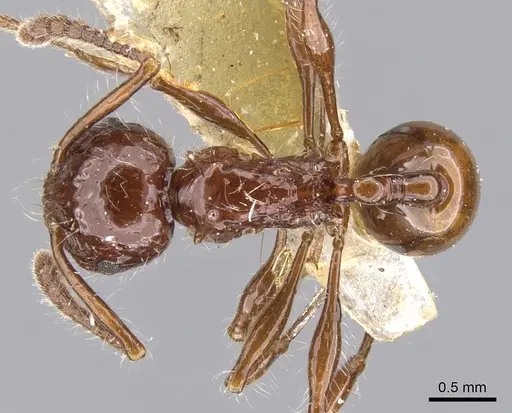
Literatur
Memuat peta distribusi...Memuat produk...