
Polyrhachis yarrabahensis
- Nama Ilmiah
- Polyrhachis yarrabahensis
- Subgenus
- Myrmatopa
- Tribe
- Camponotini
- Subfamili
- Formicinae
- Penulis
- Forel, 1915
- Distribusi
- Ditemukan di 1 negara
Pendahuluan
Polyrhachis yarrabahensis is a medium-sized arboreal ant native to lowland rainforests in New Guinea and northern Queensland, Australia . Workers measure up to 6.8 mm in total length, while queens reach up to 8.9 mm . The head is distinctly darker than the rest of the body, often appearing almost black against a medium to dark reddish-brown thorax and gaster . They build polydomous nests (multiple connected nest sites) using silk and vegetation debris on leaves, shrubs, and vines . This species belongs to the subgenus Myrmatopa and stands out for its canopy-dwelling lifestyle and unique nest construction.
Quick Summary
- Difficulty: Medium
- Origin & Habitat: Lowland rainforests from New Guinea to northern Queensland, Australia, specifically the Wet Tropics region [1]. They nest on leaves of trees, shrubs, and vines [1].
- Colony Type: Colony structure is unconfirmed. Based on typical Polyrhachis patterns, they likely form single-queen colonies, but this has not been directly studied.
- Size & Growth:
- Queen: up to 8.9 mm [1]
- Worker: up to 6.8 mm [1]
- Colony: Unknown, no colony size data available
- Growth: Unknown
- Development: Unknown for this species. Based on typical Polyrhachis patterns, expect around 6 to 10 weeks at warm tropical temperatures. (Development speed depends on stable warmth and food availability.)
- Antkeeping:
- Temperature: Keep warm and stable, roughly 24 to 28°C. A heating cable on one side of the nest creates a comfortable gradient.
- Humidity: Keep the nest substrate consistently moist but not waterlogged. Provide a humidity gradient with a damp area and drier nesting zones.
- Diapause: Unlikely. As a tropical species, they probably do not require winter dormancy. They may slow down if room temperatures drop significantly.
- Nesting: Build an arboreal setup with vertical climbing space. Use Y-tong (AAC), plaster, or soil nests with branches and leaf litter. Provide materials like small leaf fragments and cotton fibers for nest building.
- Behavior: These ants are active climbers and prefer vertical surfaces. They are not highly aggressive but will defend their nest. Escape prevention is important because they climb well. They likely forage for honeydew and small insects in the canopy.
- Common Issues: poor ventilation combined with high humidity causes mold buildup, lack of vertical climbing space stresses arboreal ants, room temperatures dropping below 22°C slows development, slow colony growth frustrates keepers expecting quick expansion, gaps in lids or connections allow escape
Natural History and Distribution
Polyrhachis yarrabahensis lives in the Australasian region, ranging from New Guinea to northern Queensland, Australia [1]. They thrive in the Wet Tropics region [1]. Unlike ground-nesting ants, these ants build their homes on leaves, shrubs, and vines in lowland rainforests [1]. They construct polydomous nests, which means the colony uses multiple connected nest sites [1]. The nests consist of silk and vegetation debris woven together on leaf surfaces [1]. This arboreal lifestyle keeps them high in the canopy where they forage among branches and leaves.
Identification and Appearance
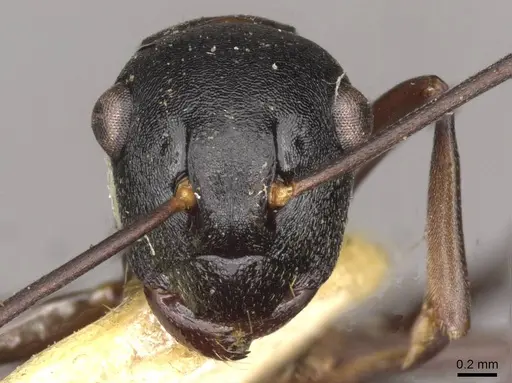
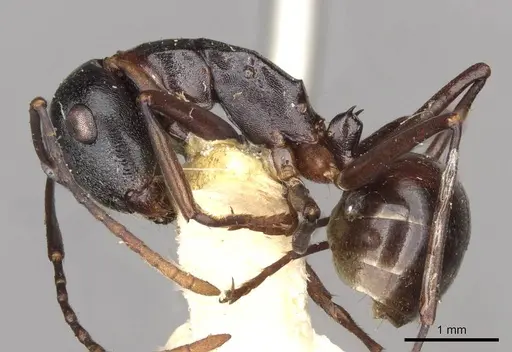
Workers measure up to 6.8 mm in total length, and queens reach up to 8.9 mm [1]. The head is distinctly darker than the rest of the body, often appearing almost black against a medium to dark reddish-brown thorax and gaster [1]. The head surface has a distinct net-like pattern of small pits, with the texture becoming rougher near the eyes and sides of the head [1]. The small projections on the back of the thorax are blunt and angular, which separates them from similar species like Polyrhachis lombokensis that have sharply upturned teeth [1]. Queens are larger and have even more pronounced texturing on the head [1].
Housing and Nest Setup
You must design a setup that matches their tree-dwelling nature. Provide plenty of vertical space with branches, cork bark, or artificial plants for climbing. A naturalistic vivarium with live plants works well and lets the ants build their characteristic leaf nests. You can also use Y-tong (AAC), plaster, or soil nests, but make sure the ants can access vertical surfaces. Give them materials like small leaf fragments, cotton fibers, or twigs to weave into nests. Test tubes work for founding queens, but you will need to connect them to a proper arboreal outworld once the colony grows. Seal all gaps between the nest and outworld to prevent escape.
Temperature and Humidity Requirements
These ants come from tropical rainforests, so they need warm and stable conditions. Keep the nest area around 24 to 28°C. A heating cable on one side creates a gradient so the ants can move to their preferred temperature. Maintain high humidity by keeping the nest substrate consistently moist but not waterlogged. Place a small water reservoir in the setup and mist the outworld regularly. You must balance humidity with strong ventilation to stop mold from growing. Poor airflow traps moisture and creates ideal conditions for mold, which can kill the colony. Increase ventilation immediately if you see constant condensation or fungal growth.
Feeding and Diet
In the wild, these ants eat honeydew from aphids and scale insects, plus small insects they hunt in the canopy. Feed them sugar water or honey as a steady energy source. Offer protein like small fruit flies, pinhead crickets, or chopped mealworms twice a week. Remove uneaten prey after 24 hours to prevent mold. Place food on elevated surfaces or branches in the outworld to match their natural foraging behavior. Some Polyrhachis species accept fresh fruit slices like citrus or melon. Keep the setup clean by removing leftover food promptly.
Frequently Asked Questions
How long does it take for Polyrhachis yarrabahensis to raise their first workers?
The exact timeline is unknown. Based on typical Polyrhachis patterns, expect around 6 to 10 weeks from egg to worker at optimal tropical temperatures. Colony growth is usually slow, especially during the founding stage.
Can I keep Polyrhachis yarrabahensis in a test tube setup?
Test tubes work for a founding queen, but these ants need vertical space and climbing structures. A test tube alone is not suitable for long-term housing. Once the colony reaches up to 15 workers, move them to a setup with climbing surfaces and nest-building materials.
What is the best nest type for Polyrhachis yarrabahensis?
An arboreal setup is ideal. Use Y-tong (AAC), plaster, or soil nests with branches and leaf litter. Provide vertical climbing space and materials like small leaf fragments and cotton fibers for nest building. Ensure the outworld has elevated foraging areas.
Do these ants need hibernation?
As a tropical species from northern Queensland, they likely do not require winter dormancy. They may slow down if room temperatures drop significantly below 20°C. Maintain warm room temperatures year-round to keep them active.
How big do Polyrhachis yarrabahensis colonies get?
Maximum colony size is unknown. Based on related Polyrhachis species, colonies likely reach several hundred workers over several years. They maintain multiple connected nest sites in nature.
Are Polyrhachis yarrabahensis good for beginners?
This species rates as Medium difficulty. Their arboreal nature and high humidity needs make them better suited for keepers with some experience. Beginners may struggle with humidity management and providing adequate vertical space.
Can I keep multiple queens together?
Colony structure is unconfirmed. Based on related Polyrhachis species, they likely form single-queen colonies. Combining unrelated queens is not recommended since this behavior has not been documented and could lead to fighting.
Why are my Polyrhachis yarrabahensis dying?
Common causes include poor humidity balance, temperatures below 22°C, mold from weak ventilation, or escape stress. Check your setup parameters first. Remove uneaten food promptly to prevent mold buildup.
What temperature range is ideal for Polyrhachis yarrabahensis?
Keep them around 24 to 28°C. They come from the Queensland wet tropics and need stable warmth. A heating cable on part of the nest creates a gradient. Avoid temperatures below 22°C or above 32°C for long periods.
Report an Issue
The current care sheet is based fully on literature. See inconsistencies, or something that's incorrect? Please , it will be resolved after review from an admin. Contributing to the blogs tab also helps providing information, to make us be able to further improve the caresheets. Thank you for your support!
References

Lembar perawatan ini dilisensikan di bawah CC BY-SA 4.0 .
Blog Komunitas
CASENT0910785
Lihat di AntWeb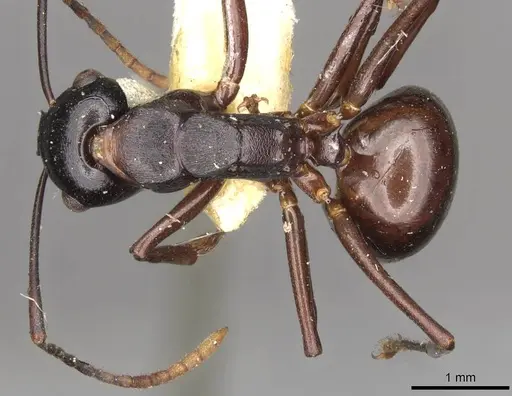
Literatur
Memuat peta distribusi...Memuat produk...