
Polyrhachis shattucki
- Nama Ilmiah
- Polyrhachis shattucki
- Subgenus
- Campomyrma
- Tribe
- Camponotini
- Subfamili
- Formicinae
- Penulis
- Kohout, 2013
- Distribusi
- Ditemukan di 0 negara
Pendahuluan
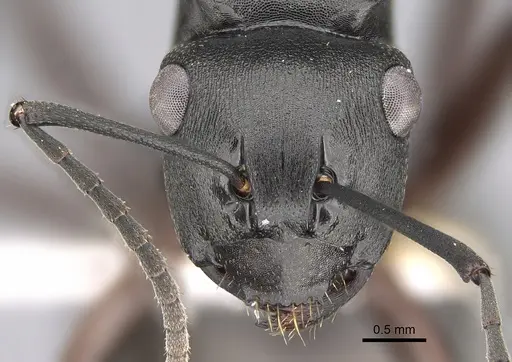
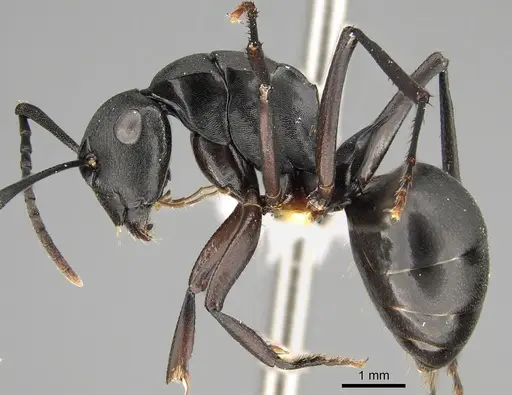
Polyrhachis shattucki is a rare Australian ant from the micans species-group. Workers measure 7.66-9.07 mm in total length and are predominantly black with reddish-brown legs and mandibles . The species is known only from Queensland savannah woodland, where nocturnal workers have been collected on the ground . This species is notable for its extreme rarity, having been collected only twice, and its nocturnal ground-foraging behavior, which is unusual for Polyrhachis ants .
Quick Summary
- Difficulty: Hard
- Origin & Habitat: Endemic to Queensland, Australia. Known only from savannah woodland habitats where workers are nocturnal ground-foragers [1][2].
- Colony Type: Colony structure is unconfirmed. Only stray workers have been collected, no colony samples exist.
- Size & Growth:
- Antkeeping:
- Temperature: Keep warm, roughly 24-28°C, based on Australian origin. Provide a temperature gradient for self-regulation.
- Humidity: Keep nest substrate consistently moist but not waterlogged.
- Diapause: Unknown, Queensland species may not require true hibernation.
- Nesting: Based on Polyrhachis patterns, likely nest in soil or under objects. Use a naturalistic setup with soil substrate or a Y-tong nest.
- Behavior: Nocturnal ground-foragers [2]. Likely docile. Medium-sized ants capable of climbing smooth surfaces, use standard escape prevention.
- Common Issues: extreme rarity makes acquisition difficult and colonies are unlikely to be available., no captive breeding data exists, making establishment uncertain., wild-caught colonies may carry parasites or diseases., nocturnal habits may require feeding in evening for best results., escape prevention needed due to medium size and climbing ability.
Appearance and Identification
Polyrhachis shattucki workers are large ants measuring 7.66-9.07 mm in total length. They are predominantly black with reddish-brown coloration on the mandibles, antennae, and legs [1]. The petiole has a pair of slender, subparallel spines, and the body surface is finely reticulate-punctate with short, silvery pubescence. Queens are similar but slightly larger at about 9.22 mm and have three ocelli and full thoracic structure including wings [1].
Natural History and Rarity
This is one of the rarest Australian Polyrhachis species, known only from two collections in Queensland. The type series was collected as nocturnal stray workers on the ground in savannah woodland [2][1]. The species was formally described in 2013 by Rudolf Kohout and belongs to the micans species-group, which typically nests in soil or under ground-level objects [2].
Housing and Nesting
No specific nesting data exists for this species. Based on Polyrhachis patterns, they likely nest in soil or under objects. Use a naturalistic setup with a soil substrate that holds moisture but drains well. Provide hiding spots like flat stones or bark. Alternatively, a Y-tong nest with narrow chambers can work. Ensure the nest area is dark and humid, with a drier outworld for foraging.
Feeding and Diet
Like most Polyrhachis species, these ants are omnivorous. Offer sugar sources (honey water, sugar water) constantly and protein prey (small insects like fruit flies) 2-3 times per week. Remove uneaten prey after 24-48 hours to prevent mold. Given their nocturnal habits, feed in the evening.
Temperature and Seasonal Care
As an Australian species from Queensland, maintain temperatures between 24-28°C during active seasons. Provide a heating cable on one side of the nest to create a gradient, allowing ants to self-regulate. Avoid sudden temperature drops. During cooler months, room temperature may be sufficient, but true hibernation is likely not required.
Colony Establishment Challenges
The biggest challenge is the species' extreme rarity, with only two wild collections documented [2][1]. If a founding queen is obtained, the founding process is unconfirmed. Expect a wait of several months for first workers, and colonies will likely grow slowly due to limited biological data.
Frequently Asked Questions
How long does it take for Polyrhachis shattucki to raise first workers?
Exact timing is unknown for this species. No species-specific data exists, so expect a wait of several months during the founding stage.
What do Polyrhachis shattucki ants eat?
They are omnivorous. Offer sugar water constantly and protein prey like small insects 2-3 times per week. Remove uneaten food to prevent mold.
Are Polyrhachis shattucki ants aggressive?
Polyrhachis species are generally docile and more likely to flee than attack. They will defend their nest if threatened.
What temperature do Polyrhachis shattucki ants need?
Keep them warm at roughly 24-28°C, with a temperature gradient for self-regulation. This is inferred from their Australian origin and genus patterns.
Can I keep multiple queens together?
Colony structure is unconfirmed for this species. Polyrhachis species are typically monogyne, but without specific data, it is not recommended to house multiple queens together.
How big do Polyrhachis shattucki colonies get?
Colony size is unknown as no established colonies have been documented. Only stray workers have been collected.
Is Polyrhachis shattucki good for beginners?
This species is not recommended for beginners due to its extreme rarity, lack of captive breeding data, and limited availability.
Do Polyrhachis shattucki ants need hibernation?
Hibernation requirements are unknown. As a Queensland species, they likely do not require true hibernation but may have reduced activity in cooler months.
Why are my Polyrhachis shattucki ants dying?
Without captive data, specific causes are unknown. Ensure proper temperature, humidity, and food. Wild-caught colonies may carry parasites. Focus on stable conditions and patience.
Report an Issue
The current care sheet is based fully on literature. See inconsistencies, or something that's incorrect? Please , it will be resolved after review from an admin. Contributing to the blogs tab also helps providing information, to make us be able to further improve the caresheets. Thank you for your support!
References

Lembar perawatan ini dilisensikan di bawah CC BY-SA 4.0 .
Blog Komunitas
CASENT0887778
Lihat di AntWeb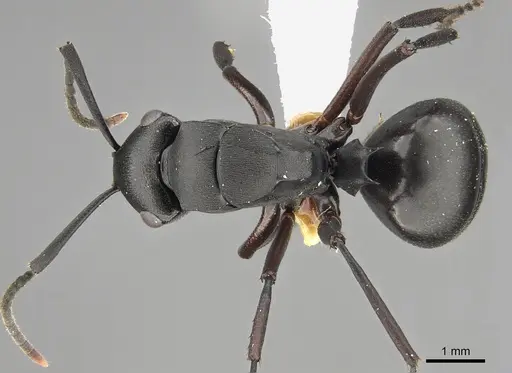
Literatur
Memuat peta distribusi...Memuat produk...