
Polyrhachis dorowi
- Nama Ilmiah
- Polyrhachis dorowi
- Subgenus
- Cyrtomyrma
- Tribe
- Camponotini
- Subfamili
- Formicinae
- Penulis
- Kohout, 2009
- Distribusi
- Ditemukan di 0 negara
Pendahuluan
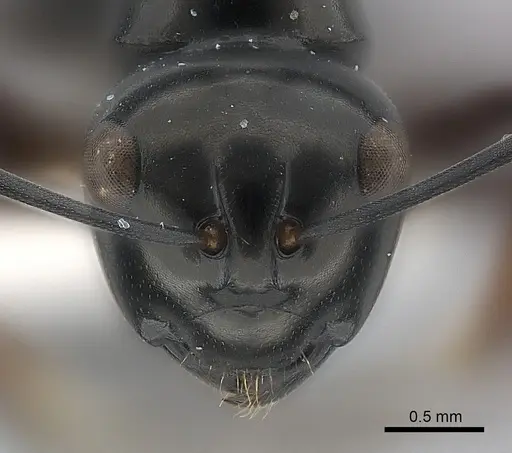
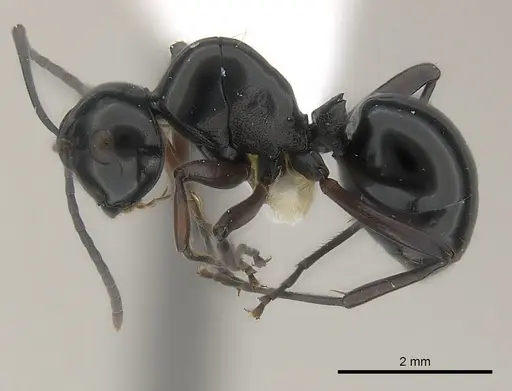
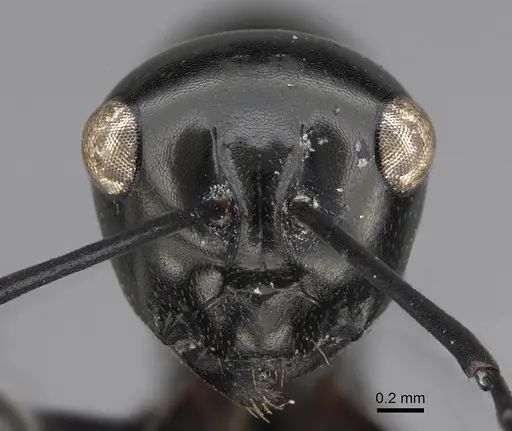
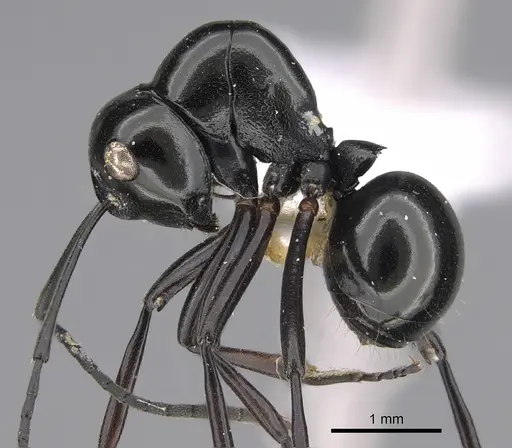
Polyrhachis dorowi is a medium-sized ant native to the tropical rainforests of northern Queensland, Australia. Workers are about 5-6 mm long and mostly black with reddish-brown legs and mandibular teeth. They have a highly arched mesosoma and a four-spined petiole. Queens are larger at 7.5-8 mm and look similar to workers. This species was described in 2009. In the wild, colonies nest between folded leaves in lowland rainforest, showing arboreal habits .
Quick Summary
- Difficulty: Medium
- Origin & Habitat: Northern Queensland, Australia, specifically Cape York Peninsula in lowland and riparian rainforest habitats like Lockerbie Scrub and Bamaga [1].
- Colony Type: Unconfirmed, likely monogyne based on typical Polyrhachis genus patterns.
- Size & Growth:
- Antkeeping:
- Temperature: Keep warm, around 24-28°C, based on tropical rainforest habitat [1].
- Humidity: Keep substrate consistently moist but not waterlogged, based on lowland rainforest habitat [1].
- Diapause: No, tropical species from northern Queensland does not require diapause.
- Nesting: Prefers arboreal nesting between leaves [3]. Use moist nests with good ventilation, such as Y-tong or plaster nests.
- Behavior: Workers are generally calm and non-aggressive. They can spray formic acid for defense, typical of Formicinae. Escape risk is moderate due to their size, use standard barriers. They are active foragers and may explore vertical spaces.
- Common Issues: tropical species needs warm, humid conditions, dry or cold environments can kill colonies [1], limited availability in the hobby since the species was described recently in 2009, specific dietary requirements are not well-documented, observe colony preferences, wild-caught colonies may be stressed from collection and transport
Natural History and Distribution
Polyrhachis dorowi is endemic to Cape York Peninsula in northern Queensland, Australia. It was described by R.J. Kohout in 2009 and named after Dr. Wolfgang H.O. Dorow. The species lives in lowland rainforest, with specimens from Lockerbie Scrub and Bamaga. Colonies nest between leaves, which is typical for the Cyrtomyrma subgenus [1][3].
Nest Preferences and Housing
In the wild, this species nests between folded leaves in the rainforest canopy. For captivity, use naturalistic setups with plants where ants can nest between leaves, or moist Y-tong or plaster nests. Ensure good ventilation to prevent mold. Provide a water tube or moisture reservoir to maintain humidity [3].
Feeding and Diet
Polyrhachis ants are omnivorous, feeding on honeydew, nectar, and small insects. Offer sugar water or honey constantly, and protein like small crickets or fruit flies every few days. Remove uneaten food to prevent mold. Feed more when brood is present.
Temperature and Seasonal Care
As a tropical species, keep temperatures around 24-28°C year-round. Use a heating cable on one side for a gentle gradient. They do not require diapause, but may be less active in cooler months.
Behavior and Defense
Workers are active and moderately fast-moving. They are not highly aggressive but can spray formic acid as a defense mechanism, typical of Formicinae. The four spines on the petiole are visible and unique [1].
Frequently Asked Questions
How long does it take for Polyrhachis dorowi to raise first workers?
No specific data is available for this species. Development time may vary with temperature and care conditions.
What is the best nest type for Polyrhachis dorowi?
Moist Y-tong or plaster nests work well, or naturalistic setups with leaves for arboreal nesting [3].
Can I keep multiple Polyrhachis dorowi queens together?
This is not recommended, as colony type is unconfirmed and combining queens may cause aggression.
What do Polyrhachis dorowi eat?
They are omnivorous. Offer sugar water or honey constantly, and protein like small insects 2-3 times per week.
Do Polyrhachis dorowi need hibernation?
No, as a tropical species, they do not require diapause.
Are Polyrhachis dorowi good for beginners?
They are moderate difficulty due to humidity and temperature needs. Experience with tropical species is helpful.
How big do Polyrhachis dorowi colonies get?
Colony size is unknown, as it is not documented in available literature.
Why are my Polyrhachis dorowi dying?
Common causes include low humidity, cold temperatures, or poor nutrition. Ensure conditions match their tropical habitat [1].
When should I move Polyrhachis dorowi to a formicarium?
Wait until the colony is established with several workers. Start in a test tube setup for founding.
Report an Issue
The current care sheet is based fully on literature. See inconsistencies, or something that's incorrect? Please , it will be resolved after review from an admin. Contributing to the blogs tab also helps providing information, to make us be able to further improve the caresheets. Thank you for your support!
References

Lembar perawatan ini dilisensikan di bawah CC BY-SA 4.0 .
Blog Komunitas
CASENT0217427
Lihat di AntWeb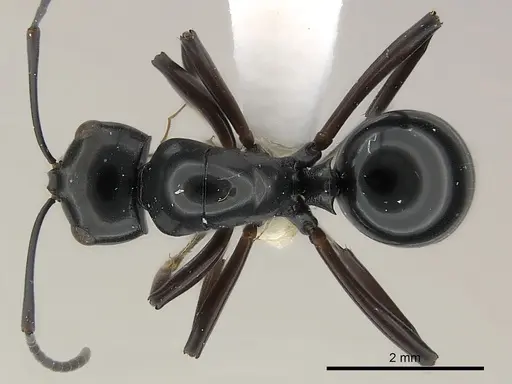
CASENT0887805
Lihat di AntWeb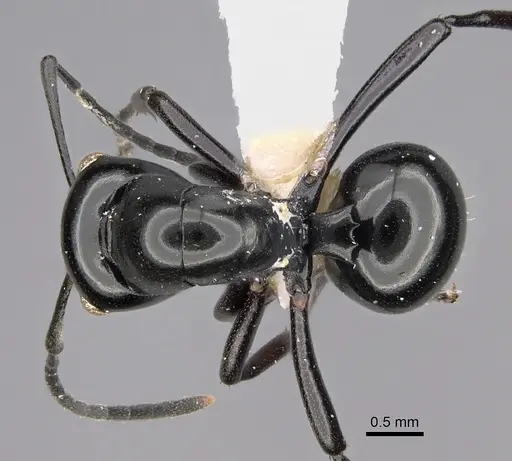
Literatur
Memuat peta distribusi...Memuat produk...