
Polyrhachis dispar
- Nama Ilmiah
- Polyrhachis dispar
- Subgenus
- Myrmhopla
- Tribe
- Camponotini
- Subfamili
- Formicinae
- Penulis
- Kohout, 2010
- Distribusi
- Ditemukan di 0 negara
Pendahuluan
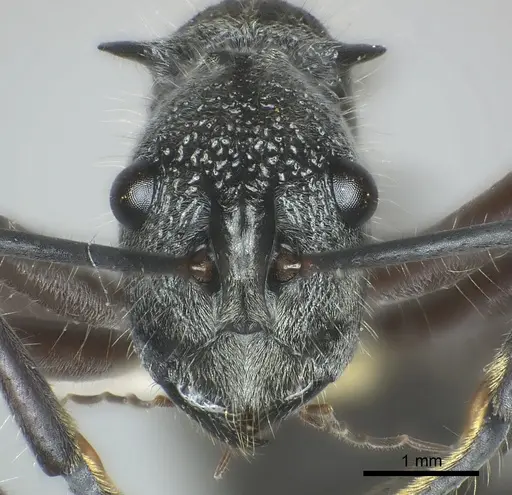
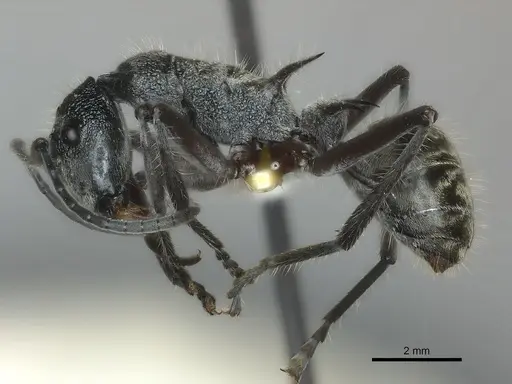
Polyrhachis dispar is a medium to large ant species endemic to northern Cape York Peninsula in Queensland, Australia. Workers measure 11-14 mm in total length and queens reach 13-14 mm, making them substantial ants within the genus . They belong to the Polyrhachis sexspinosa species-group and are distinguished by their broad occipital margin, strong humeral spines, long propodeal spines, and petiolar spines that curve downward. The body is generally black, with some specimens showing dark reddish-brown on the mesosoma and petiole . A notable aspect of P. dispar is its nesting biology: colonies nest exclusively within hollow internodes of bamboo (Bambusa forbesii) in monsoon rainforest . Almost nothing else is known about their biology in the wild, including colony structure or founding behavior .
Quick Summary
- Difficulty: Expert
- Origin & Habitat: Endemic to northern Cape York Peninsula, Queensland, Australia, in monsoon rainforest habitats like Iron Range National Park and Lockerbie Scrub. Colonies nest in hollow bamboo internodes [1][2].
- Colony Type: Colony structure is unconfirmed. No data on whether they are single-queen (monogyne) or multi-queen (polygyne) colonies [1][2][3].
- Size & Growth:
- Queen: ~13-14 mm [1][2]
- Worker: ~11-14 mm [1][2]
- Colony: Unknown, no colony size data available
- Growth: Unknown, no development data available
- Development: Unknown, no direct measurements. Based on typical Polyrhachis patterns, but unconfirmed for this species. (No published data on development time. Temperature may affect growth.)
- Antkeeping:
- Temperature: Based on monsoon rainforest habitat, keep at 24-28°C with a gentle gradient. Use a heating cable if needed [1][2].
- Humidity: Keep nest substrate consistently moist but not waterlogged, as they nest in humid bamboo internodes. Provide a water tube [1][2].
- Diapause: Unknown, no data on overwintering. As a tropical species, they may not require hibernation.
- Nesting: Provide enclosed, humid nests like Y-tong or plaster, scaled to their size (11-14 mm workers) [1][2].
- Behavior: Behavior is poorly documented. Based on genus patterns, they are likely moderately active and can defend themselves with spines. They lack a functional sting but bite and spray formic acid from an acidopore, as typical for Formicinae. Escape risk is moderate due to their size, use fluon barriers [1][2].
- Common Issues: unknown biology means caretakers must adapt care based on colony response., founding behavior is unconfirmed, so queen establishment is uncertain., humidity must be carefully managed to avoid mold or drying., no documented food preferences, offer sugar and protein, but acceptance is untested., lack of colony size data makes nest upgrades challenging.
Nesting Preferences and Housing
In the wild, Polyrhachis dispar colonies nest exclusively within hollow internodes of bamboo in monsoon rainforest [1][2]. For captive care, use a Y-tong or plaster nest that retains humidity. Chambers should be scaled to their large size (11-14 mm workers) and enclosed to mimic bamboo internodes. Keep the nest substrate moist but not waterlogged, and provide a water tube [1][2].
Feeding and Diet
No specific dietary studies exist for this species. Based on genus patterns, offer sugar water or honey constantly, and protein like fruit flies or mealworms 2-3 times per week. Remove uneaten prey after 24 hours [3].
Temperature and Seasonal Care
As a tropical species, maintain 24-28°C with a gentle gradient using a heating cable if needed. Diapause is unknown, reduce activity may occur in cooler months, but avoid temperatures below 20°C [1][2].
Behavior and Colony Dynamics
Polyrhachis dispar has defensive spines and sprays formic acid, as typical for Formicinae. Colony structure is unstudied, start with a single queen if possible. Escape risk is moderate, use fluon barriers [1][2].
Acquiring and Establishing Colonies
This species is rare in antkeeping. Founding behavior is unconfirmed, assume claustral founding if queen seals herself in a test tube at 24-28°C. Do not disturb for 4-6 weeks. After workers emerge, introduce food gradually [1][2][3].
Challenges and Limitations
The main challenge is lack of biological data. Care requires inference and observation. Growth may be slow, document conditions to adjust care [3].
Frequently Asked Questions
How long does it take for Polyrhachis dispar queens to raise their first workers?
Unknown, no direct measurements. Based on typical Polyrhachis patterns, but unconfirmed [1][2].
What do Polyrhachis dispar ants eat?
No specific studies, offer sugar water and small insects like fruit flies [3].
Can I keep multiple Polyrhachis dispar queens together?
Colony structure is unconfirmed, keep queens separate unless observed tolerating each other [1][2].
What temperature should I keep Polyrhachis dispar at?
Keep at 24-28°C based on their habitat, with a gentle gradient [1][2].
Are Polyrhachis dispar good for beginners?
No, rated Expert due to lack of data [3].
What kind of nest do Polyrhachis dispar need?
Use enclosed, humid nests like Y-tong or plaster, scaled to their size [1][2].
How big do Polyrhachis dispar colonies get?
Colony size is unknown, no published data [1].
Do Polyrhachis dispar need hibernation?
Diapause is unknown, as a tropical species, they may not require it [1][2].
Where is Polyrhachis dispar found in the wild?
Endemic to northern Cape York Peninsula, Australia, nesting in bamboo internodes [1][2].
Why is my Polyrhachis dispar colony not growing?
Check temperature, humidity, and food acceptance, adjust gradually [3].
Report an Issue
The current care sheet is based fully on literature. See inconsistencies, or something that's incorrect? Please , it will be resolved after review from an admin. Contributing to the blogs tab also helps providing information, to make us be able to further improve the caresheets. Thank you for your support!
References

Lembar perawatan ini dilisensikan di bawah CC BY-SA 4.0 .
Blog Komunitas
CASENT0217426
Lihat di AntWeb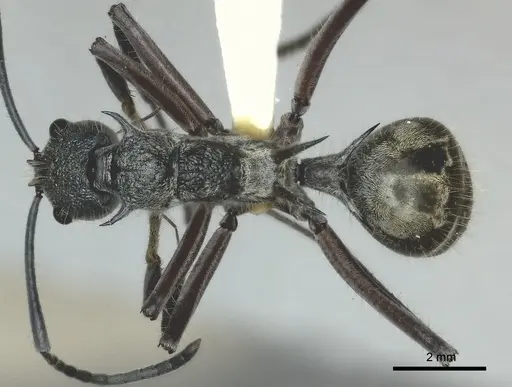
Literatur
Memuat peta distribusi...Memuat produk...