
Polyrhachis constricta
- Nama Ilmiah
- Polyrhachis constricta
- Subgenus
- Chariomyrma
- Tribe
- Camponotini
- Subfamili
- Formicinae
- Penulis
- Emery, 1897
- Distribusi
- Ditemukan di 1 negara
Pendahuluan
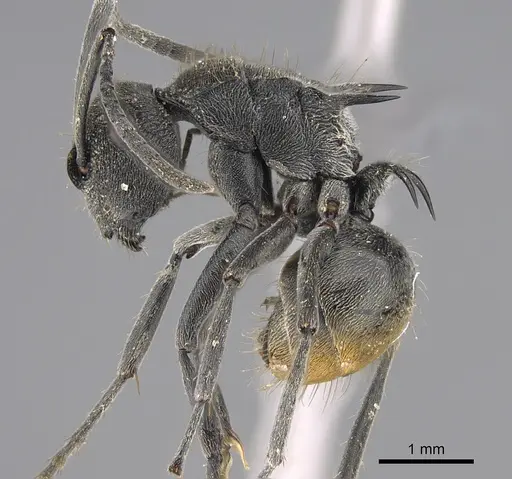
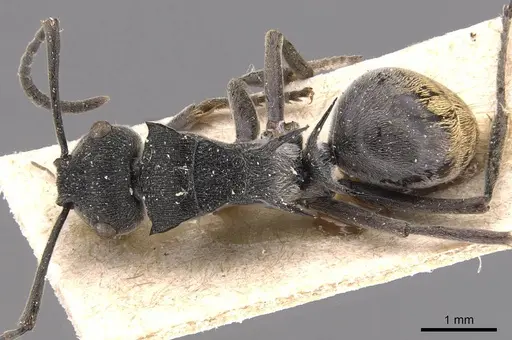
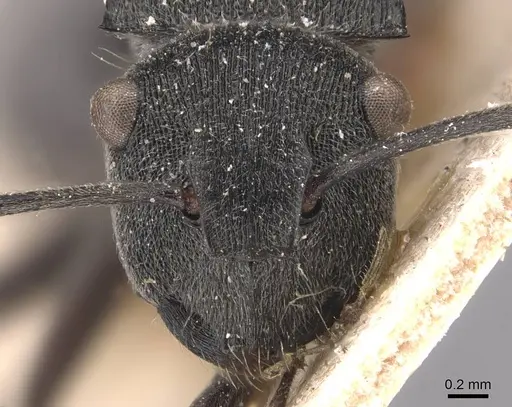
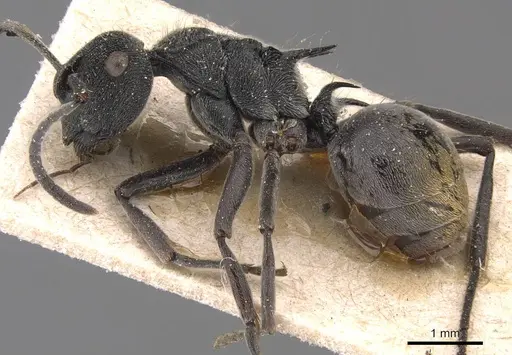
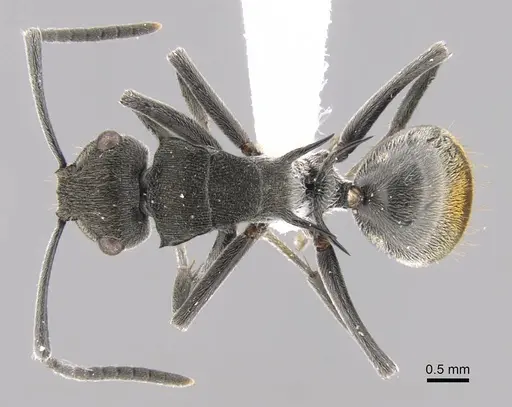
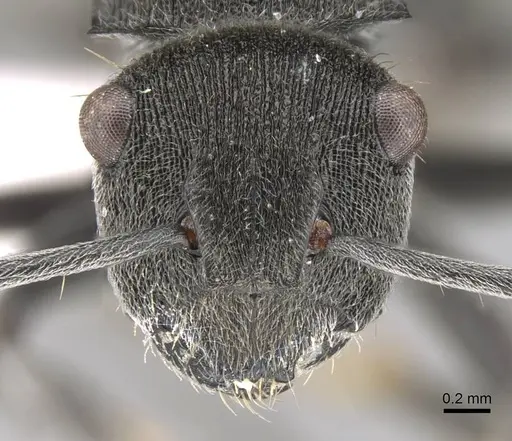
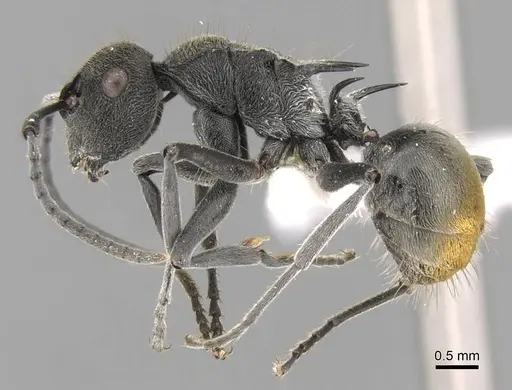
Polyrhachis constricta is a medium-sized ant species native to northern Australia, particularly the monsoonal tropics of Queensland and the Tiwi Islands . Workers are typically around 6-8 mm in total length, featuring characteristic spines on their thorax . This species nests underground in subterranean chambers, which is typical for the Chariomyrma subgenus . Unlike some related species that build elaborate nests in vegetation, P. constricta creates simple underground galleries. A notable adaptation is its ability to survive tidal flooding in mangrove habitats by using bell-shaped galleries that trap air pockets .
Quick Summary
- Difficulty: Medium
- Origin & Habitat: Northern Australia (Queensland wet tropics, Tiwi Islands) in monsoonal tropical environments [1]
- Colony Type: Colony structure is unconfirmed, but based on genus patterns, likely single-queen colonies
- Size & Growth:
- Queen: ~10-12 mm, inferred from Polyrhachis genus patterns
- Worker: ~6-8 mm, inferred from Polyrhachis genus patterns
- Colony: Up to several hundred workers, estimated based on related species
- Growth: Moderate
- Development: Estimated 6-8 weeks, inferred from Formicinae development patterns (Development time is temperature-dependent, specific data for P. constricta not available)
- Antkeeping:
- Temperature: Keep at 24-28°C, inferred from tropical habitat [1]
- Humidity: Keep substrate consistently moist but not waterlogged, based on adaptation to wet conditions [3]
- Diapause: No diapause required, inferred from tropical origin [1]
- Nesting: Subterranean nester, need soil depth for underground chambers [2]
- Behavior: Workers are generally calm and non-aggressive. They lack a sting but can spray formic acid from their acidopore, a defense mechanism common to Formicinae. Escape risk is moderate due to their size, use standard barrier methods.
- Common Issues: tropical species may struggle in cool rooms, keep warm, subterranean nesting requires depth, shallow nests cause stress, overwatering can drown colonies, ensure proper drainage, wild-caught colonies may carry parasites, quarantine new colonies
Nest Preferences and Housing
Polyrhachis constricta is a subterranean nester, meaning they dig and live in underground chambers [2]. In captivity, provide a nest with deep soil or substrate at least 5-10 cm to allow gallery creation. They do not need additional nest materials [2]. Pupal cocoons are present, so ensure the nest has space for brood development [2]. The species adapts to wet conditions by using bell-shaped galleries for air pockets during flooding [3], so maintain consistent moisture without waterlogging.
Feeding and Diet
Like most Formicinae, Polyrhachis constricta is omnivorous. Workers forage for honeydew and hunt small insects for protein. In captivity, offer sugar water or honey constantly, and protein sources like crickets or mealworms 2-3 times per week. Remove uneaten prey after 24-48 hours to prevent mold.
Temperature and Seasonal Care
Being from tropical northern Australia, this species needs warm temperatures. Keep the nest at 24-28°C for optimal health. A heating cable on one side creates a gradient for self-regulation. No hibernation is required, but activity may reduce during dry seasons.
Humidity and Water Requirements
Polyrhachis constricta comes from monsoonal tropics with high humidity. Keep the nest substrate consistently moist but not waterlogged [3]. The adaptation to tidal flooding shows they tolerate wet conditions, but avoid standing water to prevent drowning brood.
Behavior and Colony Dynamics
Workers are active foragers, generally calm and not aggressive. They lack a sting but can spray formic acid for defense. Colonies grow gradually, reaching several hundred workers. Queens are likely claustral, sealing themselves to raise the first brood alone, but this is unconfirmed for this species.
Frequently Asked Questions
How long does it take for Polyrhachis constricta to produce first workers?
Development time is not specifically documented for this species. Based on related Formicinae, first workers likely emerge around 6-8 weeks after egg laying at optimal temperatures.
Can I keep Polyrhachis constricta in a test tube setup?
Test tubes can work for founding colonies, but move to a deeper setup once the colony has 20-30 workers. Subterranean ants need soil depth for proper nesting [2].
What temperature do Polyrhachis constricta ants need?
Keep them at 24-28°C, as they are tropical ants [1]. A heating cable can create a gradient for self-regulation.
How big do Polyrhachis constricta colonies get?
Colonies likely reach up to several hundred workers, based on related Polyrhachis species.
What do Polyrhachis constricta ants eat?
They are omnivorous, feeding on sugar sources and insects. Offer honeydew or sugar water constantly, and protein like crickets 2-3 times per week.
Do Polyrhachis constricta need hibernation?
No, they do not require diapause due to their tropical origin [1]. Activity may reduce during dry seasons.
When should I move my Polyrhachis constricta colony to a formicarium?
Move them when the test tube setup is crowded (around 30+ workers) or when the water reservoir is low. Use a nest with deep, moist soil [2].
Are Polyrhachis constricta good for beginners?
They are rated Medium difficulty. They require warmth and proper humidity but are calm and manageable for intermediate keepers.
Why is my Polyrhachis constricta colony dying?
Common causes include temperatures below 22°C, improper humidity (too dry or wet), or disturbance during founding. Check heating, substrate moisture, and avoid vibrations.
Report an Issue
The current care sheet is based fully on literature. See inconsistencies, or something that's incorrect? Please , it will be resolved after review from an admin. Contributing to the blogs tab also helps providing information, to make us be able to further improve the caresheets. Thank you for your support!
References

Lembar perawatan ini dilisensikan di bawah CC BY-SA 4.0 .
Blog Komunitas
Literatur
Memuat peta distribusi...Memuat produk...