
Polyrhachis busiris
- Nama Ilmiah
- Polyrhachis busiris
- Subgenus
- Cyrtomyrma
- Tribe
- Camponotini
- Subfamili
- Formicinae
- Penulis
- Smith, 1860
- Distribusi
- Ditemukan di 0 negara
Pendahuluan
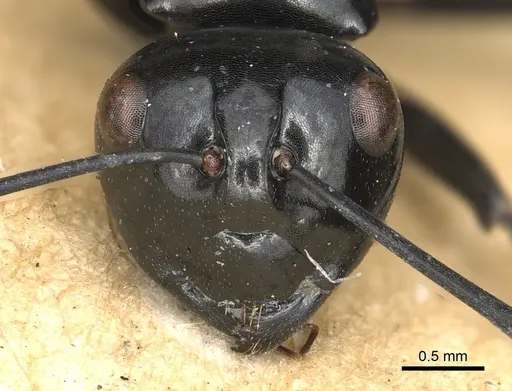
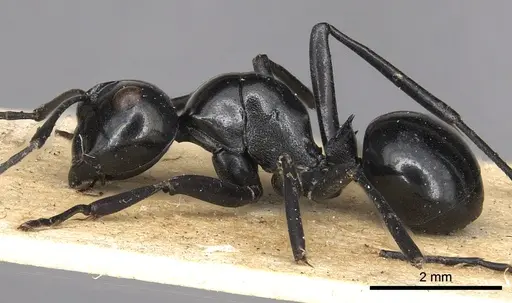
Polyrhachis busiris is a medium-sized ant native to New Guinea and nearby islands. Workers are jet-black, smooth, and measure about 6.4-7.1 mm total length. They have angular or toothed shoulders (pronotal humeri) and a pair of small tubercles on the propodeum. The most striking feature is the petiole, which bears four equal, sharp spines pointing upward . Originally described in 1860,the species was later mistakenly lumped with Polyrhachis rastellata until a 2009 revision reinstated its validity . Their nesting biology is unusual: they build carton nests on tree trunks in lowland swamp forest . Almost nothing else is known about their natural history or captive care. This makes Polyrhachis busiris a true mystery species - a blank canvas for experienced keepers willing to experiment and document observations.
Quick Summary
- Difficulty: Expert
- Origin & Habitat: Native to New Guinea and surrounding islands (Dory/Manokwari in Irian Jaya, Batjan Island, Indonesia). Found in lowland swamp forest at elevations around 20 meters. They build carton nests on tree trunks [2][3].
- Colony Type: Unknown, colony structure has not been documented. Most Polyrhachis species are monogyne (single queen), but this is not confirmed for Polyrhachis busiris.
- Size & Growth:
- Queen: Unconfirmed, no queens have been documented in scientific literature [4]
- Worker: 6.40-7.06 mm total length [2]
- Colony: Unknown, no colony size data exists
- Growth: Unknown
- Development: Unconfirmed, no development data exists. Based on typical Polyrhachis patterns, expect 6-10 weeks at warm temperatures, but this is a rough estimate. (Sexuals (queens, males) and immature stages (eggs, larvae, pupae) have never been documented [4].)
- Antkeeping:
- Temperature: Based on their New Guinea lowland habitat [2], they likely prefer warm conditions around 24-28°C. Provide a gentle temperature gradient so ants can choose their preferred zone.
- Humidity: As a lowland swamp forest species [2], they need moderate to high humidity, aim for 60-80% relative humidity. Keep the nest substrate moist but not waterlogged.
- Diapause: Unknown, New Guinea species may not enter true diapause, but may reduce activity during cooler periods. No specific data exists.
- Nesting: In the wild they build carton nests on tree trunks [2]. In captivity, a naturalistic setup with vertical surfaces (cork bark, branches) works best. Provide materials they can build with, they may construct carton-like material from plant fibers and their own secretions. Avoid deep soil nests, they prefer exposed vertical surfaces.
- Behavior: Documented behavior is very limited. Based on their arboreal nesting, they are likely active foragers on tree trunks. Like all Formicinae, they lack a functional sting and instead spray formic acid from the abdomen, a mild chemical defense. Workers are about 7 mm, so escape prevention is important: use fine mesh or ensure gaps are under 2 mm. No specific temperament data exists, but Polyrhachis species are generally not aggressive to keepers.
- Common Issues: complete lack of biological data means no established care protocols exist, you are pioneering husbandry for this species, no confirmed diet preferences, you must experiment with protein and sugar sources, unknown if they accept artificial nests or require fully naturalistic setups, no information on founding behavior, queen biology unconfirmed, making colony starting speculative, risk of acquiring wild-caught colonies with unknown health, parasites, or stress
Nest Preferences and Housing
Polyrhachis busiris is an arboreal species that builds carton nests on tree trunks in lowland swamp forest [2]. This is unusual among common antkeeping genera, most captive ants nest in soil or wood, but these ants construct their own nests from a papery material made of plant fibers and secretions. In captivity, replicate this arboreal lifestyle. Use a vertical setup with cork bark, branches, or hollow logs that provide exposed surfaces. A Y-tong (AAC) nest oriented vertically may also work if you provide building materials such as leaf litter, fine bark, or cotton fibers. Avoid deep soil nests, they prefer to build on surfaces. The key is vertical space and nest-building materials.
Feeding and Diet
The diet of Polyrhachis busiris has never been documented. Based on the genus Polyrhachis, they are likely omnivorous: they probably forage for honeydew from sap-sucking insects, flower nectar, and small arthropods for protein. In captivity, offer a varied diet and observe what they accept. Start with sugar water or honey as a constant energy source. For protein, offer small insects like fruit flies, small crickets, or mealworms. Some Polyrhachis species also accept seeds or soft plant matter. Remove uneaten protein after 24-48 hours to prevent mold. Keep a food journal to track preferences.
Temperature and Humidity Requirements
As a species from lowland New Guinea near the equator, Polyrhachis busiris likely needs consistently warm, humid conditions. Lowland forests there average 24-28°C with high humidity year-round [2]. In captivity, target 24-28°C with a gentle gradient so ants can choose their preferred temperature. For humidity, aim for 60-80% relative humidity. Because they come from swamp forest, they appreciate moisture but avoid stagnant, waterlogged conditions. Mist the outworld occasionally and provide a water source. Monitor for mold, which thrives in warm, humid environments.
Understanding This Species' Unique Challenges
Polyrhachis busiris presents a true challenge: almost nothing is known about its biology. This isn't a species with established care protocols, you are pioneering captive husbandry. Every observation you make adds to collective knowledge. Start with the basics (warmth, humidity, varied food) and adjust based on colony behavior. Watch for signs of stress: workers avoiding certain areas, refusing food, or clustering abnormally. Because founding behavior is unknown, if you obtain a queen, research Polyrhachis genus patterns (most are claustral) but be prepared for surprises. This species is best for experienced keepers who enjoy experimentation and documenting findings. Consider joining antkeeping communities to share results. [4]
Frequently Asked Questions
How do I keep Polyrhachis busiris ants?
Since almost nothing is known about this species' biology, there is no established care protocol. Based on their arboreal nesting in carton nests on tree trunks in lowland swamp forest [2], provide a vertical naturalistic setup with building materials. Keep them warm (24-28°C) and humid (60-80%). Experiment with protein and sugar foods to determine preferences.
What do Polyrhachis busiris ants eat?
Their specific diet is unconfirmed. Based on typical Polyrhachis behavior, offer sugar water or honey, small insects (fruit flies, small crickets, mealworms), and possibly nectar sources. Experiment to see what they accept.
How big do Polyrhachis busiris colonies get?
Colony size is completely unknown, no scientific data exists on maximum colony size for this species [4].
Are Polyrhachis busiris good for beginners?
No. This species is not recommended for beginners due to the complete lack of biological data. There are no established care protocols, and keeping them successfully requires experience with antkeeping fundamentals and a willingness to experiment [4]. Choose a species with documented care requirements instead.
How long does it take for Polyrhachis busiris to develop from egg to worker?
This is completely unconfirmed, no development data exists. Based on typical Polyrhachis patterns, expect approximately 6-10 weeks at optimal warm temperatures, but this is a rough estimate.
What type of nest do Polyrhachis busiris need?
In the wild they build carton nests on tree trunks [2]. In captivity, use a vertical setup with cork bark, branches, or a Y-tong nest oriented vertically. Provide building materials such as leaf litter, bark flakes, or cotton fibers so they can construct their own nest chambers.
Where is Polyrhachis busiris found?
This species is native to New Guinea and nearby islands (Dory/Manokwari in Irian Jaya and Batjan Island, Indonesia). They inhabit lowland swamp forest at elevations around 20 meters [2][3].
Do Polyrhachis busiris need hibernation?
Unknown, as a New Guinea species near the equator, they likely do not experience true winter dormancy. They may reduce activity during cooler periods, but no specific seasonal behavior has been documented.
Can I keep multiple Polyrhachis busiris queens together?
Unknown, colony structure (monogyne vs polygyne) has never been documented for this species. Most Polyrhachis are monogyne, but confirmation is lacking. Without data, keep queens separately to avoid aggression.
Report an Issue
The current care sheet is based fully on literature. See inconsistencies, or something that's incorrect? Please , it will be resolved after review from an admin. Contributing to the blogs tab also helps providing information, to make us be able to further improve the caresheets. Thank you for your support!
References

Lembar perawatan ini dilisensikan di bawah CC BY-SA 4.0 .
Blog Komunitas
CASENT0901940
Lihat di AntWeb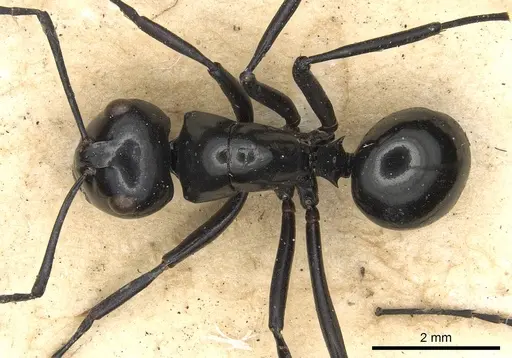
Literatur
Memuat peta distribusi...Memuat produk...