
Polyrhachis archeri
- Nama Ilmiah
- Polyrhachis archeri
- Subgenus
- Hagiomyrma
- Tribe
- Camponotini
- Subfamili
- Formicinae
- Penulis
- Kohout, 2013
- Distribusi
- Ditemukan di 1 negara
Pendahuluan
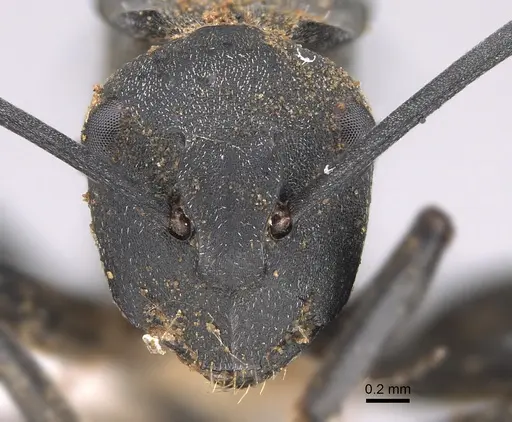
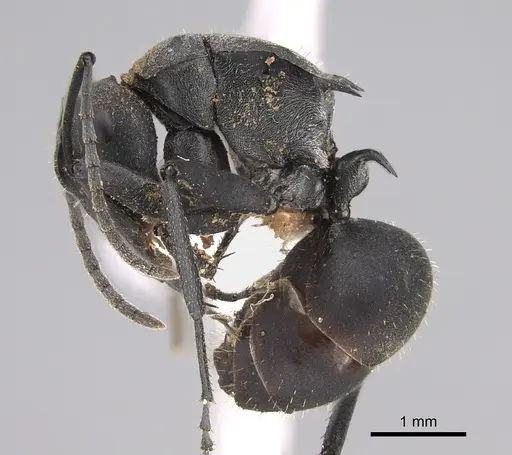
Polyrhachis archeri is a medium-sized ant native to northern Australia, with workers measuring 6.55-6.96 mm total length. They have a black body with reddish-brown mandibles, legs, and antennae, and feature prominent spines on the thorax and petiole characteristic of Polyrhachis ants. This species is ground-nesting, establishing colonies under rocks in the Gulf Country region of Queensland and the Northern Territory . Polyrhachis archeri was described in 2013 and is closely related to Polyrhachis anderseni and Polyrhachis hoffmanni, but lacks the long body hairs that distinguish P. hoffmanni . Captive breeding information is limited, as most care guidelines are based on its natural habitat and genus-level patterns .
Quick Summary
- Difficulty: Medium
- Origin & Habitat: Northern Australia, specifically the Gulf Country in north-western Queensland and the Northern Territory, including Nitmiluk National Park and Standley Chasm. Natural habitat consists of ground-nesting sites under rocks in tropical savanna areas [1][2].
- Colony Type: Colony structure is unconfirmed. No specific data on queen number for Polyrhachis archeri [1].
- Size & Growth:
- Antkeeping:
- Temperature: Keep warm, roughly 24-28°C, based on tropical distribution [1]
- Humidity: Keep nest substrate moist but not waterlogged, based on ground-nesting behavior under rocks [1]
- Diapause: No diapause required, as species is tropical [1]
- Nesting: Ground-nesting under rocks, in captivity, use soil with a flat stone or suitable nest [1][2]
- Behavior: Workers are active foragers, generally docile. Escape risk is moderate due to their size, and standard barrier methods work well.
- Common Issues: limited species-specific information makes precise care challenging, ground-nesting behavior requires careful moisture management to prevent mold, tropical species may struggle in cooler climates without supplemental warmth, queens may be difficult to obtain as this is a rarely kept species
Nest Preferences and Housing
Polyrhachis archeri is a ground-nesting species that naturally establishes colonies under rocks [1]. In captivity, replicate this with a soil-filled container and a flat stone on top to simulate natural sites [2]. Alternatively, use Y-tong or plaster nests with narrow chambers scaled to their size. Maintain moderate humidity with a moisture reservoir, as they prefer tight, enclosed spaces [1][2].
Feeding and Diet
Based on typical Polyrhachis behavior, these ants are omnivorous. Offer sugar water or honey as a constant energy source, and protein prey such as fruit flies or crickets 2-3 times per week. Remove uneaten protein after 24 hours. Fresh water should always be available.
Temperature and Seasonal Care
Keep temperatures warm at 24-28°C, as this species is from tropical Australia [1]. Use a heating cable on top of the nest to create a gradient. No diapause is needed, but slight cooling during winter months may slow activity [1].
Behavior and Colony Dynamics
Workers are active foragers, generally docile, and use spines for defense against predators. Colonies are likely queen-right with a single reproductive female, but this is unconfirmed for P. archeri [1].
Acquiring and Establishing a Colony
Polyrhachis archeri is rarely kept, and queens may be hard to obtain. If you have a founding queen, house her in a test tube setup until workers emerge. Handle colonies gently to avoid disturbance.
Frequently Asked Questions
How long does it take for Polyrhachis archeri queens to raise their first workers?
No data on development timeline for this species. Based on genus patterns, it may take several weeks, but patience is key during founding.
What do Polyrhachis archeri ants eat?
They are omnivorous. Offer sugar water or honey, and protein prey like fruit flies or crickets 2-3 times per week.
What temperature do Polyrhachis archeri ants need?
Keep them warm at 24-28°C, based on their tropical distribution [1].
Can I keep multiple Polyrhachis archeri queens together?
Colony structure is unconfirmed. Most Polyrhachis species are monogyne, so combining queens is not recommended without evidence [1].
What type of nest is best for Polyrhachis archeri?
A naturalistic setup with soil and a flat stone works well, replicating ground-nesting under rocks [1][2].
Are Polyrhachis archeri ants good for beginners?
This species is rated Medium difficulty due to limited species-specific information. Experience with similar ants is helpful.
Do Polyrhachis archeri ants need hibernation?
No diapause is required, as the species is tropical [1].
How big do Polyrhachis archeri colonies get?
Maximum colony size is unknown for this species [1].
Why is my Polyrhachis archeri colony not growing?
Common causes include temperatures too low, humidity issues, or insufficient protein. Check conditions against their warm, humid preferences.
Report an Issue
The current care sheet is based fully on literature. See inconsistencies, or something that's incorrect? Please , it will be resolved after review from an admin. Contributing to the blogs tab also helps providing information, to make us be able to further improve the caresheets. Thank you for your support!
References

Lembar perawatan ini dilisensikan di bawah CC BY-SA 4.0 .
Blog Komunitas
CASENT0887785
Lihat di AntWeb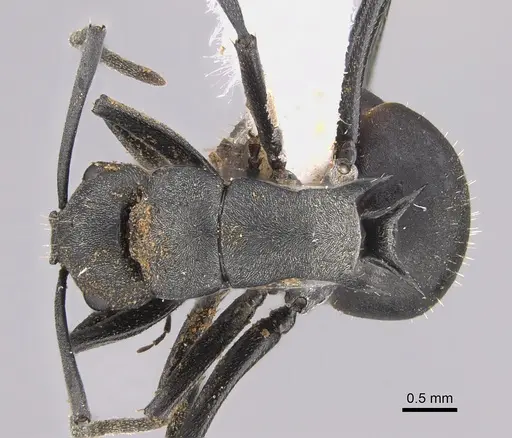
Literatur
Memuat peta distribusi...Memuat produk...