
Pogonomyrmex mapuche
- Nama Ilmiah
- Pogonomyrmex mapuche
- Tribe
- Pogonomyrmecini
- Subfamili
- Myrmicinae
- Penulis
- Johnson, 2021
- Distribusi
- Ditemukan di 0 negara
Pendahuluan
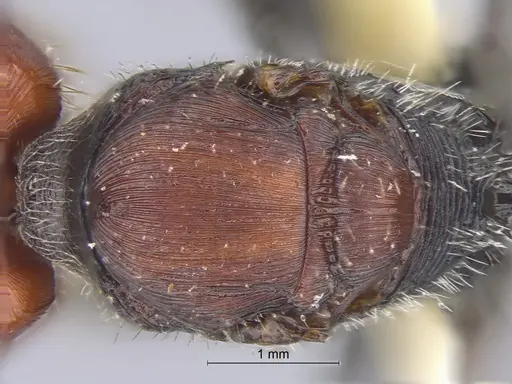
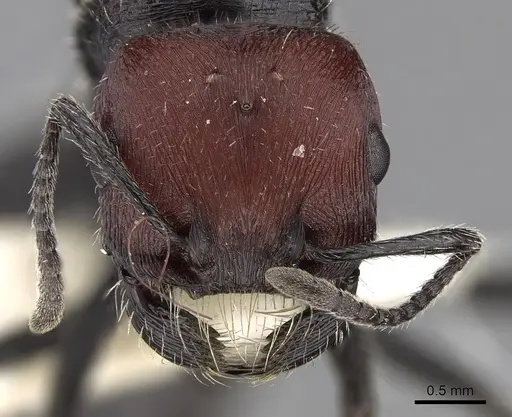
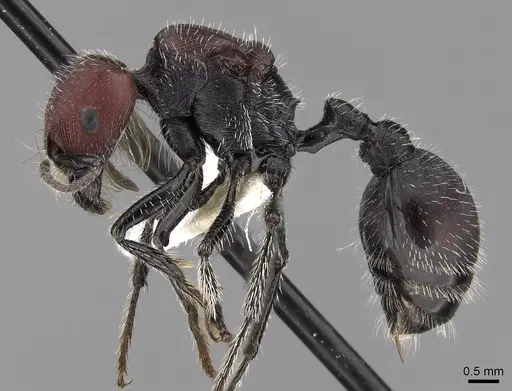
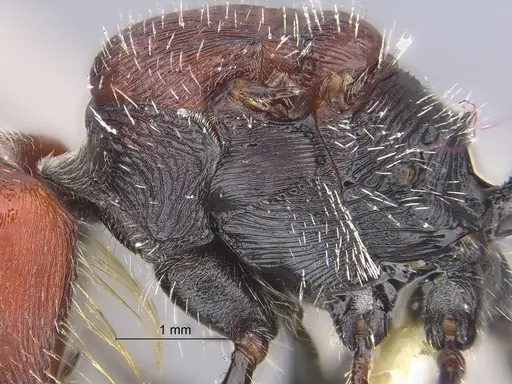
Pogonomyrmex mapuche is a seed-harvester ant native to the Patagonian steppe in Argentina, found at elevations around 850 meters . Workers have a dark red to reddish-black head and mesosoma, with a blackish gaster . They possess seven-toothed mandibles and striae extending over the anterior half of the first gastral segment . This species was formally described in 2021 and is part of the Pogonomyrmex genus, which is known for defensive stings .
Quick Summary
- Difficulty: Medium
- Origin & Habitat: Patagonian steppe ecoregion in Argentina, specifically at 850m elevation in Neuquén province [1].
- Colony Type: Likely monogyne (single-queen) colonies based on typical Pogonomyrmex patterns [1].
- Size & Growth:
- Queen: Size data unavailable
- Worker: Size data unavailable
- Colony: Unknown for this species
- Growth: Moderate, inferred from genus patterns
- Development: Estimated 6-10 weeks based on typical Pogonomyrmex development at warm room temperature. (Development time may vary with temperature.)
- Antkeeping:
- Temperature: Keep at 20-26°C during active season. They prefer cooler conditions than tropical ants [1].
- Humidity: Low to moderate. Keep nest relatively dry with occasional misting, matching their dry native habitat [1].
- Diapause: Yes, requires winter dormancy at 10-15°C for 3-4 months [1].
- Nesting: Use Y-tong or plaster nests with dry to moderately moist conditions [1].
- Behavior: Workers are defensive and will sting when threatened [2]. They are diurnal, with activity during daylight hours [1]. Escape prevention is important due to their medium size.
- Common Issues: colonies may fail if kept too warm, they need cooler temperatures, overwatering can be fatal, prefer drier conditions, hibernation is essential, skipping it can weaken colonies, their sting is painful and they are defensive, slow founding phase requires patience
Nest Preferences and Housing
Pogonomyrmex mapuche does well in standard antkeeping setups that provide dry to moderately humid conditions [1]. For founding colonies, a simple test tube setup works well, fill it with water, plug with cotton, and place the queen in the dark [1]. Once workers arrive, you can keep them in the test tube or transfer to a small formicarium. Y-tong (AAC) nests or plaster nests suit them well because they allow you to control humidity levels [1]. These ants prefer compact chambers rather than large open spaces. Avoid naturalistic setups with excessive moisture, the Patagonian steppe is a dry environment [1]. Always provide a secure water tube for drinking, but don't overdo the humidity.
Feeding and Diet
As seed-harvester ants, their primary food source is seeds [2]. In captivity, offer a variety of small seeds, millet, chia, flax, and similar small seeds work well [2]. They will also accept protein sources like small insects (fruit flies, small crickets, mealworms) [2]. Sugar water or honey is typically accepted for energy [2]. Offer seeds constantly as a base diet, with protein 1-2 times per week [2]. Remove any uneaten seeds or insects after 24-48 hours to prevent mold [2].
Temperature and Seasonal Care
Being from the Patagonian steppe of Argentina, this species prefers cooler temperatures than many ant species [1]. Keep the nest area at 20-26°C during the active season, with room temperature (around 20-22°C) being ideal [1]. They can tolerate brief periods cooler or warmer, but avoid sustained high temperatures above 30°C [1]. During winter, they require a true hibernation period, reduce temperatures to 10-15°C for 3-4 months [1]. This winter dormancy is essential for colony health and mimics their natural seasonal cycle [1].
Behavior and Defense
Pogonomyrmex mapuche workers are active foragers that search for seeds and small insects [1]. They are diurnal, with activity patterns matching daylight hours in their natural habitat [1]. These ants are defensive and will aggressively defend their nest against threats [2]. The genus is well-known for its painful sting, which can cause significant discomfort in humans [2]. When disturbed, workers will emerge and attempt to sting the intruder [2]. Handle with care and use appropriate escape prevention, while not tiny, they can still squeeze through small gaps [1].
Colony Founding
Colony founding behavior is unconfirmed [1]. Dealate (wingless) queens have been observed walking on the ground during mid-afternoon in January, which suggests they may search for suitable founding sites after mating [1]. If claustral, the queen would seal herself in a small chamber and remain there while laying eggs and raising the first brood. She would rely on her stored fat reserves to survive the founding period, not leaving to forage. Do not disturb the queen during this critical period, excessive vibration or light can cause her to abandon or consume the brood [1].
Frequently Asked Questions
How long does it take for Pogonomyrmex mapuche to raise first workers?
From egg to first worker typically takes 6-10 weeks at warm room temperature (around 24-26°C). This is an estimate based on related Pogonomyrmex species, as no specific development data exists for this newly described species. Cooler temperatures will slow development significantly.
What do Pogonomyrmex mapuche eat?
They are seed-harvesters [2]. Offer small seeds like millet, chia, or flax as a staple [2]. They also accept protein sources like small insects and may take sugar water or honey [2]. Keep seeds available constantly and offer protein 1-2 times per week [2].
Do Pogonomyrmex mapuche need hibernation?
Yes, they require a winter dormancy period [1]. Being from the Patagonian steppe with cold winters, they need 3-4 months at 10-15°C during winter [1]. Skipping hibernation can weaken or kill the colony.
Can I keep multiple Pogonomyrmex mapuche queens together?
No, this species is likely monogyne (single-queen) based on typical Pogonomyrmex patterns [1]. Combining unrelated queens is not recommended and will likely result in fighting.
What temperature is best for Pogonomyrmex mapuche?
Keep them at 20-26°C during the active season [1]. Room temperature (20-22°C) is ideal [1]. They prefer cooler conditions than tropical ants and should be kept warmer than room temperature only during the founding stage to speed development.
Are Pogonomyrmex mapuche good for beginners?
They are rated as medium difficulty. While not the hardest species, they have specific requirements: cooler temperatures, proper hibernation, and dry conditions [1]. They are also defensive with painful stings [2]. They may not be the best first ant but are manageable for those with some experience.
How big do Pogonomyrmex mapuche colonies get?
Colony size is not documented for this specific species [1]. Typical Pogonomyrmex colonies can reach several thousand workers, but growth is moderate, expect several months to a year before you see significant numbers.
When should I move Pogonomyrmex mapuche to a formicarium?
Keep them in a test tube for founding [1]. Once the colony reaches a reasonable size and the test tube is showing signs of stress (condensation buildup, mold), you can move them to a small formicarium or Y-tong nest [1].
Why is my Pogonomyrmex mapuche colony dying?
Common causes include: too much heat (keep below 30°C) [1], excessive humidity (they prefer dry conditions) [1], skipping hibernation [1], or disturbing the queen during founding [1]. Check that conditions match their Patagonian steppe origins, cooler and drier is better than warm and humid.
Report an Issue
The current care sheet is based fully on literature. See inconsistencies, or something that's incorrect? Please , it will be resolved after review from an admin. Contributing to the blogs tab also helps providing information, to make us be able to further improve the caresheets. Thank you for your support!
References

Lembar perawatan ini dilisensikan di bawah CC BY-SA 4.0 .
Blog Komunitas
CASENT0280985
Lihat di AntWeb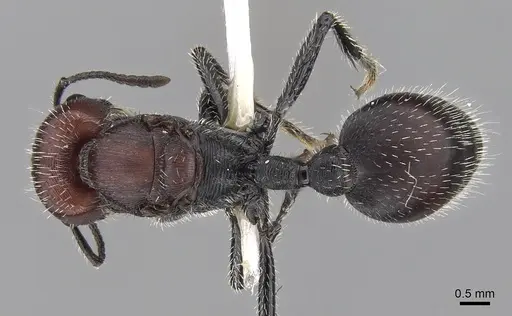
CASENT0280988
Lihat di AntWeb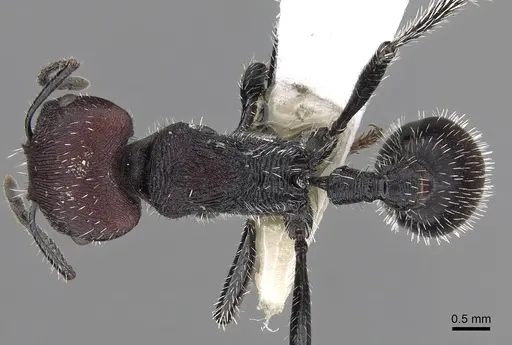
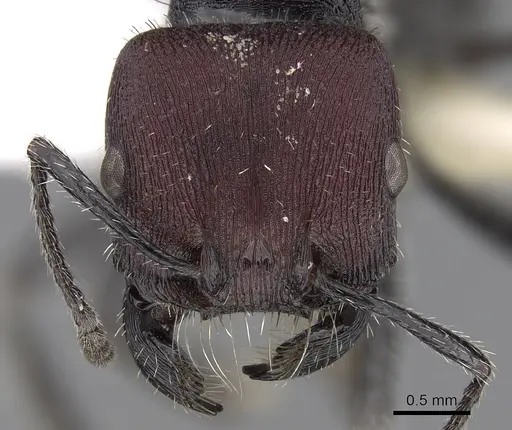
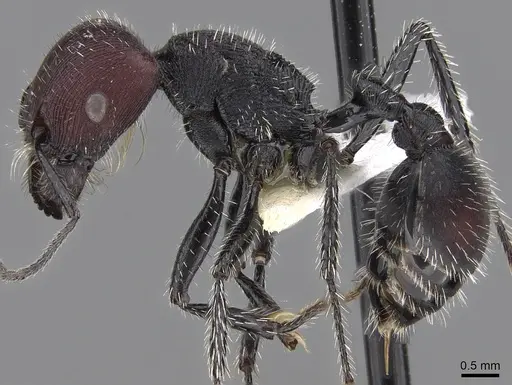
Literatur
Memuat peta distribusi...Memuat produk...