
Podomyrma laevissima
- Nama Ilmiah
- Podomyrma laevissima
- Tribe
- Crematogastrini
- Subfamili
- Myrmicinae
- Penulis
- Smith, 1863
- Distribusi
- Ditemukan di 0 negara
Pendahuluan
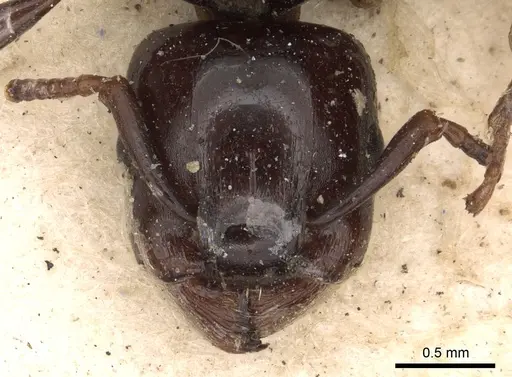
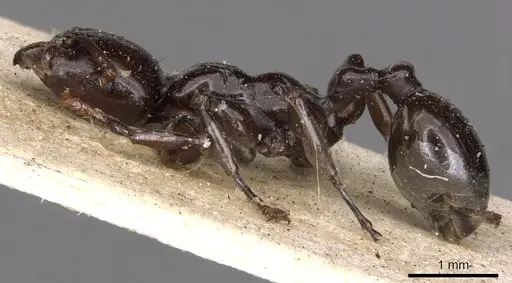
Podomyrma laevissima is a medium-sized ant species native to the Australasian region, found throughout Australia, New Guinea, and eastern Indonesia . Workers measure approximately 7.5mm in length with a smooth, largely unmarked thorax and abdomen, and a head showing double punctation with fine punctae among larger ones . The pronotum has two robust teeth, while the metanotum is unarmed. This species inhabits tropical and subtropical environments across its range. A notable feature is its defense mechanism: as a member of the Crematogastrini tribe, it uses a modified stinger to smear venom onto enemies rather than stinging directly, typical of Myrmicinae ants.
Quick Summary
- Difficulty: Unknown, limited data available
- Origin & Habitat: Australasian region: Australia, New Guinea, and eastern Indonesia (Misool Island). Found in tropical and subtropical environments [1].
- Colony Type: Colony structure is unconfirmed. No published data exists on queen number or colony size in wild populations.
- Size & Growth:
- Queen: Unknown, not directly measured. Based on genus Podomyrma patterns, likely 8-10mm.
- Worker: 7.5mm [2]
- Colony: Unknown, no colony size data available
- Growth: Unknown, no development data available
- Development: Unknown, no direct measurements. Based on typical Myrmicinae patterns in tropical environments, estimate 6-10 weeks at optimal temperature. (Development may vary with temperature, monitor colony growth.)
- Antkeeping:
- Temperature: Aim for 22-28°C with a gradient, based on tropical habitat [1]. Start around 24-26°C and observe colony activity.
- Humidity: Provide a moist nest chamber with some drier areas for choice, based on typical tropical conditions [1].
- Diapause: Likely no true diapause required, as species is from tropical regions [1].
- Nesting: Based on genus and habitat, likely nests in soil, under stones, or in rotting wood. A Y-tong or plaster nest with moderate moisture works as a starting point [1].
- Behavior: Behavior is poorly documented. Based on genus placement in Myrmicinae, they are likely generalist foragers. Primary defense is smearing venom with a modified stinger, typical of Crematogastrini tribe. Escape risk is moderate given their 7.5mm worker size, standard barriers should be adequate.
- Common Issues: incorrect diet may harm colony, start with standard ant foods and observe acceptance, escape risk due to unknown behavior, ensure all connections are secure for 7.5mm workers, diapause requirements unclear, monitor activity if kept in temperate climates, wild-caught colonies may have parasites, quarantine and monitor new colonies
Appearance and Identification
Podomyrma laevissima workers reach approximately 7.5mm in length, making them a medium-sized ant species. The head displays distinctive double punctation, fine numerous punctae interspersed with larger punctae. The thorax is smooth with few large punctae, and the pronotum is armed with two robust teeth while the metanotum is completely unarmed. The abdomen is smooth with very brief wrinkles at the base. This species can be distinguished from related Podomyrma by the combination of its smooth thorax, armed pronotum, and specific punctation pattern on the head [2].
Distribution and Habitat
Podomyrma laevissima has a broad distribution across the Australasian region, including Australia, New Guinea, and eastern Indonesia. The type locality is Misool Island in Indonesia [1]. The species has been documented in northern Australia, particularly around the Cape York Peninsula region based on historical collection records. In New Guinea, specimens have been collected from various locations including the Hindenburg Wall region. This species inhabits tropical and subtropical environments, suggesting it prefers warm, moderately humid conditions typical of these regions.
Housing and Nesting
Since specific nesting biology is unconfirmed for this species, housing recommendations are based on inferred preferences from the genus and habitat. A Y-tong (AAC) nest or plaster nest with moderate moisture works well as a starting point. Provide a nest chamber that stays consistently moist but not waterlogged, with some drier areas available so ants can self-regulate. The outworld should allow for typical foraging behavior. Given the 7.5mm worker size, standard escape prevention measures should be adequate, but ensure all connections are secure. A small water test tube should be provided as a humidity source [1].
Feeding and Diet
No specific dietary studies exist for Podomyrma laevissima. As a Myrmicinae member in the Crematogastrini tribe, they likely have generalist feeding habits similar to related ants. Start with standard ant colony foods: sugar water or honey as an energy source, and protein sources such as small insects, fruit flies, pinhead crickets, or mealworms. Observe your colony's acceptance of different foods and adjust accordingly. Fresh water should always be available. Since this is a medium-sized ant, they can handle prey items comparable to their own body size.
Temperature and Seasonal Care
Based on their tropical and subtropical distribution across Australia and New Guinea, Podomyrma laevissima likely prefers warmer conditions. Aim for a temperature range of 22-28°C, with a gradient allowing the colony to choose its preferred zone. A starting point of 24-26°C is recommended. Observe colony behavior, if workers cluster consistently in warmer areas, increase slightly, if they avoid heated areas, reduce temperature. Unlike temperate species, they likely do not require a true hibernation period, but may experience reduced activity during cooler winter months if your room temperature drops significantly. [1]
Colony Development
No published data exists on the development timeline of Podomyrma laevissima. Based on typical Myrmicinae patterns in tropical environments, estimate 6-10 weeks from egg to first worker at optimal temperature (around 24-26°C). The first workers (nanitics) will likely be smaller than mature workers. Colony growth rate is unknown but is expected to be moderate. Given the lack of specific data, monitor your colony's development and adjust care conditions based on observed growth patterns. Success with this species will require careful observation and adaptation to their specific needs.
Frequently Asked Questions
How long does it take for Podomyrma laevissima to produce first workers?
The egg-to-worker timeline is unconfirmed for this species. Based on typical Myrmicinae development in tropical conditions, expect approximately 6-10 weeks at optimal temperature (24-26°C).
What do Podomyrma laevissima ants eat?
No specific dietary data exists. Start with sugar water or honey for energy and small protein sources like fruit flies, pinhead crickets, or mealworms. Adjust based on what your colony accepts.
What temperature do Podomyrma laevissima ants need?
Based on their tropical/subtropical habitat, aim for 22-28°C. Start around 24-26°C and adjust based on colony behavior [1].
Do Podomyrma laevissima ants need hibernation?
Likely no true hibernation required. Being from tropical Australia and New Guinea, they probably do not enter diapause [1].
How big do Podomyrma laevissima colonies get?
Colony size is unknown, no published data exists on maximum colony size for this species.
Is Podomyrma laevissima a good species for beginners?
Difficulty level cannot be determined due to limited data. This species is not commonly kept in captivity, and much of the care information must be inferred rather than based on documented husbandry success.
Do Podomyrma laevissima ants sting?
Stinging behavior has not been documented for this species. As Myrmicinae ants, they have the ability to sting but may not do so aggressively. Primary defense is smearing venom with a modified stinger, typical of Crematogastrini tribe.
What type of nest should I use for Podomyrma laevissima?
No specific nesting data exists. Based on genus and habitat, a Y-tong or plaster nest with moderate moisture is recommended as a starting point [1].
Report an Issue
The current care sheet is based fully on literature. See inconsistencies, or something that's incorrect? Please , it will be resolved after review from an admin. Contributing to the blogs tab also helps providing information, to make us be able to further improve the caresheets. Thank you for your support!
References

Lembar perawatan ini dilisensikan di bawah CC BY-SA 4.0 .
Blog Komunitas
CASENT0901395
Lihat di AntWeb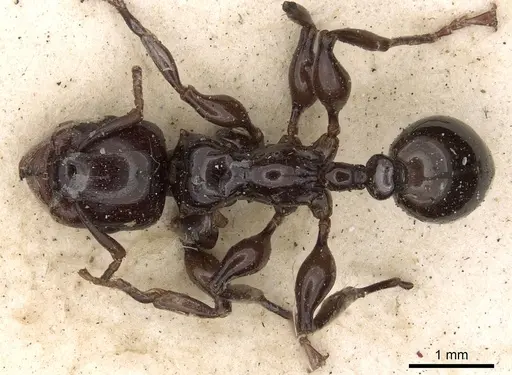
Literatur
Memuat peta distribusi...Memuat produk...