
Pheidole strobeli
- Nama Ilmiah
- Pheidole strobeli
- Tribe
- Attini
- Subfamili
- Myrmicinae
- Penulis
- Emery, 1906
- Distribusi
- Ditemukan di 1 negara
Pendahuluan
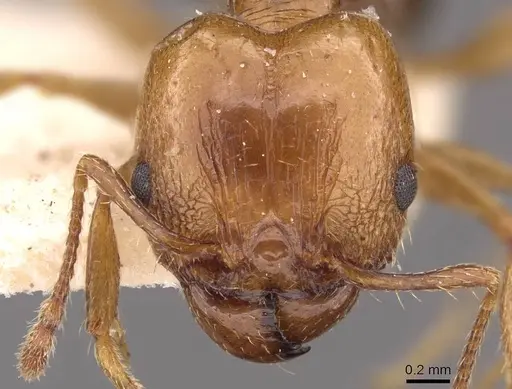
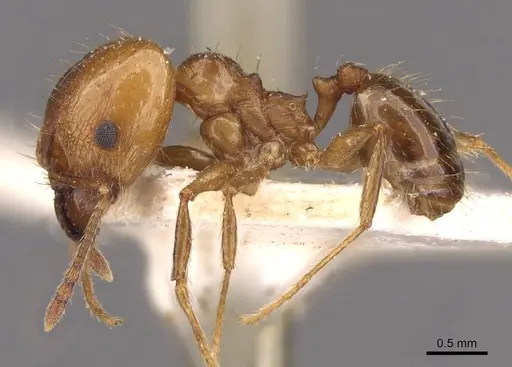
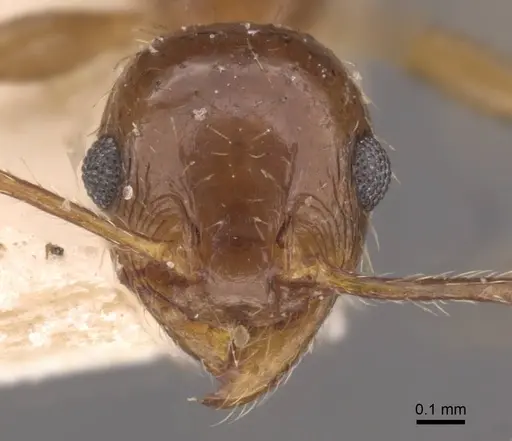
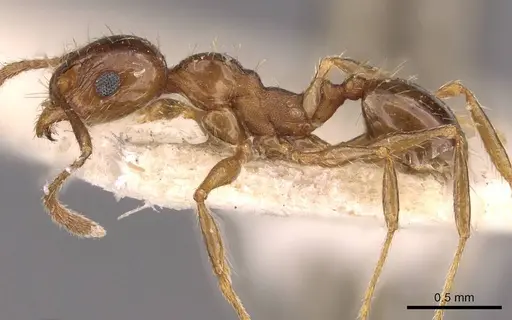
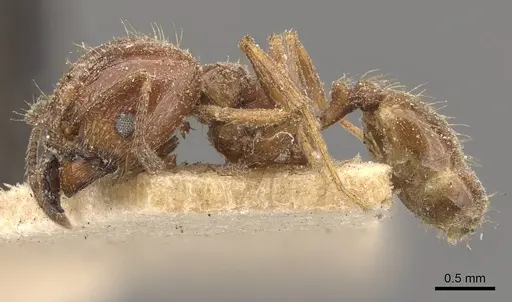
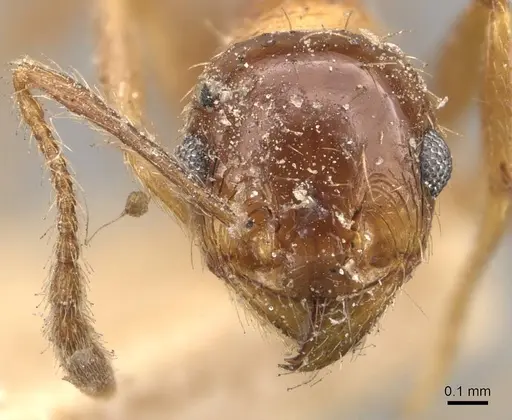
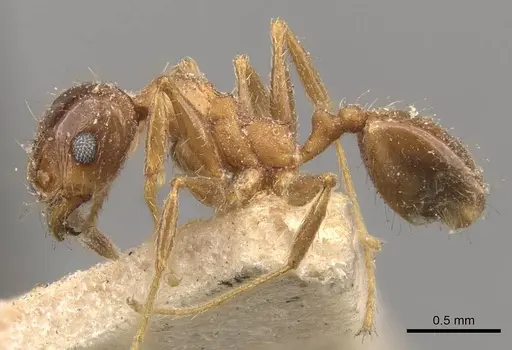
Pheidole strobeli is a small Neotropical ant species native to Argentina, Brazil, and Uruguay . Majors (soldiers) are 3.3-3.5 mm long, while workers are around 2 mm long . They have a light yellowish-brown coloration with distinctive head pilosity - majors have appressed hairs on the head sides but standing hairs on the vertexal margin, which separates them from related species P. nitidula and P. dione . This species was recently revived from synonymy with P. nitidula in 2020 . It is a soil-nesting ant that builds subterranean colonies and uses mass recruitment for foraging .
Quick Summary
- Difficulty: Easy
- Origin & Habitat: Native to Argentina, Brazil, and Uruguay, found in soil habitats where they build subterranean nests [1][3].
- Colony Type: Likely single-queen (monogyne) colonies based on Pheidole genus patterns, but unconfirmed from specific literature [3].
- Size & Growth:
- Queen: Size data unavailable, no total length measurements provided in literature.
- Worker: ~2 mm (minors), ~3.3-3.5 mm (majors) [2]
- Colony: Colonies can grow large, but specific size is unconfirmed [3].
- Growth: Moderate to fast
- Development: Estimated 6-8 weeks at optimal temperature, based on typical Pheidole development patterns. (Direct development data unavailable, estimate based on genus patterns at 24-26°C.)
- Antkeeping:
- Temperature: Keep at 22-26°C, based on their subtropical distribution [1].
- Humidity: Moderate to high humidity, keep nest substrate consistently moist but not waterlogged [3].
- Diapause: Likely requires a mild winter diapause, reduce temperature to 15-18°C for 2-3 months during winter.
- Nesting: Soil-nesting species, provide naturalistic setups with soil substrate or Y-tong nests [3].
- Behavior: Aggressive with mass recruitment behavior [3]. Majors help with defense and food processing. Small size requires standard escape prevention measures.
- Common Issues: colonies can become aggressive and may bite if threatened, handle gently [3], small size means standard escape prevention is needed, overheating can kill colonies, avoid temperatures above 30°C [1], mold can be an issue if substrate stays too wet, ensure ventilation, wild-caught colonies may contain parasites that can devastate captive colonies
Nest Preferences
Pheidole strobeli is a soil-nesting species that builds subterranean colonies in natural habitats [3]. In captivity, they do well in naturalistic setups with a deep soil layer that allows them to excavate tunnels, or in Y-tong nests with soil/sand filling. They prefer dark, humid nest chambers and will accept soil-based nests with appropriate moisture-retentive substrate. The key is providing them with a moist, dark space where they can raise their brood. Avoid dry, airy nests as this species prefers stable humidity.
Feeding and Diet
Pheidole strobeli is a generalist omnivore typical of the genus [3]. They are soil omnivores that employ mass recruitment to food sources. In captivity, offer a varied diet: protein sources like mealworms, fruit flies, or small insects should be provided regularly. They also accept sugar sources like honey water or sugar water. As with most Pheidole, they will readily take protein-rich foods and can be fed 2-3 times per week for established colonies. Remove uneaten food after 24-48 hours to prevent mold. Their small size means prey items should be appropriately sized.
Temperature and Seasonal Care
Keep Pheidole strobeli at 22-26°C, avoiding temperatures above 30°C which can be lethal [1]. They come from subtropical regions of southern South America where temperatures are warm but moderate. A heating cable on one side of the nest can create a temperature gradient, allowing ants to self-regulate. During winter, consider providing a mild diapause period by reducing temperatures to 15-18°C for 2-3 months. This mimics their natural seasonal cycle. Do not cool them suddenly, reduce temperature gradually over 1-2 weeks.
Behavior and Colony Structure
This species exhibits typical Pheidole behavior with distinct major (soldier) and minor worker castes [2]. Majors are larger and help with food processing and colony defense, while minors handle most foraging and brood care. They use mass recruitment, when a forager finds a good food source, it returns to the nest and recruits many workers [3]. They are aggressive in interspecific interactions and will defend resources vigorously. Colonies can grow quite large, eventually producing winged reproductives for nuptial flights. The species is not particularly dangerous to humans due to their small size.
Growth and Development
Pheidole strobeli colonies grow from a single queen who raises the first brood alone [2]. The first workers are typically smaller than normal workers. Based on typical Pheidole development, expect 6-8 weeks from egg to first worker at optimal temperature. After the first workers emerge, the colony enters a growth phase where the queen's egg-laying increases. Major workers typically appear once the colony reaches several hundred workers. Colonies can live for many years with proper care.
Frequently Asked Questions
How long does it take for Pheidole strobeli to produce first workers?
Expect 6-8 weeks from egg to first worker at optimal temperature (24-26°C). This is based on typical Pheidole genus development patterns as specific timing for this species has not been documented.
What do Pheidole strobeli eat?
They are generalist omnivores. Offer protein sources like small insects (mealworms, fruit flies) 2-3 times per week, and provide constant access to sugar water or honey [3].
Can I keep multiple Pheidole strobeli queens together?
Not recommended. Like most Pheidole, they are likely single-queen (monogyne) species. Combining unrelated queens typically results in fighting. If you capture a queen during nuptial flights, house her alone in a test tube setup until workers emerge.
What temperature is ideal for Pheidole strobeli?
Keep them at 22-26°C. Avoid temperatures above 30°C as this can be lethal. A gentle temperature gradient with a heating cable on one side of the nest works well [1].
Do Pheidole strobeli need hibernation?
They likely benefit from a mild winter rest period (diapause) given their southern South American distribution. Reduce temperatures to 15-18°C for 2-3 months during winter months.
How big do Pheidole strobeli colonies get?
Colonies can grow large, but specific size is unconfirmed. With proper care, colonies can live for many years [3].
Are Pheidole strobeli good for beginners?
Yes, they are considered an easy species to keep. They are hardy, adaptable, and accept a wide variety of foods. Their main requirements are stable warmth, adequate humidity, and escape prevention due to their small size.
When should I move Pheidole strobeli to a formicarium?
Keep new queens in a test tube setup until the colony is established and outgrowing the test tube. You can then transfer to a naturalistic setup or Y-tong nest with soil substrate.
Why are my Pheidole strobeli dying?
Common causes include: temperature stress (too hot above 30°C or too cold), drying out (low humidity), mold from overwatering, parasites from wild-caught colonies, or poor nutrition. Review your temperature, humidity, and feeding schedule.
Report an Issue
The current care sheet is based fully on literature. See inconsistencies, or something that's incorrect? Please , it will be resolved after review from an admin. Contributing to the blogs tab also helps providing information, to make us be able to further improve the caresheets. Thank you for your support!
References

Lembar perawatan ini dilisensikan di bawah CC BY-SA 4.0 .
Blog Komunitas
CASENT0908150
Lihat di AntWeb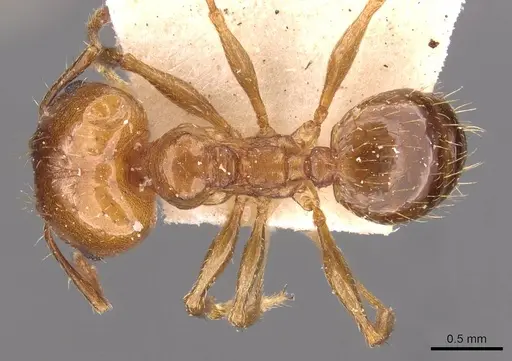
CASENT0908151
Lihat di AntWeb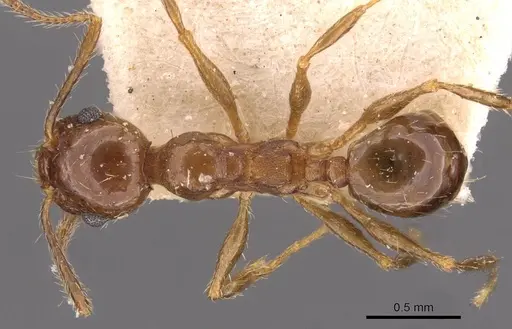
CASENT0908152
Lihat di AntWeb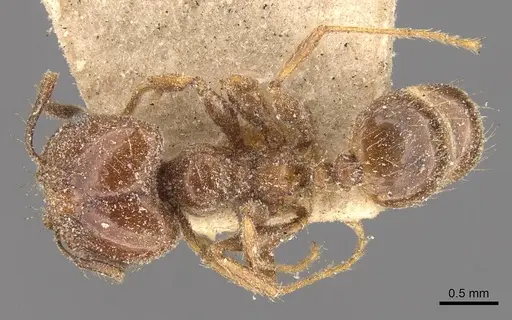
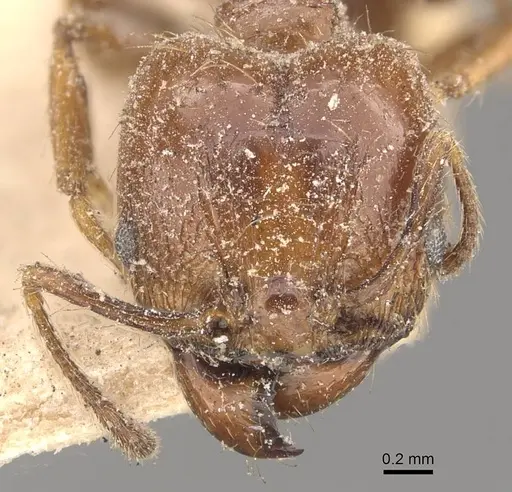
CASENT0908153
Lihat di AntWeb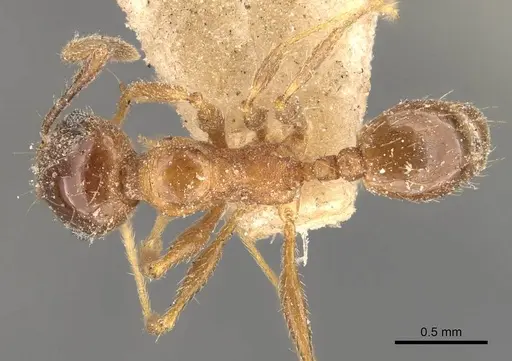
Literatur
Memuat peta distribusi...Memuat produk...