
Pheidole reichenspergeri
- Nama Ilmiah
- Pheidole reichenspergeri
- Tribe
- Attini
- Subfamili
- Myrmicinae
- Penulis
- Santschi, 1923
- Distribusi
- Ditemukan di 0 negara
Pendahuluan
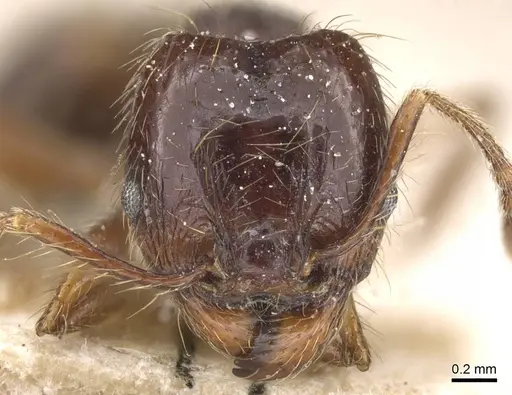
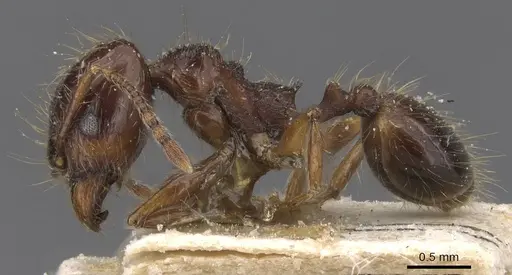
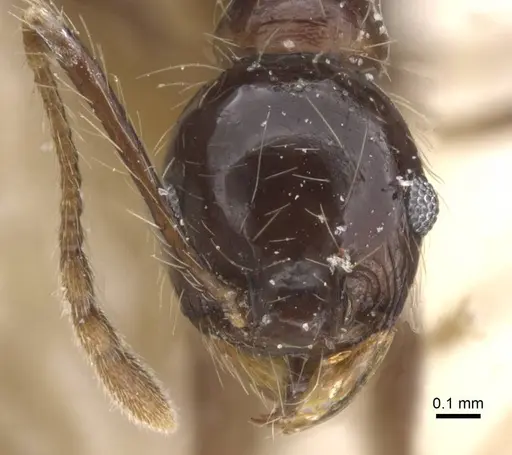
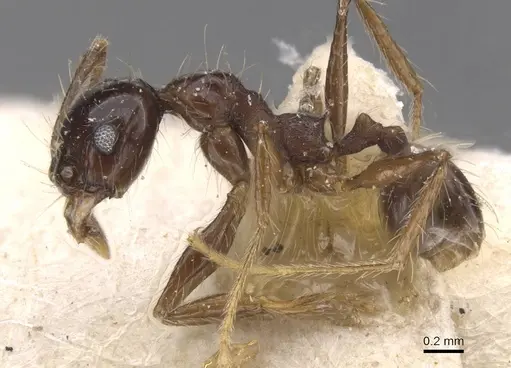
Pheidole reichenspergeri is a small Neotropical ant with pronounced size polymorphism between major and minor workers. Majors have large heads with dense, long pilosity, while minors are smaller with similar hair. The species is light reddish brown with brownish yellow appendages. It is known from Brazil and Colombia, found at elevations of 1750-1850m in Santander, Colombia . This species was described in 1923 and is part of the diligens group. It is distinguishable by its pronotum completely covered by transverse carinulae and very long pilosity . However, nothing is known about its biology in the wild, including nesting habits, colony size, or diet .
Quick Summary
- Difficulty: Unknown
- Origin & Habitat: Neotropical region, Brazil and Colombia. Found at higher elevations (1750-1850m) in Santander, Colombia [1][3].
- Colony Type: Colony structure is unconfirmed. No data on queen number or social structure.
- Size & Growth:
- Queen: Size data unavailable, no total length measurements provided.
- Worker: Size data unavailable, no total length measurements provided. Morphological details describe major and minor workers [2].
- Colony: Unknown
- Growth: Unknown
- Development: Unconfirmed, no data on development timeline. (No specific information available.)
- Antkeeping:
- Temperature: Based on elevation data, this species likely prefers cooler conditions. Start around 20-24°C with a gradient, but adjust based on colony activity [1].
- Humidity: Keep nest substrate consistently moist but not waterlogged, as with many ants.
- Diapause: Unknown, no data on hibernation needs.
- Nesting: Nesting preferences are unconfirmed. Use standard ant housing methods.
- Behavior: Pheidole species are generally non-aggressive toward keepers. Defense involves stinging, but stingers are small and not medically significant to humans. Escape risk is moderate due to small minor workers, use barrier methods.
- Common Issues: limited knowledge makes care challenging, observe colony closely for any issues, wild-caught colonies may have unknown parasites or health vulnerabilities, temperature and humidity management is uncertain, start conservative and monitor
Housing and Nest Setup
Since nesting preferences are unconfirmed, use standard methods for ant keeping. For founding colonies, a test tube setup works well, fill a clean test tube with water, plug with cotton, and place the queen inside. For established colonies, Y-tong, plaster, or soil nests provide good visibility and humidity control. Keep the nest area humid but allow some drier areas for self-regulation [2].
Feeding and Diet
Pheidole species are generalist omnivores. Offer protein sources like small insects (e.g., fruit flies) and carbohydrates like sugar water or honey. No specific dietary data for this species, so observe what your colony consumes and adjust accordingly.
Temperature and Seasonal Care
Based on elevation data from Colombia (1750-1850m), this species likely prefers cooler conditions. Start with temperatures around 20-24°C and provide a thermal gradient. Avoid overheating, and monitor colony activity for signs of stress [1].
Colony Founding
Founding behavior is unconfirmed for this species. Most Pheidole queens are claustral, sealing themselves in to rely on stored fat reserves, but this is not documented for P. reichenspergeri. Provide a dark, humid chamber and avoid disturbance during founding.
Behavior and Defense
Pheidole species are generally non-aggressive toward keepers. Defense involves stinging, as per subfamily Myrmicinae, but stingers are small and not medically significant. Minor workers may flee while majors defend the nest. Use standard barrier methods to prevent escapes.
Frequently Asked Questions
How long does it take for Pheidole reichenspergeri to have first workers?
This is unconfirmed for this species. No data on development timeline exists, so be patient with founding colonies.
What do Pheidole reichenspergeri ants eat?
They are likely generalist omnivores. Offer protein from insects and carbohydrates from sugar water or honey, but no specific data is available.
Can I keep multiple Pheidole reichenspergeri queens together?
This has not been documented. Colony structure is unconfirmed, so avoid combining queens unless prepared to separate them if they fight.
What temperature do Pheidole reichenspergeri need?
Based on their higher elevation origin, they likely prefer cooler conditions around 20-24°C with a gradient [1].
Is Pheidole reichenspergeri good for beginners?
Difficulty is unknown due to lack of data. Basic ant care knowledge is needed, but rarity and limited information make it challenging.
How big do Pheidole reichenspergeri colonies get?
Colony size is unknown. No data on maximum worker count exists.
Does Pheidole reichenspergeri need hibernation?
Diapause requirements are unknown. No data on seasonal needs exists.
When should I move my colony to a formicarium?
Wait until the colony is actively foraging and consuming food, but no specific worker count is recommended due to lack of data.
Why is my Pheidole reichenspergeri colony not growing?
With limited knowledge, check basics like temperature, humidity, and food variety. Some colonies may grow slowly due to unknown factors.
Report an Issue
The current care sheet is based fully on literature. See inconsistencies, or something that's incorrect? Please , it will be resolved after review from an admin. Contributing to the blogs tab also helps providing information, to make us be able to further improve the caresheets. Thank you for your support!
References

Lembar perawatan ini dilisensikan di bawah CC BY-SA 4.0 .
Blog Komunitas
CASENT0913414
Lihat di AntWeb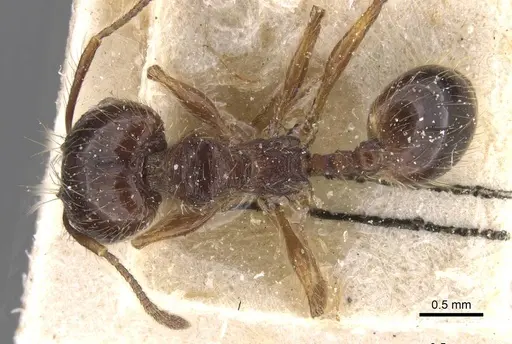
CASENT0913415
Lihat di AntWeb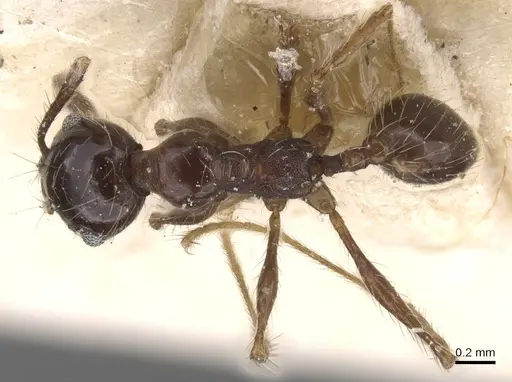
Literatur
Memuat peta distribusi...Memuat produk...