
Pheidole planidorsum
- Nama Ilmiah
- Pheidole planidorsum
- Tribe
- Attini
- Subfamili
- Myrmicinae
- Penulis
- Eguchi, 2001
- Distribusi
- Ditemukan di 0 negara
Pendahuluan
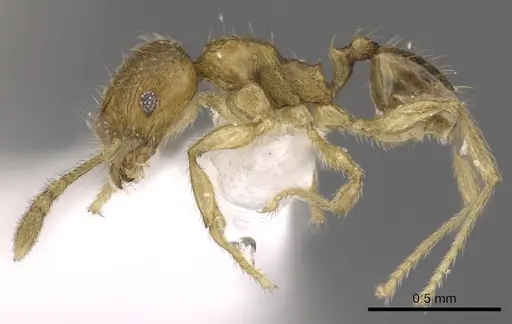
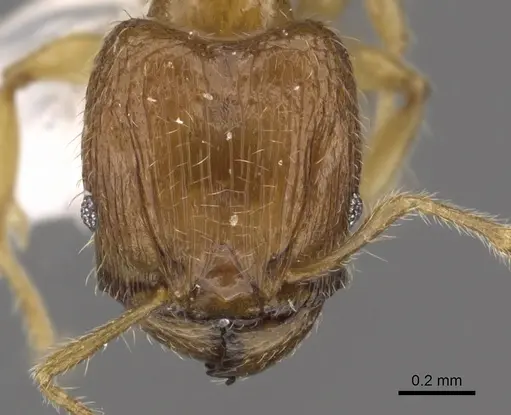
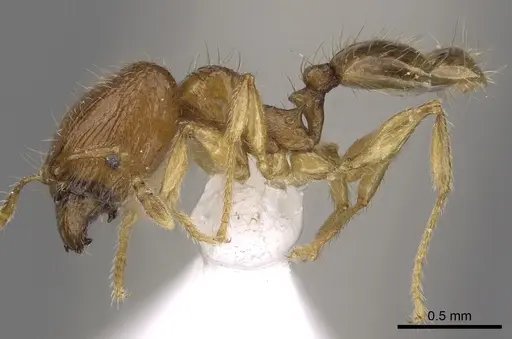
Pheidole planidorsum is a small tropical ant species native to Southeast Asia, found across Borneo, Indonesia, Malaysia, the Philippines, and Vietnam . Workers are dimorphic: majors measure approximately 2.3 mm in total length, while minors are 1.3-1.4 mm . The body is yellowish-brown . This species was described in 2001 by Eguchi . Notably, stable isotope analysis indicates this species has a predatory or carnivorous diet, based on specimens from Borneo .
Quick Summary
- Difficulty: Medium
- Origin & Habitat: Tropical forests of Southeast Asia, including Borneo, Indonesia, Malaysia, the Philippines, and Vietnam. Collected in limestone forest habitats using Winkler extraction methods [2].
- Colony Type: Likely monogyne (single queen) based on typical Pheidole genus patterns [1].
- Size & Growth:
- Queen: Size data unavailable [1]
- Worker: Majors approximately 2.3 mm, minors 1.3-1.4 mm [1]
- Colony: Unknown, no colony size data available
- Growth: Unknown
- Development: Unknown, no direct data available. Based on typical Pheidole patterns, estimate 6-8 weeks from egg to first worker at warm temperatures [1]. (Development timeline is unconfirmed. Tropical Pheidole species typically develop faster due to year-round warm conditions.)
- Antkeeping:
- Temperature: Keep in the warm range typical of tropical ants, roughly 24-28°C. Adjust based on colony activity and observe behavior [1].
- Humidity: Tropical forest species, keep substrate moderately moist with some dry areas available. Aim for 60-80% humidity range [1].
- Diapause: No, this is a tropical species from Southeast Asia and does not require hibernation or winter dormancy [1].
- Nesting: In captivity, standard test tubes and small formicaria work well for founding colonies. In the wild, they nest in soil and leaf litter in forest habitats [2].
- Behavior: Pheidole ants are generally non-aggressive and shy. They possess a stinger but are not typically aggressive toward humans. Based on stable isotope data, this species is predatory, so live prey acceptance is likely [2]. Escape risk is moderate due to small worker size, use standard barrier methods.
- Common Issues: Very limited biological data makes care recommendations uncertain, this species is poorly studied, Small minor workers may escape through fine gaps, ensure barrier integrity, Tropical species requires consistent warmth year-round [1], Predatory diet may require live prey which can be challenging to provide consistently [2]
Species Identification and Morphology
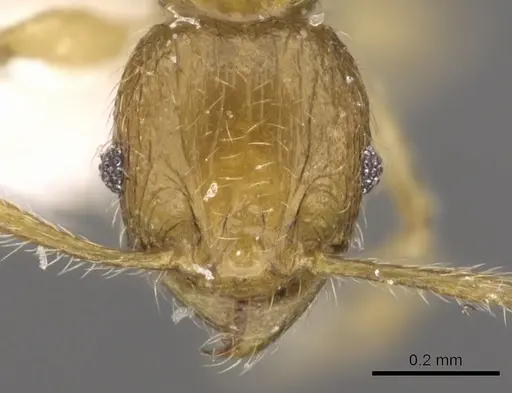
Pheidole planidorsum is a dimorphic species with distinct major and minor workers. Major workers measure approximately 2.3 mm in total length with a broad head. Minor workers are much smaller at 1.3-1.4 mm with a relatively flat posterior head profile. Both castes have a yellowish-brown body color. The species was described in 2001 by Katsuyuki Eguchi from specimens collected near Kota Kinabalu in Sabah, Borneo [1]. It can be distinguished from similar species like Pheidole merimbun and Pheidole parva by the puncturation pattern on the head and alitrunk of minor workers [1].
Distribution and Habitat
This species has a broad distribution across the Indomalaya region, documented in Borneo, Indonesia, Malaysia, the Philippines, and Vietnam [1]. Research specimens have been collected from Nam Cat Tien in Vietnam [3] and limestone forest habitats in Borneo [2]. The stable isotope study from Borneo indicates it occupies leaf litter microhabitats in tropical rainforests [2]. The species appears to prefer forested environments and is likely a litter-dwelling species that forages in the upper soil layers and decaying organic matter.
Feeding and Diet
While no direct feeding observations exist for this specific species, the stable isotope analysis from Borneo specimens provides strong evidence about its trophic position. The δ15Ncor value of 5.25 indicates a predatory or carnivorous diet, meaning this species primarily hunts and consumes other small invertebrates rather than relying on plant materials or honeydew [2]. In captivity, you should prioritize offering small live prey such as fruit flies, pinhead crickets, and other tiny arthropods. Sugar sources like honey or sugar water may be accepted but should not be the primary food. Protein-rich foods are essential for brood development.
Temperature and Care
As a tropical species from Southeast Asia, Pheidole planidorsum requires warm, stable temperatures throughout the year. Maintain the nest area in the range of 24-28°C, which aligns with typical tropical forest floor conditions [1]. Unlike temperate species, this ant does not require any diapause or winter cooling period. Temperature drops below 20°C for extended periods may stress the colony. A heating cable or mat on one side of the nest can help maintain appropriate temperatures, but ensure there is a gradient so ants can move to cooler areas if needed.
Colony Development and Growth
The colony structure follows the typical Pheidole pattern with one queen (monogyne) and two worker castes, majors and minors. The queen is likely claustral, meaning she seals herself in a chamber during founding and relies on her stored fat reserves, but this is unconfirmed for this species. Major workers handle defense and processing, while minor workers handle foraging and brood care. The exact development timeline from egg to worker is unknown, but based on typical tropical Pheidole patterns, expect approximately 6-8 weeks at warm temperatures [1]. Colonies likely reach several hundred workers at maturity, though no specific colony size data exists for this species.
Nesting in Captivity
For captive husbandry, standard test tube setups work well for founding colonies. The queen will seal herself in a dark chamber and remain there until her first brood emerges. Once the colony reaches a small size, you can consider moving them to a small formicarium or naturalistic setup. Given their natural habitat in leaf litter and soil, they prefer nests with moist substrate that they can tunnel through. Y-tong nests, plaster nests, or soil-based naturalistic setups all work well. Ensure the nest material retains moisture without becoming waterlogged, and provide a water tube for humidity [2].
Frequently Asked Questions
How long does it take for Pheidole planidorsum to produce first workers?
The exact timeline is unknown for this species. Based on typical tropical Pheidole development patterns, expect approximately 6-8 weeks from egg to first worker at optimal warm temperatures (24-28°C) [1].
What do Pheidole planidorsum ants eat?
Stable isotope evidence suggests this species is predatory or carnivorous. Offer small live prey like fruit flies, pinhead crickets, and other tiny arthropods. Sugar sources may be accepted but should not be the primary food [2].
Do Pheidole planidorsum ants need hibernation?
No. This is a tropical species from Southeast Asia and does not require hibernation or any winter cooling period [1].
What temperature is best for Pheidole planidorsum?
Keep them in the range of 24-28°C. This tropical species requires warm, stable temperatures and may be stressed by temperatures below 20°C [1].
How big do Pheidole planidorsum colonies get?
The maximum colony size is unknown. Based on typical Pheidole genus patterns, colonies likely reach several hundred workers at maturity [1].
Can I keep multiple Pheidole planidorsum queens together?
This species is likely monogyne (single queen). Combining unrelated queens is not recommended as they would likely fight. In natural colonies, only one queen is typically present [1].
Is Pheidole planidorsum good for beginners?
This species is not recommended for beginners due to the very limited biological data available. Care recommendations are largely inferred from genus patterns rather than species-specific research. If you have experience with other Pheidole species, this one should be manageable [1].
What size are Pheidole planidorsum workers?
Major workers are approximately 2.3 mm, while minor workers are much smaller at 1.3-1.4 mm. The size difference between castes is significant [1].
Where is Pheidole planidorsum found?
This species is native to Southeast Asia, documented in Borneo, Indonesia, Malaysia, the Philippines, and Vietnam. It inhabits tropical forest leaf litter [1].
Report an Issue
The current care sheet is based fully on literature. See inconsistencies, or something that's incorrect? Please , it will be resolved after review from an admin. Contributing to the blogs tab also helps providing information, to make us be able to further improve the caresheets. Thank you for your support!
References

Lembar perawatan ini dilisensikan di bawah CC BY-SA 4.0 .
Blog Komunitas
CASENT0901638
Lihat di AntWeb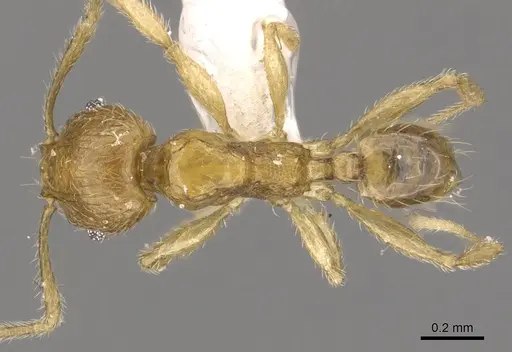
CASENT0901639
Lihat di AntWeb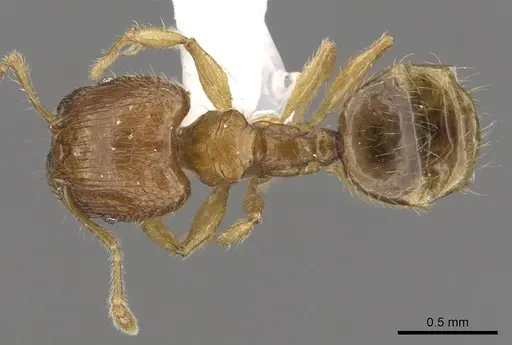
Literatur
Memuat peta distribusi...Memuat produk...