
Pheidole pegasus
- Nama Ilmiah
- Pheidole pegasus
- Tribe
- Attini
- Subfamili
- Myrmicinae
- Penulis
- Sarnat, 2008
- Distribusi
- Ditemukan di 1 negara
Pendahuluan
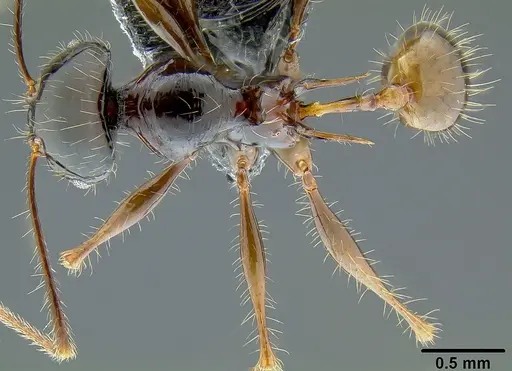
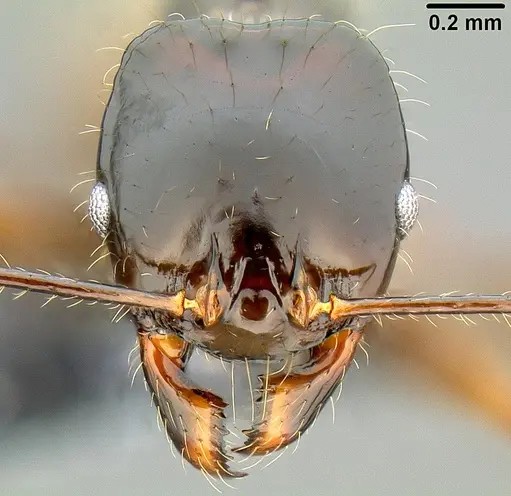
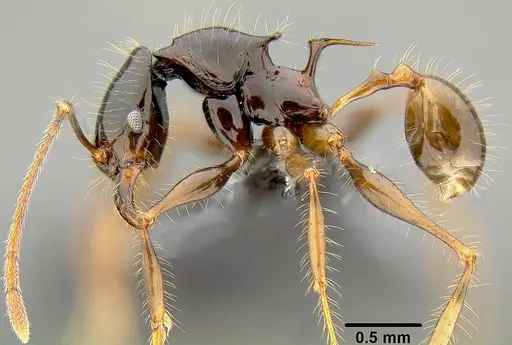
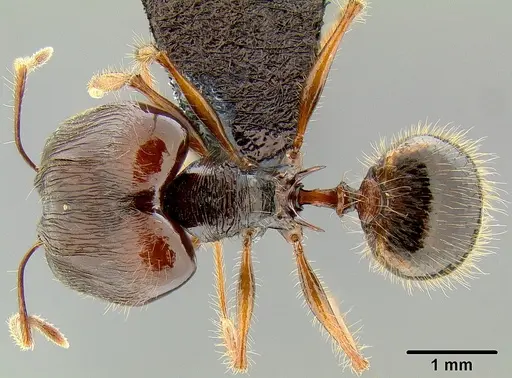
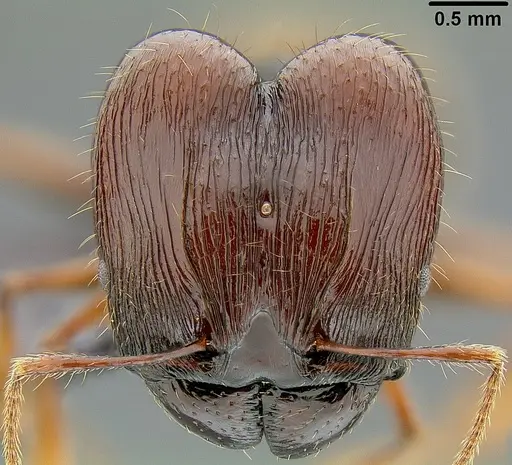
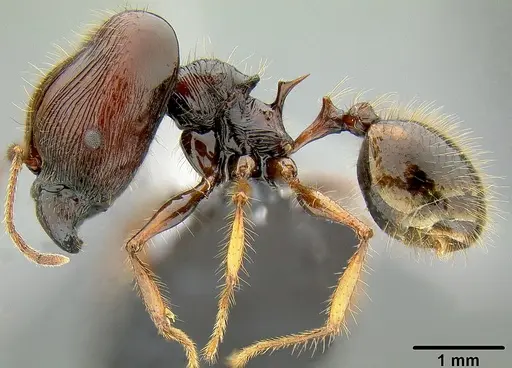
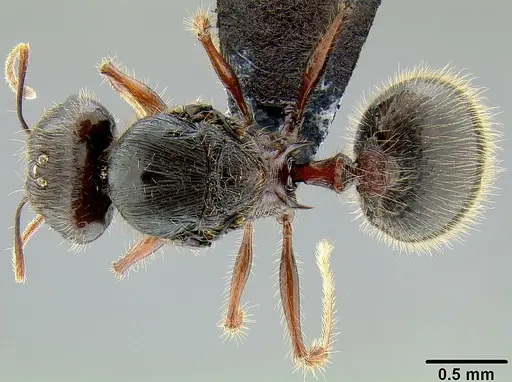
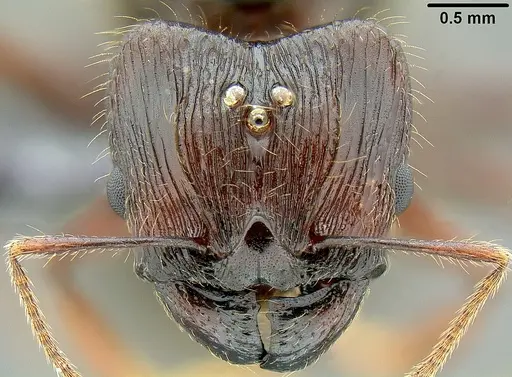
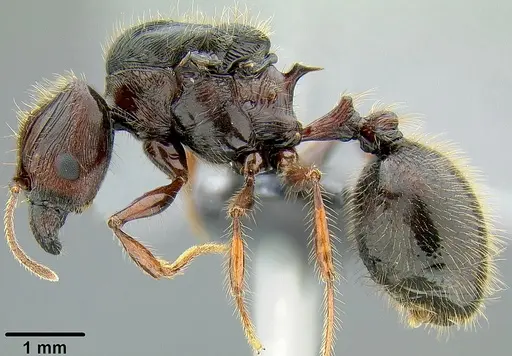
Pheidole pegasus is a distinctive ant species with extraordinarily long propodeal spines that resemble wings. Major workers reach 6.45-6.98 mm in total length, minors 3.91-4.39 mm, and queens 8.77 mm . This species is endemic to Fiji, known only from the summit of Mt. Delaikoro on Vanua Levu at 910 m elevation, where it nests in turret-like structures with 5 mm entrance holes . The long propodeal spines are a key feature of the roosevelti group, and while their exact function is unconfirmed, they may serve a defensive purpose . Queens have strongly developed mesosomas, suggesting substantial energy reserves for founding .
Quick Summary
- Difficulty: Expert
- Origin & Habitat: Endemic to Fiji, specifically Vanua Levu, known only from Mt. Delaikoro summit at 910 m elevation in high-elevation moss forest [1][2].
- Colony Type: Colony structure is unconfirmed. Based on typical Pheidole patterns, likely single-queen (monogyne) colonies.
- Size & Growth:
- Queen: 8.77 mm [1]
- Worker: Majors 6.45-6.98 mm, minors 3.91-4.39 mm [1]
- Colony: Unknown, only known from a few collections in the wild [1]
- Growth: Unknown, no development data exists for this species
- Development: Unconfirmed, no direct observations exist. Based on typical Pheidole patterns and tropical location, estimate 5-8 weeks at optimal temperature. (Development timeline is unconfirmed. Related Pheidole species typically develop in 4-8 weeks in tropical conditions.)
- Antkeeping:
- Temperature: Temperature needs are estimated based on high-elevation origin. Start around 22-26°C and observe colony behavior [1].
- Humidity: Humidity should be kept high, as the natural habitat is moss forest. Keep nest substrate consistently moist but not waterlogged [1].
- Diapause: Diapause requirements are unconfirmed.
- Nesting: Naturalistic setups with moist substrate work well. In the wild, they build turret nests in soil [1].
- Behavior: Workers are likely defensive due to long spines. Major workers can bite. Escape risk is moderate due to size, so standard barriers should suffice.
- Common Issues: limited availability in the antkeeping trade due to rarity, no captive breeding data exists, so wild-caught colonies may struggle, high humidity requirements can lead to mold if ventilation is inadequate, spinescent morphology may indicate aggressive defense when disturbed, sensitive to overheating due to high-elevation origin
Housing and Nest Setup
Pheidole pegasus builds distinctive turret nests in nature with a 5 mm diameter entrance hole surrounded by a ring of vegetation debris placed by workers [1]. For captive care, a naturalistic setup with moist substrate works well, think damp forest floor conditions. Y-tong nests or plaster nests with narrow chambers are suitable options. The species has long legs and is relatively active, so provide adequate space for foraging. Given their high-elevation origin, avoid placing the nest in direct sunlight or near heat sources that could cause overheating. A test tube setup can work for founding colonies, but be prepared to move them to a larger formicarium as the colony grows.
Feeding and Diet
Diet is unconfirmed for this species. As a Pheidole species, it may accept protein sources like small insects and carbohydrates like sugar water or honey. Offer food every 2-3 days and remove uneaten prey to prevent mold. Always provide a constant water source.
Temperature and Seasonal Care
This species comes from high-elevation Fiji (910 m on Mt. Delaikoro), which means it prefers cooler conditions than typical tropical ants. Start around 22-26°C and observe colony behavior [1]. If workers cluster together and show reduced activity, the temperature may be too low. If they avoid the nest area and seem agitated, it may be too warm. Never place the nest in direct sunlight or use heating elements directly on the nest. Diapause requirements are unconfirmed, but if the colony shows seasonal slowdowns, reduce feeding and keep them in a cooler area for a few months.
Behavior and Defense
The most distinctive feature of Pheidole pegasus is its extraordinarily long propodeal spines, which are among the longest in the roosevelti group [1]. This spinescent morphology may serve as a defense mechanism against predators. When disturbed, workers may adopt defensive postures. The majors have large heads and can deliver a painful bite. This species is not aggressive toward humans but will defend the nest vigorously. Standard escape prevention measures work well, these are moderately large ants that cannot squeeze through typical barrier gaps.
Colony Establishment and Growth
No captive breeding data exists for this species, so colony establishment may be challenging. Queens are large (8.77 mm) with strongly developed mesosomas, suggesting they have substantial fat reserves for founding [1]. If you obtain a founding queen, provide a quiet, dark location with stable humidity. Expect 4-8 weeks for the first workers to emerge, though this is an estimate based on related species. The colony will likely grow slowly at first, then accelerate once the first majors appear. Be patient, spinescent species often grow more slowly than typical Pheidole.
Acquisition and Legal Considerations
Pheidole pegasus is endemic to Fiji and known only from a single mountain summit. It is not commonly available in the antkeeping hobby. If available, it will likely be expensive and difficult to obtain. Always ensure any colony you purchase was captive-bred, not wild-caught from the limited natural population. Check your local regulations before importing, Fiji may have export restrictions on native species. Never release this species or any ant colony outdoors in non-native areas. [1][2]
Frequently Asked Questions
How long does it take for Pheidole pegasus to go from egg to worker?
The egg-to-worker timeline is unconfirmed for this species. Based on typical Pheidole patterns in tropical conditions, estimate 5-8 weeks at optimal temperature (22-26°C).
What do Pheidole pegasus ants eat?
Diet is unconfirmed, but as a Pheidole species, they may accept small insects for protein and sugar water or honey for carbohydrates. Remove uneaten prey after 24-48 hours.
Are Pheidole pegasus good for beginners?
No. This is an expert-level species due to limited availability, no captive breeding data, and high humidity requirements.
What temperature should I keep Pheidole pegasus at?
Start around 22-26°C. This species comes from high-elevation Fiji, which is cooler than typical tropical lowlands. Avoid overheating and monitor colony behavior [1].
How big do Pheidole pegasus colonies get?
Colony size is unknown, no data exists on maximum colony size for this species.
Can I keep multiple Pheidole pegasus queens together?
Colony structure is unconfirmed. Based on typical Pheidole patterns, they likely form single-queen colonies. Combining unrelated queens is not recommended without evidence they can coexist.
What makes Pheidole pegasus so special?
This species has the most extraordinary propodeal spines in the entire roosevelti group, they're so long they resemble wings, giving the species its name after the mythical winged horse Pegasus. It is also restricted to a single mountain in Fiji [1][2].
Do Pheidole pegasus need hibernation?
Diapause requirements are unconfirmed. The high-elevation origin suggests some seasonal response may be beneficial, but no specific data exists.
What type of nest is best for Pheidole pegasus?
Naturalistic setups with moist substrate or Y-tong nests with narrow chambers work well. In the wild, they build turret nests in soil with 5 mm entrances [1].
Why is my Pheidole pegasus colony dying?
Without captive data, colony failures are difficult to diagnose. Common issues include overheating, low humidity, mold from overwatering, or stress from disturbance. Ensure stable conditions and minimal handling.
Is Pheidole pegasus invasive anywhere?
No. This species is endemic to Fiji and has never been documented as invasive. It is known only from a single mountain summit. However, never release any ant colony outdoors in non-native areas [1][2].
Report an Issue
The current care sheet is based fully on literature. See inconsistencies, or something that's incorrect? Please , it will be resolved after review from an admin. Contributing to the blogs tab also helps providing information, to make us be able to further improve the caresheets. Thank you for your support!
References

Lembar perawatan ini dilisensikan di bawah CC BY-SA 4.0 .
Blog Komunitas
Literatur
Memuat peta distribusi...Memuat produk...