
Pheidole paraensis
- Nama Ilmiah
- Pheidole paraensis
- Tribe
- Attini
- Subfamili
- Myrmicinae
- Penulis
- Wilson, 2003
- Distribusi
- Ditemukan di 2 negara
Pendahuluan
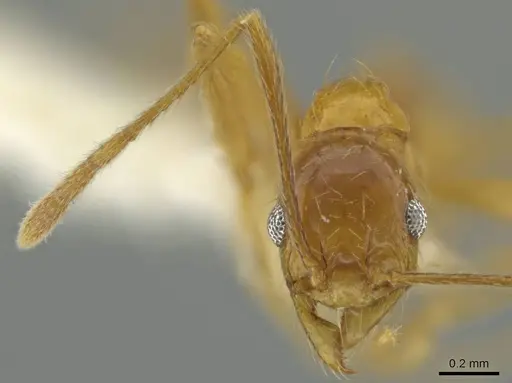
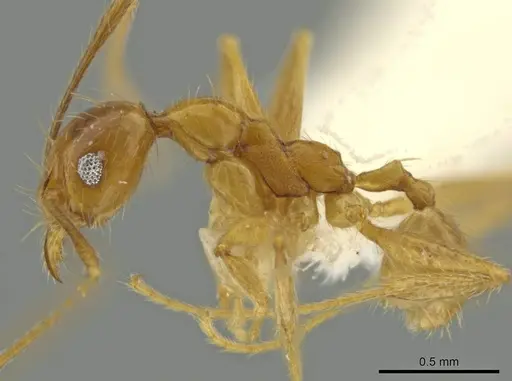
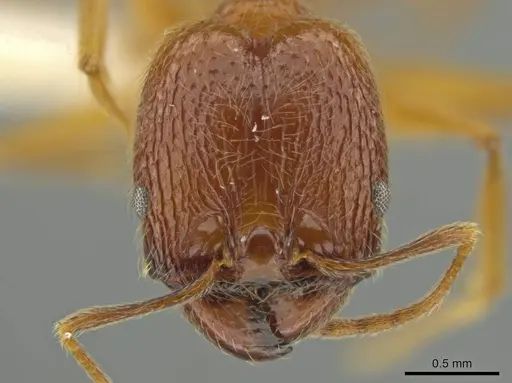
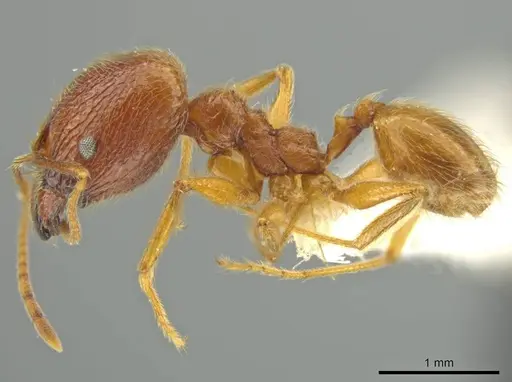
Pheidole paraensis is a small ant from the Amazon, first described in 2003 by Wilson. Very little is known about its biology . It has a distinct caste system with two worker forms: majors have a large rectangular head (head width ~1.5 mm) covered with a loose, coarse rugoreticulum pattern, while minors are much smaller with smoother heads and no propodeal spines. The body is light reddish brown with a lighter brown gaster and yellowish‑brown legs and antennae . Originally found near Belém, Pará, Brazil, Pheidole paraensis has since been recorded in Mato Grosso, Brazil, and in terra firme (upland) forests of the Colombian Amazon .
Quick Summary
- Difficulty: Medium
- Origin & Habitat: Amazonian region of Brazil (Pará, Mato Grosso) and Colombia, in terra firme (upland) forest environments [3][2]. The type locality is Utinga Tract near Belém, Pará, Brazil.
- Colony Type: Unknown, most Pheidole are monogyne (single queen), but not confirmed for this species.
- Size & Growth:
- Queen: Not documented, estimated ~5–7 mm (inferred from Pheidole genus patterns).
- Worker: Major: ~5–6 mm, Minor: ~2–3 mm (inferred from Pheidole genus patterns).
- Colony: Not documented, likely hundreds to a few thousand workers (inferred from Pheidole patterns).
- Growth: Moderate (inferred from genus).
- Development: Estimated 6–10 weeks based on typical Pheidole development at tropical temperatures. (Direct development data unavailable.)
- Antkeeping:
- Temperature: 24–28 °C (inferred from Amazonian habitat). Keep warm, stable, avoid drops below 22 °C.
- Humidity: High humidity – keep nest substrate consistently moist but not waterlogged. Provide a gradient with some drier areas.
- Diapause: No – Amazonian species do not require true diapause. Activity may slow slightly in cooler months, but keep warm year‑round.
- Nesting: Y‑tong (AAC) or plaster nests that hold humidity well. Provide dark, humid chambers with some ventilation.
- Behavior: Based on typical Pheidole behavior: minors handle foraging, brood care, and nest maintenance, majors defend the colony and process seeds. Not aggressive toward keepers but will bite if the nest is disturbed. Escape risk is low given their moderate size.
- Common Issues: lack of biological data makes specific care requirements uncertain, adjust based on colony behavior., humidity control is critical, too dry causes brood death, too wet encourages mold., sensitive to temperatures below 22 °C., wild‑caught colonies may carry parasites or pathogens.
Housing and Nest Setup
Since the specific nesting preferences of Pheidole paraensis are unknown, follow general Pheidole care. Use Y‑tong or plaster formicariums that hold humidity well. Provide a humidity gradient – keep the nest substrate consistently moist, but include a drier area so the colony can choose. A test‑tube setup works for founding: use a water reservoir with a cotton plug and cover the chamber to keep it dark. Move the colony to a proper nest once it reaches 30–50 workers. Make sure the chambers are tall enough for majors, but Pheidole don't require huge spaces. Outworld space can be moderate, with room for foraging and seed storage.
Feeding and Diet
Pheidole paraensis is omnivorous. Provide small live prey (fruit flies, pinhead crickets, small mealworms) – both majors and minors will take them. Seeds (grass seeds, small grains) are also accepted, and majors will process them with their strong head muscles. Offer sugar water or honey water in a shallow container to prevent drowning. Feed protein 2–3 times per week and keep sugar water available at all times. Remove uneaten prey within 24 hours to avoid mold.
Temperature and Seasonal Care
Based on its Amazonian habitat [3], Pheidole paraensis needs warm conditions year‑round. Keep the nest area at 24–28 °C. A slight temperature gradient (warmer on one side) lets the colony choose. Avoid temperatures below 22 °C, which can stress the colony and slow brood development. No true diapause is required, but you may notice slightly reduced activity during what would be the dry season in its native range. A heating cable on one side of the nest helps maintain stability.
Colony Development
The full founding process has not been observed for this species. If Pheidole paraensis follows the typical Pheidole pattern (claustral founding), the queen will seal herself in a chamber after mating and raise the first brood on her stored fat reserves. First workers (nanitics) would emerge in roughly 6–10 weeks under optimal warm temperatures. These early workers are smaller than mature majors, but they start foraging quickly. Colony growth is moderate – expect 100–200 workers within the first year under good conditions. Majors usually appear once the colony reaches 50–100 workers, though this timing can vary. The colony continues growing over several years, potentially reaching a few thousand workers.
Behavior and Defense
Pheidole paraensis likely shows the typical Pheidole caste system. Minor workers handle most foraging, brood care, and nest maintenance, while majors defend the nest, block entrances with their large heads, and process hard seeds. They have a functional stinger (as members of subfamily Myrmicinae, tribe Attini), but it is mild and not dangerous to humans – they rely more on biting. The ants are not aggressive toward the keeper but will defend their nest vigorously if disturbed. Workers are primarily diurnal in the wild, but in captivity they adjust to your schedule. Once established, they form clear foraging trails.
Frequently Asked Questions
How long does it take for Pheidole paraensis to raise first workers?
Expect first workers (nanitics) in approximately 6–10 weeks from egg‑laying, assuming optimal temperatures of 24–28 °C. This is an estimate based on typical Pheidole development, actual timing may vary.
What do Pheidole paraensis ants eat?
They are omnivorous. Offer small live prey (fruit flies, pinhead crickets, mealworms), seeds, and sugar water or honey water. Provide protein 2–3 times per week and sugar water continuously.
Do Pheidole paraensis ants need hibernation?
No – as an Amazonian species, they do not require true diapause. Keep them warm year‑round at 24–28 °C. Activity may naturally decrease slightly during cooler months, but no hibernation is needed.
Are Pheidole paraensis good for beginners?
This species is rated Medium difficulty. General Pheidole care is straightforward, but the lack of specific biological data means you may need to adjust conditions based on how the colony responds. Beginners should pay close attention to humidity and temperature.
How big do Pheidole paraensis colonies get?
Colony size has not been documented for this species. Based on Pheidole patterns, they likely reach several hundred to a few thousand workers over several years.
Can I keep multiple Pheidole paraensis queens together?
Not recommended. This species has not been studied, but most Pheidole are monogyne (single‑queen colonies). Keeping unrelated queens together almost always leads to fighting. Do not attempt unless you have specific evidence that this species is polygyne.
What temperature is best for Pheidole paraensis?
Keep nest temperatures between 24–28 °C. This Amazonian species needs warmth, and temperatures below 22 °C can stress the colony and slow development.
When should I move my colony to a formicarium?
Move from the test tube to a proper nest (Y‑tong, plaster, or naturalistic setup) once the colony reaches 30–50 workers. Ensure the new setup can maintain high humidity.
Why are my Pheidole paraensis dying?
Common causes include: low humidity (nest substrate too dry), temperatures below 22 °C, mold from over‑watering, or poor nutrition. Check these parameters first and adjust accordingly.
Report an Issue
The current care sheet is based fully on literature. See inconsistencies, or something that's incorrect? Please , it will be resolved after review from an admin. Contributing to the blogs tab also helps providing information, to make us be able to further improve the caresheets. Thank you for your support!
References

Lembar perawatan ini dilisensikan di bawah CC BY-SA 4.0 .
Blog Komunitas
CASENT0645841
Lihat di AntWeb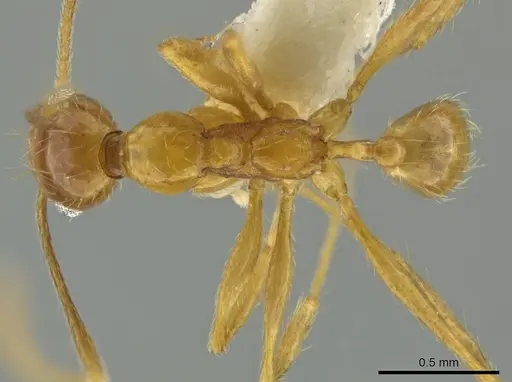
JTLC000016480
Lihat di AntWeb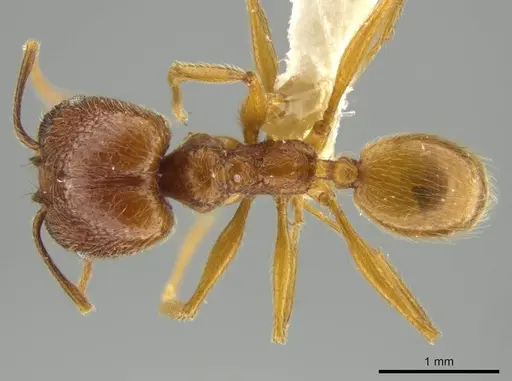
Literatur
Memuat peta distribusi...Memuat produk...