
Pheidole hospita
- Nama Ilmiah
- Pheidole hospita
- Tribe
- Attini
- Subfamili
- Myrmicinae
- Penulis
- Bingham, 1903
- Distribusi
- Ditemukan di 0 negara
Pendahuluan
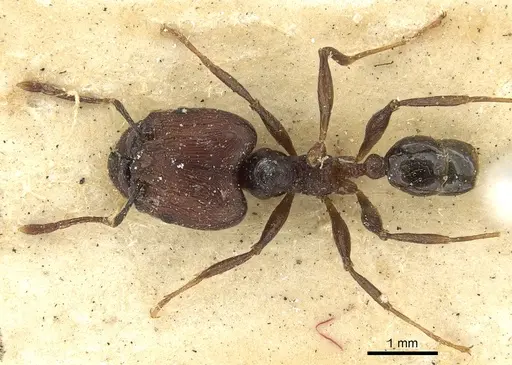
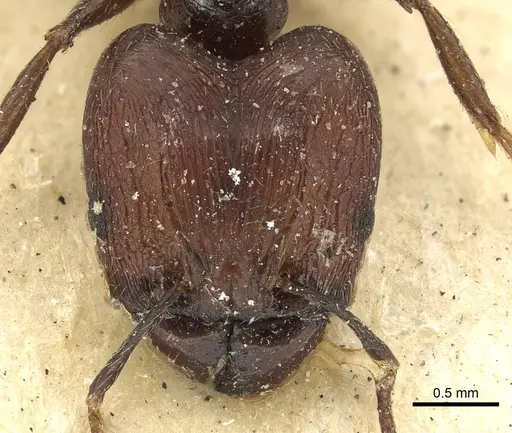
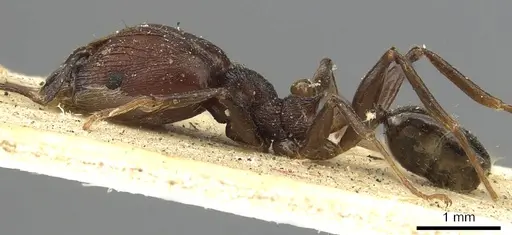
Pheidole hospita is a small ant species endemic to India, recorded from Sikkim and West Bengal . It was first described by Bingham in 1903 . Size data is unavailable from the research, but inferred from the Pheidole genus to be around 7-9 mm for queens and 2-5 mm for workers. Like other Pheidole species, it has a caste system with major workers that have enlarged heads for seed-crushing and defense. A key feature is the presence of major workers, which are larger and have specialized mandibles, typical of the Pheidole genus.
Quick Summary
- Difficulty: Easy
- Origin & Habitat: Endemic to India, specifically Sikkim and West Bengal [1]. They likely inhabit forest edges and degraded areas in the Himalayan foothills.
- Colony Type: Unconfirmed, no specific data on queen number, but Pheidole species are typically monogyne (single queen colonies).
- Size & Growth:
- Queen: inferred from Pheidole genus (~7-9 mm)
- Worker: inferred from Pheidole genus (~2-5 mm for minors,3-5 mm for majors)
- Colony: up to several hundred workers, inferred from genus patterns
- Growth: Moderate
- Development: Estimated 6-8 weeks, inferred from genus patterns (Development time may vary with temperature)
- Antkeeping:
- Temperature: Keep at 22-26°C, based on their Himalayan distribution [1]
- Humidity: Keep nest substrate consistently moist but not waterlogged, inferred from typical ant care
- Diapause: Yes, reduce temperature to 10-15°C for 2-3 months during winter, inferred from Himalayan distribution [1]
- Nesting: Use test tubes for founding colonies, Y-tong or plaster nests for established colonies, inferred from genus patterns
- Behavior: Generally peaceful, but major workers may defend the colony. They possess a functional stinger but it is less medically significant than fire ants. Small size makes them excellent escape artists, so escape prevention is critical.
- Common Issues: escape prevention is critical due to small size, winter diapause is often missed, causing colony stress, slow initial growth may lead to overfeeding, test tube setups can flood if water reservoirs are overfilled, wild-caught colonies may harbor parasites
Housing and Nest Setup
For founding colonies, a test tube setup is recommended, which is common for Pheidole species [3]. Fill a test tube one-third with water, plug with cotton, and place the queen inside. For established colonies, Y-tong or plaster nests work well, inferred from genus patterns. Provide a connected outworld for foraging. Ensure all connections are smooth and use barriers like Fluon to prevent escapes, as these ants are small and agile.
Feeding and Diet
Pheidole species are generalist foragers. Offer protein sources like small insects twice weekly, and seeds for majors to crush. Provide sugar water or honey for energy. Fresh water should always be available. Remove uneaten food after 24-48 hours to prevent mold, inferred from typical ant care [3].
Temperature and Seasonal Care
Keep nest temperatures at 22-26°C during active seasons, based on their Himalayan distribution [1]. During winter, reduce temperatures to 10-15°C for 2-3 months to allow diapause, inferred from geography. Do not feed during diapause but keep a small water source available.
Colony Growth and Development
New queens may seal themselves in a chamber to raise first workers, but founding behavior is unconfirmed for this species. First workers emerge after an estimated 6-8 weeks, inferred from genus patterns. Growth is moderate, with major workers appearing as the colony expands.
Behavior and Temperament
Pheidole hospita is peaceful but major workers defend the colony with bites. They have a functional stinger, but it is not medically significant to humans. Their small size makes them escape artists, so fine mesh and barriers are essential.
Frequently Asked Questions
How long does it take for Pheidole hospita to have first workers?
Expect first workers to emerge 6-8 weeks after queen lays eggs, inferred from genus patterns [3].
What do I feed Pheidole hospita?
Offer a varied diet including small insects, seeds, and sugar water or honey. Remove uneaten food after 24-48 hours [3].
Do Pheidole hospita need hibernation?
Yes, given their Himalayan origin, reduce temperatures to 10-15°C for 2-3 months during winter [1].
Are Pheidole hospita good for beginners?
Yes, they are considered easy to keep, but escape prevention is critical due to their small size.
How big do Pheidole hospita colonies get?
Colonies likely reach up to several hundred workers, inferred from genus patterns.
Can I keep multiple Pheidole hospita queens together?
Not recommended, as Pheidole species are typically monogyne. Combining queens may result in fighting.
When should I move Pheidole hospita to a formicarium?
Keep them in a test tube setup until the colony reaches 30-50 workers or becomes crowded. Move to Y-tong or plaster nests afterward [3].
Why are my Pheidole hospita escaping?
Their small size makes them excellent escape artists. Use fine mesh, apply barriers, and check for gaps as small as 1 mm [3].
What temperature is best for Pheidole hospita?
Keep nest temperatures between 22-26°C, based on their Himalayan distribution [1].
Report an Issue
The current care sheet is based fully on literature. See inconsistencies, or something that's incorrect? Please , it will be resolved after review from an admin. Contributing to the blogs tab also helps providing information, to make us be able to further improve the caresheets. Thank you for your support!
References

Lembar perawatan ini dilisensikan di bawah CC BY-SA 4.0 .
Blog Komunitas
CASENT0901524
Lihat di AntWeb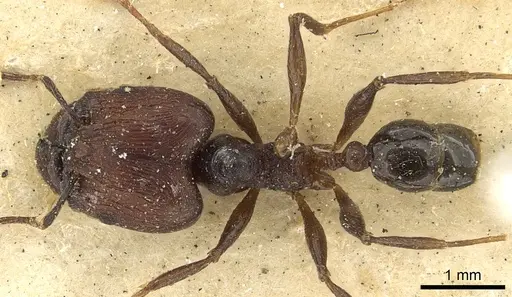
Literatur
Memuat peta distribusi...Memuat produk...