
Paratopula andamanensis
- Nama Ilmiah
- Paratopula andamanensis
- Tribe
- Crematogastrini
- Subfamili
- Myrmicinae
- Penulis
- Forel, 1903
- Distribusi
- Ditemukan di 0 negara
Pendahuluan
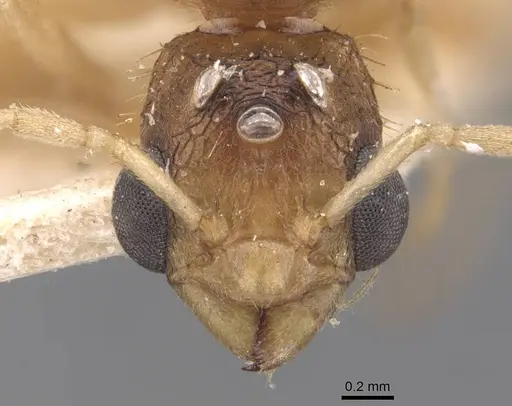
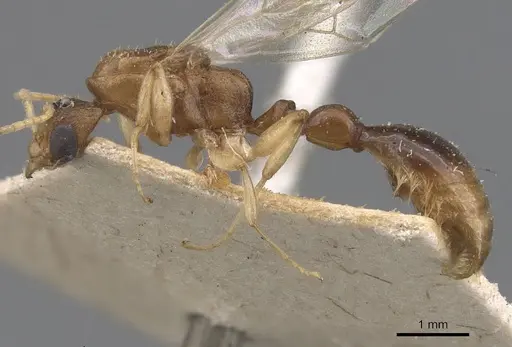
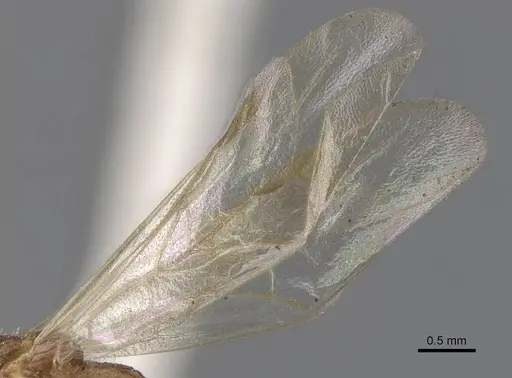
Paratopula andamanensis is known only from male specimens collected in the Andaman Islands, India. The worker and queen castes have never been described or observed. Males measure approximately 6-7mm . The species is endemic to the Andaman Islands . This ant is a mystery to science; it has never been observed alive, and no colonies have been found in over a century of surveys.
Quick Summary
- Difficulty: Expert
- Origin & Habitat: Endemic to the Andaman Islands, India. Known only from Little Andaman [2]. As an arboreal genus, Paratopula likely inhabits forest canopies, though specific preferences for P. andamanensis are unconfirmed [1].
- Colony Type: Unknown, only male specimens have been collected, worker and queen castes are undescribed.
- Size & Growth:
- Queen: Unknown, queen caste has never been described
- Worker: Unknown, worker caste has never been described
- Colony: Unknown, no colony observations exist
- Growth: Unknown
- Development: Unknown, no brood development data exists (This species is known only from male specimens, workers and queens have never been collected or described)
- Antkeeping:
- Temperature: Unknown, no thermal data exists for this species
- Humidity: Unknown, likely matches Andaman Islands tropical climate but specific requirements unconfirmed
- Diapause: Unknown, no seasonal data available
- Nesting: Unknown, Paratopula is an arboreal genus but specific nesting behavior of P. andamanensis is unconfirmed
- Behavior: Completely unobserved. No behavioral data exists. Defense mechanism is likely smear-based as typical for Myrmicinae Crematogastrini, but no specific observations.
- Common Issues: this species cannot be kept in captivity as workers and queens have never been described., no information exists on diet, making appropriate feeding impossible., nuptial flight timing and behavior are completely unknown., as an endemic species from a remote archipelago, collection would require specific permits.
Why This Species Cannot Be Kept
Paratopula andamanensis represents an extreme case of missing biological data. Known only from male specimens collected over a century ago, the workers and queens have never been observed. Without knowing their appearance, size, diet, or behavior, care is impossible. This species remains a mystery even to experts [1].
Taxonomic History and Rarity
Originally described as Paratopula andamanensis by Forel in 1903,it has been transferred to Paratopula by Bolton in 1988. Despite surveys in the Andaman Islands, no additional specimens have been found, suggesting extreme rarity or specialized habitat [1].
Related Species and Inferences
While P. andamanensis is unknown, the genus Paratopula is arboreal. The related P. oculata has workers and queens, but Bolton's comparison notes differences, so inferences are speculative [1].
Frequently Asked Questions
Can I keep Paratopula andamanensis ants?
No. This species cannot be kept because workers and queens have never been described. No living specimens exist in antkeeping collections.
What do Paratopula andamanensis workers look like?
Unknown. The worker caste has never been described or collected. We have no information about their size, color, or morphology.
Where do Paratopula andamanensis live?
They are endemic to the Andaman Islands, India, specifically Little Andaman [2].
What do Paratopula andamanensis eat?
Unknown. No feeding observations or diet data exists for this species.
How big do Paratopula andamanensis colonies get?
Unknown. No colony has ever been observed.
Are Paratopula andamanensis endangered?
We do not know. The species has only been collected once over 120 years ago. Its conservation status has not been assessed.
Do Paratopula andamanensis queens exist?
Unknown. The queen caste has never been described or collected.
When do Paratopula andamanensis nuptial flights occur?
Unknown. No nuptial flight observations exist.
Can I find Paratopula andamanensis in the wild?
Extremely unlikely. The species has only been collected once in over 120 years of surveys.
Are there similar ants I can keep instead?
Other Paratopula species are occasionally collected but are rare and arboreal, making them challenging. Research other genus options through established antkeeping channels.
Report an Issue
The current care sheet is based fully on literature. See inconsistencies, or something that's incorrect? Please , it will be resolved after review from an admin. Contributing to the blogs tab also helps providing information, to make us be able to further improve the caresheets. Thank you for your support!
References

Lembar perawatan ini dilisensikan di bawah CC BY-SA 4.0 .
Blog Komunitas
CASENT0907447
Lihat di AntWeb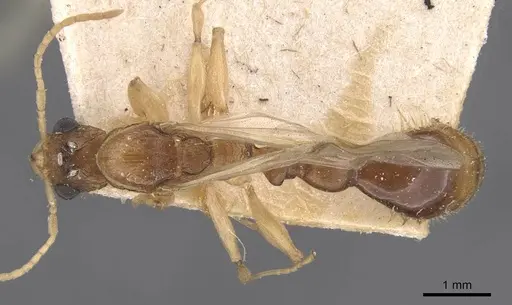
Literatur
Memuat peta distribusi...Memuat produk...