
Paraparatrechina sordida
- Nama Ilmiah
- Paraparatrechina sordida
- Tribe
- Lasiini
- Subfamili
- Formicinae
- Penulis
- Santschi, 1914
- Distribusi
- Ditemukan di 0 negara
Pendahuluan
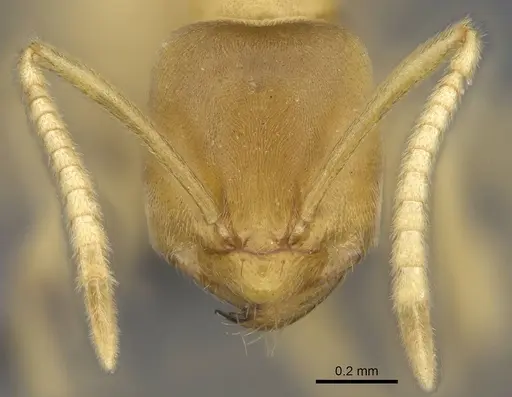
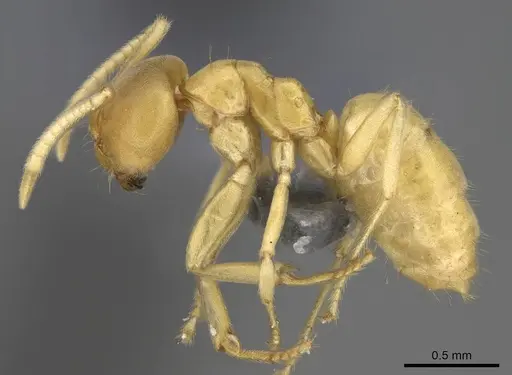
Paraparatrechina sordida is a small ant species native to the Afrotropical region, found in Central African Republic, Democratic Republic of Congo, Ghana, and Uganda . Workers are tiny ants with Formicinae features, including a strongly impressed metanotal groove, scapes without erect macrosetae, and few macrosetae on the mesosoma (2 on pronotum,1 on mesonotum,1 on propodeum) . This species was previously classified under Pseudolasius and revived as a separate species in 2014 . Care requirements for this species are poorly documented, with most information coming from taxonomic descriptions rather than ecological or behavioral studies .
Quick Summary
- Difficulty: Hard
- Origin & Habitat: Afrotropical region, found in Central African Republic, Democratic Republic of Congo, Ghana, and Uganda [1]. Specific habitat preferences are not documented.
- Colony Type: Unconfirmed, colony structure has not been studied for this species.
- Size & Growth:
- Queen: Size data unavailable, no total length measurements documented in available literature
- Worker: Size data unavailable, no total length measurements documented in available literature
- Colony: Unknown, no colony size data available
- Growth: Unknown
- Development: Unknown, no development data exists for this species (No direct measurements available. Estimates based on related Lasiini species suggest development may take 6-10 weeks at warm temperatures, but this is highly speculative.)
- Antkeeping:
- Temperature: Temperature needs are estimated based on tropical distribution, aim for 20-26°C [1]. Start around 22-24°C and observe colony activity.
- Humidity: Provide a humidity gradient with consistently moist but not waterlogged substrate, as inferred from tropical habitat [1].
- Diapause: Unknown, tropical species may not require formal hibernation, but may have reduced activity during cooler seasons.
- Nesting: Nesting preferences are unconfirmed, but based on related Lasiini species, they likely nest in soil or under cover [1]. For captivity, test tube setups or small Y-tong nests are appropriate.
- Behavior: Based on related Lasiini species, they are likely docile and non-aggressive foragers [1]. Escape risk is high due to small size, use fine mesh barriers and tight-fitting lids.
- Common Issues: improper care due to lack of information can kill the colony., small size increases escape risk, use fine mesh barriers., incorrect temperature or humidity can prevent colony development., combining queens without knowing colony structure may cause conflict., incorrect diet can lead to malnutrition.
Identification and Taxonomy
Paraparatrechina sordida was originally described as a variety of Paraparatrechina weissi in 1914 by Santschi, based on specimens from Ghana. It was later moved to synonymy with P. weissi and then revived as a separate species in 2014 by LaPolla and Fisher, who also confirmed its senior synonymy with Paraparatrechina bucculentus (described from DRC) and Paraparatrechina gowdeyi (described from Uganda) [2]. The species can be identified by its scapes lacking erect macrosetae, few macrosetae on the mesosoma (2 on pronotum,1 on mesonotum,1 on propodeum), and the strongly impressed metanotal groove [2]. It belongs to the subfamily Formicinae and tribe Lasiini.
Distribution and Habitat
This species is known from four countries in the Afrotropical region: Central African Republic, Democratic Republic of Congo, Ghana, and Uganda [1]. No specific habitat information has been documented in the scientific literature. The Afrotropical region generally has warm temperatures year-round with seasonal rainfall patterns.
Nest Preferences
No specific nesting data exists for Paraparatrechina sordida. Based on the genus placement and related species in the Lasiini tribe, these ants likely nest in soil cavities, under stones, or in rotting wood in natural habitats [1]. For captive care, standard test tube setups work well for founding colonies. Small Y-tong style nests would be appropriate as the colony grows. Given their small size, ensure any nest setup has appropriately scaled chambers and passages.
Feeding and Diet
Diet is unconfirmed for this species. As a member of the Formicinae subfamily, they likely accept sugar sources (honey, sugar water) and protein sources (insects, small prey) [1]. Related Lasiini species often tend aphids for honeydew and forage for small arthropods. Start with standard ant foods: sugar water or honey, and small protein sources like fruit flies or pinhead crickets.
Temperature and Care
No species-specific temperature data exists. Based on the tropical Afrotropical distribution, aim for temperatures in the range of 20-26°C [1]. Start around room temperature (22-24°C) and observe colony behavior, if workers are active and foraging, the temperature is likely suitable. Avoid temperature extremes.
Behavior and Temperament
No specific behavioral studies exist for Paraparatrechina sordida. Based on related genera in the Lasiini, these ants are likely relatively docile, non-aggressive foragers [1]. They probably use chemical trails for foraging communication, similar to other Formicinae. Their small size means they can escape through tiny gaps, use fine mesh on any enclosure and ensure lids fit tightly.
Frequently Asked Questions
How do I care for Paraparatrechina sordida ants?
Specific care requirements are not documented for this species. Based on related Lasiini ants, provide a test tube setup for founding colonies, maintain moderate temperatures (20-26°C) [1], and offer standard ant foods (sugar water and small insects). This is a species where you will need to learn alongside your colony since scientific care guides do not exist.
What do Paraparatrechina sordida ants eat?
Their exact diet is not documented. Based on related species, they likely accept sugar sources (honey, sugar water) and small protein prey (fruit flies, small insects) [1]. Start with these standard foods and observe what your colony accepts.
How big do Paraparatrechina sordida colonies get?
Colony size is unknown, no scientific data exists on maximum colony sizes for this species. Related Lasiini species typically form colonies ranging from dozens to a few hundred workers.
What temperature do Paraparatrechina sordida ants need?
No species-specific data exists. Based on their tropical African distribution, aim for 20-26°C [1]. Start around 22-24°C and adjust based on colony activity.
How long does it take for Paraparatrechina sordida to develop from egg to worker?
No development data exists for this species. Based on related Lasiini species, expect approximately 6-10 weeks at warm temperatures, but this is a rough estimate.
Are Paraparatrechina sordida good for beginners?
This species is not recommended for beginners due to the complete lack of documented care information. You would essentially be pioneering husbandry methods with no established guidelines to follow. Consider starting with better-documented species like Lasius niger or Tetramorium species.
Can I keep multiple Paraparatrechina sordida queens together?
Colony structure is unconfirmed, we do not know if this species is single-queen (monogyne) or multi-queen (polygyne). Combining unrelated queens is not recommended without understanding their natural colony structure.
Where is Paraparatrechina sordida found?
This species is known from Central African Republic, Democratic Republic of Congo, Ghana, and Uganda in the Afrotropical region [1].
Does Paraparatrechina sordida need hibernation?
Unknown, as a tropical species from Africa, they likely do not require formal hibernation. They may have reduced activity during cooler seasons, but this is not well-documented.
Report an Issue
The current care sheet is based fully on literature. See inconsistencies, or something that's incorrect? Please , it will be resolved after review from an admin. Contributing to the blogs tab also helps providing information, to make us be able to further improve the caresheets. Thank you for your support!
References

Lembar perawatan ini dilisensikan di bawah CC BY-SA 4.0 .
Blog Komunitas
CASENT0914143
Lihat di AntWeb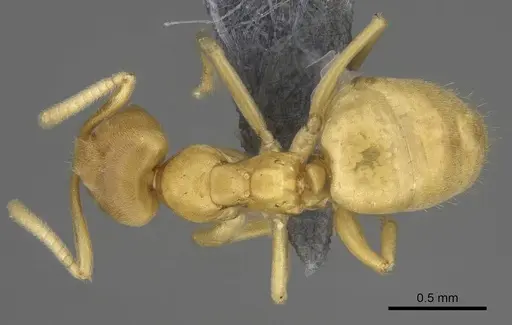
Literatur
Memuat peta distribusi...Memuat produk...