
Pachycondyla lenkoi
- Nama Ilmiah
- Pachycondyla lenkoi
- Tribe
- Ponerini
- Subfamili
- Ponerinae
- Penulis
- Kempf, 1962
- Distribusi
- Ditemukan di 1 negara
Pendahuluan
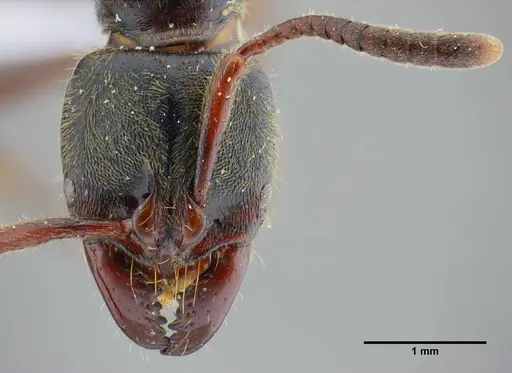
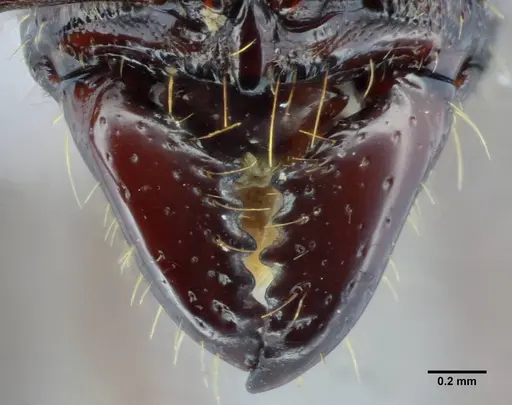
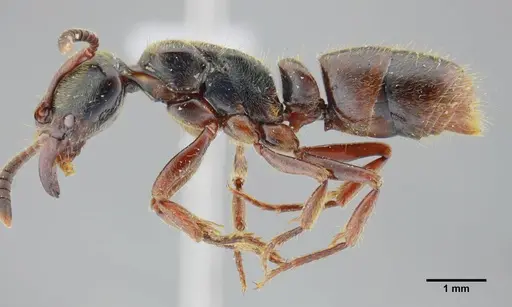
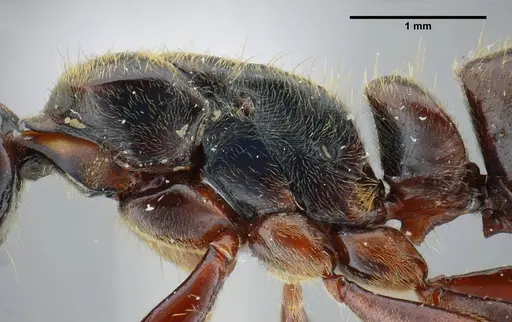
Pachycondyla lenkoi is a medium-sized ponerine ant native to the Neotropical region, found in Brazil (Mato Grosso) and Bolivia. Workers measure 6.5-8mm in total length and have a ferrugineous red to black coloration, with lighter areas on the mandibles, clypeus, legs, and gaster. This species is recognized by its smooth and shiny integument,7-toothed mandibles, and a unique slit-shaped propodeal spiracle . The biology of this species is completely unknown - only the worker caste has been described, and nothing is known about colony structure, founding behavior, or specific care requirements .
Quick Summary
- Difficulty: Hard
- Origin & Habitat: Brazil (Mato Grosso) and Bolivia in the tropical Neotropical region. Specific habitat is unknown [1].
- Colony Type: Unknown, only the worker caste has been described [1].
- Size & Growth:
- Antkeeping:
- Temperature: Unknown, start with warm conditions around 24-28°C and observe colony activity. Provide a temperature gradient.
- Humidity: Unknown, keep nest substrate consistently moist but not waterlogged, with some drier areas available.
- Diapause: Unknown, as a tropical species, they likely do not require hibernation, but this is unconfirmed.
- Nesting: Natural nesting is unconfirmed. In captivity, use test tubes for founding colonies, then transition to Y-tong or plaster nests with moist substrate.
- Behavior: Behavior is unstudied. Based on Pachycondyla genus patterns, they may be predatory and can deliver a painful sting. Given their size (6.5-8mm), escape prevention should be moderate, use standard barriers.
- Common Issues: biology is completely unknown, keepers must experiment with care conditions., no data on founding behavior, founding type is unconfirmed., queen size and morphology unknown, cannot provide accurate founding setup guidance., no information on colony size limits, growth rate is unpredictable., tropical origin suggests sensitivity to temperature drops, avoid cool conditions.
What Makes This Species Unique
Pachycondyla lenkoi has several distinctive morphological features. Its body surface is unusually smooth and shiny compared to related species. The mandibles have seven teeth, which is less than most Pachycondyla. The propodeal spiracle is slit-shaped, unlike the circular spiracles in related species. The subpetiolar process is a sharp tooth, not a collar-like flange. This species bridges between two species complexes, but its biology remains unstudied [1].
Naming and Discovery
This species was described in 1962 by Walter Kempf based on a worker from Rio Sacre, Mato Grosso, Brazil. It is named after Karol Lenko, who collected the holotype. The holotype is deposited in the Museu de Zoologia da Universidade de São Paulo. No biological information has been published since [2][1].
Housing and Care Approach
Since biology is unknown, you must approach care experimentally. Start with test tube setups for any founding colony, then transition to Y-tong or plaster nests. Provide a moisture gradient in the nest. Keep temperatures warm around 24-28°C. Offer a varied diet including protein and sugar sources, but be prepared for trial and error. Use escape prevention barriers for moderate-sized ants. [1]
Understanding the Knowledge Gaps
This species has significant knowledge gaps. We do not know colony size, development times, or specific care requirements. Keepers should keep detailed records and adjust care based on colony response. Any successes would contribute to antkeeping knowledge [1].
Frequently Asked Questions
How do I care for Pachycondyla lenkoi ants?
Care is unknown since the biology has not been studied. Start with standard Pachycondyla care: test tube for founding, warm temperatures (24-28°C), moderate humidity, and offer varied diet. Be prepared to experiment based on your colony's response.
What do Pachycondyla lenkoi eat?
Diet is unconfirmed. Based on related Pachycondyla species, they are likely predatory or omnivorous. Offer small insects, mealworms, and sugar sources. Monitor what they actually accept.
How big do Pachycondyla lenkoi colonies get?
Unknown, no colony size data exists. Workers are 6.5-8mm, suggesting a moderate-sized colony is possible, but actual maximum size is unstudied.
Do Pachycondyla lenkoi ants sting?
Sting capability is unconfirmed for this specific species, but Pachycondyla ants can deliver painful stings. Assume they can sting and handle with caution.
What temperature do Pachycondyla lenkoi need?
Unknown. As a tropical species from Brazil/Bolivia, start with warm conditions around 24-28°C. Provide a gradient so ants can self-regulate.
How long does it take for Pachycondyla lenkoi to develop from egg to worker?
Unknown, no development data exists. Based on typical Pachycondyla genus patterns, estimate 6-10 weeks at warm temperatures, but this is a rough guess.
Is Pachycondyla lenkoi a good species for beginners?
No, this is not recommended for beginners due to completely unknown biology. Without basic information on care requirements, colony failure is highly likely. Choose a better-documented species first.
Can I keep multiple Pachycondyla lenkoi queens together?
Unknown, colony structure has not been documented. The species is only known from workers, no queens have been described or studied.
Where does Pachycondyla lenkoi live in the wild?
Brazil (Mato Grosso) and Bolivia in the Neotropical region. Specific habitat type is unknown, but Pachycondyla species generally nest in soil, rotting wood, or under stones.
Does Pachycondyla lenkoi need hibernation?
Unknown, no seasonal behavior data exists. As a tropical species from Brazil/Bolivia, they likely do not require hibernation, but this is unconfirmed.
What makes Pachycondyla lenkoi different from other Pachycondyla?
Their most distinctive features are: unusually smooth and shiny body surface,7-toothed mandibles (most have more), slit-shaped propodeal spiracle (others have circular), and a unique sharp tooth-like subpetiolar process.
Why is so little known about this ant?
Despite being described in 1962,no biological studies have been published. Only the worker caste is known, and the species has never been documented in ecological or behavioral research. It remains one of the least studied ants in the genus.
Report an Issue
The current care sheet is based fully on literature. See inconsistencies, or something that's incorrect? Please , it will be resolved after review from an admin. Contributing to the blogs tab also helps providing information, to make us be able to further improve the caresheets. Thank you for your support!
References

Lembar perawatan ini dilisensikan di bawah CC BY-SA 4.0 .
Blog Komunitas
ECOFOG-SL13-1078-01
Lihat di AntWeb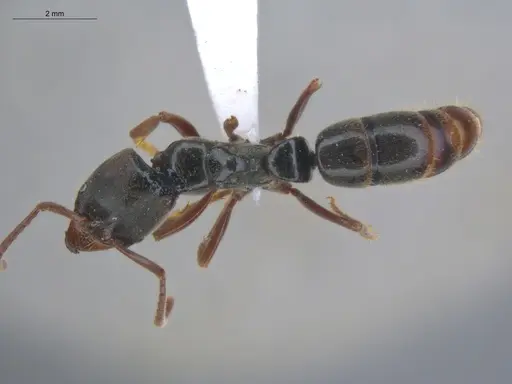
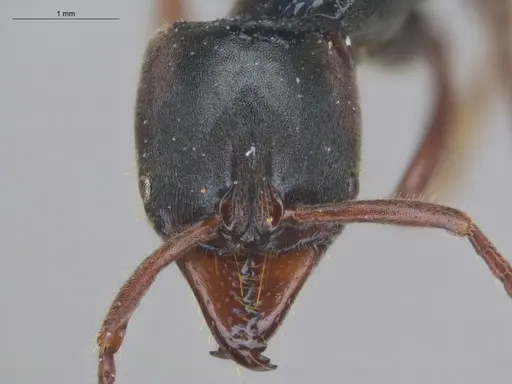
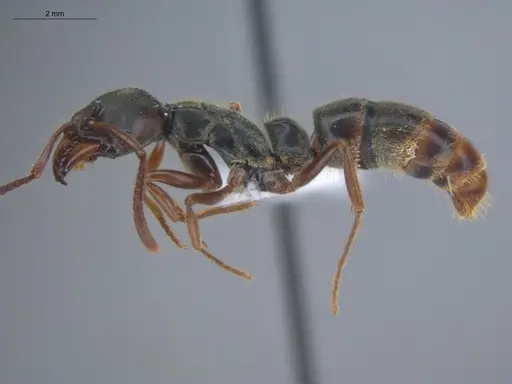
UFV-LABECOL-000002
Lihat di AntWeb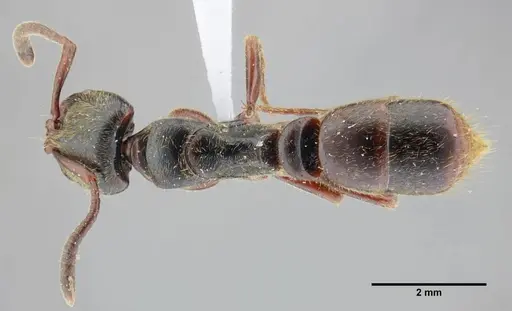
Literatur
Memuat peta distribusi...Memuat produk...