
Oxyopomyrmex negevensis
- Nama Ilmiah
- Oxyopomyrmex negevensis
- Tribe
- Stenammini
- Subfamili
- Myrmicinae
- Penulis
- Salata & Borowiec, 2015
- Distribusi
- Ditemukan di 0 negara
Pendahuluan
Oxyopomyrmex negevensis is a tiny desert ant from the Negev Desert in Israel. Workers have a total length of about 0.56 mm, with a black head and abdomen, and dark ochraceous thorax and legs . The first abdominal tergite bears a dense layer of appressed microsetae, giving the abdomen a dull, textured appearance . This species is endemic to Israel and found in arid environments . What makes O. negevensis unusual is its microscopic size and the unique microsetae on the abdomen, which are not found in other Oxyopomyrmex species .
Quick Summary
- Difficulty: Expert
- Origin & Habitat: Endemic to the Negev Desert in Israel, specifically Sede Boger at approximately 476m elevation [1][2].
- Colony Type: Colony structure is unconfirmed. No data on queen number or social structure [1].
- Size & Growth:
- Antkeeping:
- Behavior: Workers are tiny (0.56 mm), so escape prevention is critical [1]. Temperament is unstudied [3].
- Common Issues: high escape risk due to tiny worker size [1], no data on founding or development [1], care requirements are unconfirmed [3]
Species Discovery and Taxonomy
Oxyopomyrmex negevensis was formally described in 2015 by Sebastian Salata and Lech Borowiec in their comprehensive taxonomic revision of the genus Oxyopomyrmex. The species name 'negevensis' refers to the Negev Desert in Israel, where this ant was discovered. The type specimens were collected from Sede Boger in November 1974,but the species was not formally described until over 40 years later. This makes it one of the most recently described ant species available to antkeepers. The genus Oxyopomyrmex contains only a handful of species, all distributed around the Mediterranean and Middle East. What makes O. negevensis distinctive among its genus is the dense layer of appressed microsetae on the first abdominal tergite, a feature not found in any other Oxyopomyrmex species [1].
Identification and Appearance
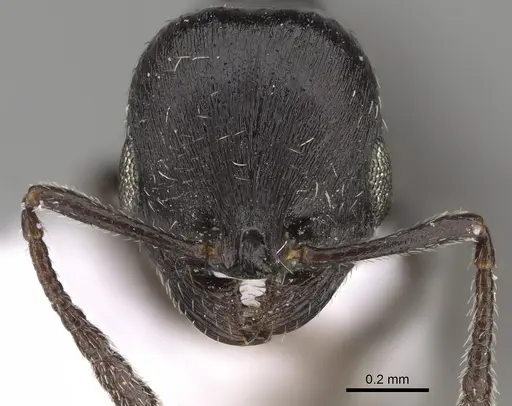
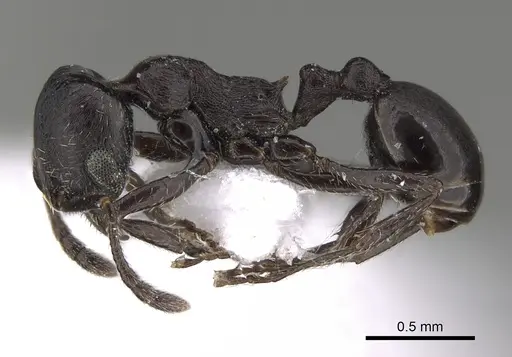
Workers of Oxyopomyrmex negevensis are tiny, measuring approximately 0.56 mm in total length. They have a distinctive color pattern: the head and abdomen are black, while the thorax and legs are dark ochraceous. The tarsi and first five segments of the antenna funiculus are dark brown. The head is oval and longer than wide, with large eyes that extend to the anteroventral margin of the head. The antennae have 11 segments, with a short scape and a short funiculus. A key identifying feature is the dense layer of tiny hairs (appressed microsetae) on the first abdominal tergite, which gives the normally shiny ant abdomen a dull, textured appearance. The propodeal spines are short and triangular, rising obliquely upward [1].
Natural Habitat and Distribution
This species is known only from the Negev Desert in southern Israel. The type locality is Sede Boger, at approximately 476 meters elevation. The Negev Desert is an arid to semi-arid region with extremely hot summers and mild winters. Annual rainfall is very low, typically under 100mm. Summer temperatures regularly exceed 40°C, while winter temperatures rarely drop below freezing. This is a Palearctic species found at around 30.87° latitude [2][1]. The extreme desert environment suggests this species has adaptations for drought tolerance and heat resistance. In captivity, these conditions should be replicated, warm, dry environments with good ventilation.
Inferred Care Requirements
Since no biological data exists for Oxyopomyrmex negevensis, care recommendations are inferred from its desert habitat [2]. Keep temperatures warm around 22-28°C with a gradient, and maintain low humidity by keeping the nest substrate dry. Diapause is unknown, but desert species may not require cold-induced dormancy. Nesting preferences are unconfirmed, but based on desert habitat, likely nest in soil or under stones, for captivity, use dry Y-tong or plaster nests. Workers are tiny, so escape prevention is critical [1].
Challenges for Keepers
Oxyopomyrmex negevensis presents unique challenges because it is essentially a blank slate in terms of antkeeping knowledge. No one has documented the colony founding process, development timeline, queen size, colony structure, or any aspect of their biology in captivity. This makes them an experimental species, keepers will need to document their own observations and be prepared for trial and error. The species is also very newly described (2015), so captive breeding may be limited to few or no established colonies. For these reasons, this species is best suited for experienced antkeepers who enjoy experimenting and contributing to the knowledge base. Beginners should consider more established species with documented care protocols [3].
Frequently Asked Questions
How do I care for Oxyopomyrmex negevensis?
Care is unconfirmed since no biological studies exist [3]. Based on desert habitat, keep warm (22-28°C), dry conditions with a varied diet. This is an experimental species, be prepared to document your own findings.
What do Oxyopomyrmex negevensis ants eat?
Diet is unstudied [3]. Based on related Stenammini species, they likely eat seeds, nectar, and small insects. Offer a mix of protein and carbohydrates.
How big do Oxyopomyrmex negevensis colonies get?
Colony size is unknown [1]. No field data exists to confirm estimates.
What temperature do Oxyopomyrmex negevensis need?
Likely warm conditions around 22-28°C based on their Negev Desert habitat [2]. Avoid cool temperatures, they are not cold-hardy.
Do Oxyopomyrmex negevensis queens need to forage during founding?
Founding type is unconfirmed [1]. More research is needed to confirm this for O. negevensis.
Are Oxyopomyrmex negevensis good for beginners?
No, this is not a beginner species. No biological data exists, and no established care protocols exist [3]. This is an experimental species best suited for experienced antkeepers.
Do Oxyopomyrmex negevensis sting?
Sting capability is unstudied [3]. Given their tiny size, any sting would likely be negligible to humans.
How long does it take for Oxyopomyrmex negevensis to develop from egg to worker?
Development timeline is completely unconfirmed [1]. No direct evidence exists.
What nest type is best for Oxyopomyrmex negevensis?
No specific data exists [3]. Based on desert habitat, use a dry nest like Y-tong or plaster.
Where is Oxyopomyrmex negevensis found in the wild?
Only known from the Negev Desert in Israel, specifically the Sede Boger area [1][2].
Can I keep multiple Oxyopomyrmex negevensis queens together?
Colony structure is unconfirmed [1]. No data exists on whether they are monogyne or polygyne.
Why is Oxyopomyrmex negevensis so rare in the antkeeping hobby?
This species was only described in 2015 and has no documented captive breeding history [1]. Very few specimens exist, and no established breeding protocols exist.
Report an Issue
The current care sheet is based fully on literature. See inconsistencies, or something that's incorrect? Please , it will be resolved after review from an admin. Contributing to the blogs tab also helps providing information, to make us be able to further improve the caresheets. Thank you for your support!
References

Lembar perawatan ini dilisensikan di bawah CC BY-SA 4.0 .
Blog Komunitas
CASENT0923228
Lihat di AntWeb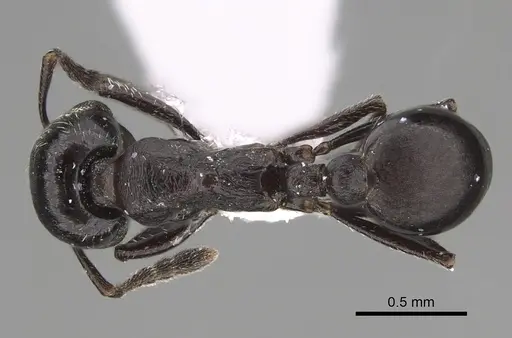
Literatur
Memuat peta distribusi...Memuat produk...