
Oxyepoecus rosai
- Nama Ilmiah
- Oxyepoecus rosai
- Tribe
- Solenopsidini
- Subfamili
- Myrmicinae
- Penulis
- Albuquerque & Brandão, 2009
- Distribusi
- Ditemukan di 1 negara
Pendahuluan
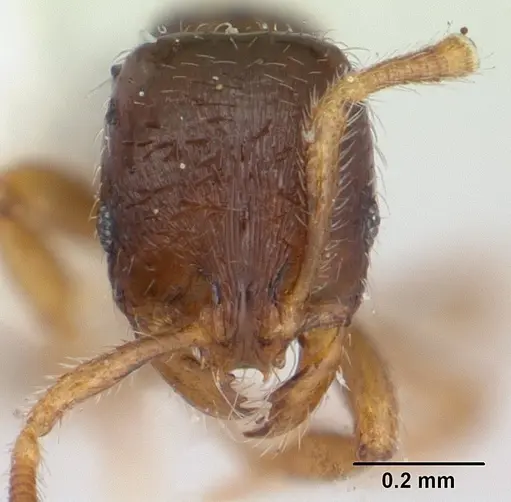
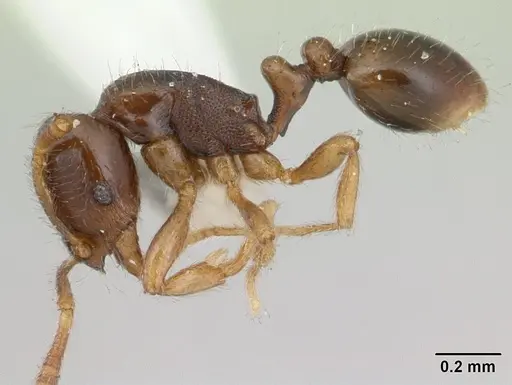
Oxyepoecus rosai is a tiny ant species native to the Atlantic Forest of southeastern Brazil, found in São Paulo and Santa Catarina states . Workers measure 2.30-2.40 mm in total length, and queens measure 2.80-2.93 mm . They have a chestnut brown body with a darker gaster, and workers have very small compound eyes with only 4-5 facets . This species was described in 2009 and named after collector Rogério Rosa da Silva .
Quick Summary
- Difficulty: Expert
- Origin & Habitat: Brazilian Atlantic Forest in São Paulo and Santa Catarina states. Found in leaf-litter using Winkler extractors and attracted to sardine protein baits [1][2].
- Colony Type: Colony structure is unconfirmed. Based on typical Solenopsidini patterns, likely monogyne, but this has not been documented.
- Size & Growth:
- Queen: 2.80-2.93 mm [1]
- Worker: 2.30-2.40 mm [1]
- Colony: Unknown, no data on colony size from context.
- Growth: Unknown
- Development: Unconfirmed, no direct data, estimated 4-8 weeks based on typical Solenopsidini development at warm temperatures. (Development likely depends on temperature and food availability.)
- Antkeeping:
- Temperature: Temperature needs are unclear, start around 22-26°C and observe, based on Atlantic Forest habitat [1].
- Humidity: Keep the nest substrate consistently moist but not waterlogged, as they are from humid Atlantic Forest [1].
- Diapause: Unconfirmed, based on subtropical range, may not require diapause [1].
- Nesting: Use a naturalistic setup with fine substrate or small-chambered nest scaled to their tiny size, inferred from leaf-litter habitat [1].
- Behavior: These ants are likely predatory based on attraction to sardine baits [1]. Escape risk is high due to tiny size, ensure fine mesh barriers. Temperament is unknown but related Solenopsidini are typically non-aggressive.
- Common Issues: escape risk due to tiny size, use fine mesh barriers., no established captive protocols, colony failures are common., wild-caught colonies may have parasites or fail to adapt., protein-focused diet may be difficult to provide in captivity., slow colony growth can lead to keeper impatience and overfeeding.
Species Discovery and Naming
Oxyepoecus rosai was described in 2009 by Albuquerque & Brandão and named in honor of Rogério Rosa da Silva, a colleague and efficient ant collector on the research team [1]. The species belongs to the Rastratus species-group within the genus Oxyepoecus. It was discovered in the Atlantic Forest region of São Paulo state at the Estação Biológica de Boracéia [1][3].
Identification and Distinguishing Features
Workers of O. rosai can be distinguished from other Oxyepoecus species, particularly O. myops, by larger compound eyes and smooth integument on head vertex, lateral pronotum, petiolar node, and postpetiole [1]. Workers measure 2.30-2.40 mm in total length, with a chestnut brown body and darker gaster [1]. Compound eyes have only 4-5 facets in workers, suggesting reliance on chemical cues [1].
Natural History and Foraging
In the wild, O. rosai is collected from leaf-litter in the Brazilian Atlantic Forest and attracted to sardine baits, indicating predatory or scavenging behavior [1][3]. Specimens are recovered using Winkler extractors, confirming they live in the forest floor layer [1]. Their tiny size allows them to hunt small prey in leaf-litter microhabitats.
Housing and Care Recommendations
Based on their Atlantic Forest habitat, these ants need warm, humid conditions with small-scale environments [1][2]. Keep temperatures around 22-26°C and humidity moderate with moist substrate. Escape prevention is critical due to tiny size, use fine mesh on ventilation. For nesting, use a naturalistic setup with fine substrate or a small-chambered nest scaled to their size. Feed protein-rich foods like small live prey, as they are attracted to sardine baits [1].
Distribution and Habitat
Oxyepoecus rosai has a limited distribution in the Atlantic Forest of South and Southeastern Brazil, specifically between São Paulo and Santa Catarina states [1]. It has been recorded in Santa Catarina in western and plateau regions [2]. This humid, subtropical habitat is important for captive care setups [1].
Frequently Asked Questions
How long does it take for Oxyepoecus rosai to produce first workers?
The egg-to-worker timeline is unconfirmed. Based on typical Solenopsidini development at warm temperatures, estimate 4-8 weeks, but this is an educated guess.
What do Oxyepoecus rosai ants eat?
In the wild, they are attracted to protein baits like sardines, suggesting they are predatory on small arthropods [1]. In captivity, offer small live prey such as fruit flies or springtails.
Are Oxyepoecus rosai good for beginners?
This species is not recommended for beginners due to its tiny size and lack of established captive protocols.
What temperature do Oxyepoecus rosai need?
Keep them at 22-26°C, based on their Atlantic Forest habitat [1]. A gentle temperature gradient allows them to regulate body temperature.
How big do Oxyepoecus rosai colonies get?
Colony size is unconfirmed from context, but based on related leaf-litter species, they likely remain small.
Can I keep multiple Oxyepoecus rosai queens together?
The colony structure is unconfirmed. Combining unrelated queens is not recommended as it hasn't been documented and could cause aggression.
Do Oxyepoecus rosai need hibernation?
Diapause requirements are unconfirmed. As Brazilian ants from a subtropical region, they likely do not require true hibernation [1].
Why are my Oxyepoecus rosai dying?
Without established protocols, colony failures are common. Potential issues include inability to provide live prey, stress, parasites, temperature extremes, or escape-related losses.
What type of nest should I use for Oxyepoecus rosai?
Use a naturalistic setup with fine, moist substrate or a small-chambered nest scaled to their tiny size.
Report an Issue
The current care sheet is based fully on literature. See inconsistencies, or something that's incorrect? Please , it will be resolved after review from an admin. Contributing to the blogs tab also helps providing information, to make us be able to further improve the caresheets. Thank you for your support!
References

Lembar perawatan ini dilisensikan di bawah CC BY-SA 4.0 .
Blog Komunitas
CASENT0178852
Lihat di AntWeb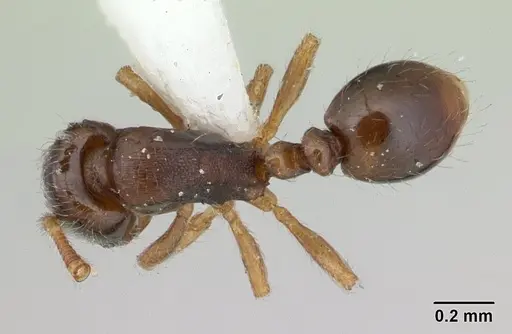
Literatur
Memuat peta distribusi...Memuat produk...