
Oxyepoecus punctifrons
- Nama Ilmiah
- Oxyepoecus punctifrons
- Tribe
- Solenopsidini
- Subfamili
- Myrmicinae
- Penulis
- Borgmeier, 1927
- Distribusi
- Ditemukan di 1 negara
Pendahuluan
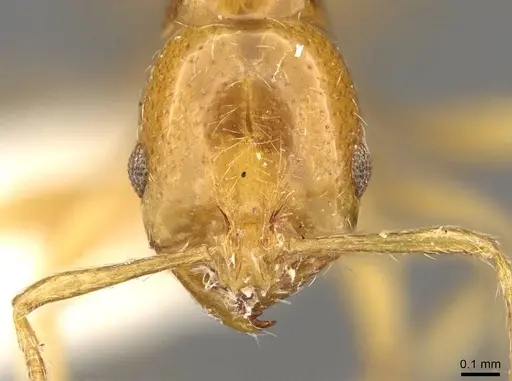
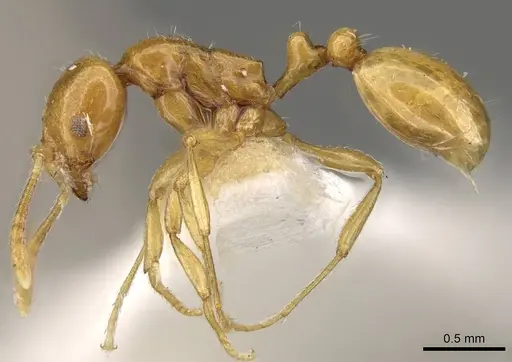
Oxyepoecus punctifrons is a tiny Neotropical ant species native to the Atlantic Forest of southeastern and southern Brazil. Workers have a total length of approximately 2.7-3.4 mm and are reddish-yellow with an almost smooth and shiny exoskeleton . This species is found in multiple localities within the Atlantic Forest Domain, including Paraná, Rio Grande do Sul, Santa Catarina, and São Paulo states . It is one of the few Oxyepoecus species that forms independent nests rather than being socially parasitic . The queen is ergatomorphic, meaning she is wingless and worker-like in appearance .
Quick Summary
- Difficulty: Medium
- Origin & Habitat: Atlantic Forest Domain in southeastern and southern Brazil, specifically in states like Paraná, Rio Grande do Sul, Santa Catarina, and São Paulo. They inhabit leaf litter and have been collected from canopy trees [1].
- Colony Type: Colony structure is unconfirmed, but known to form independent nests with ergatomorphic queens. This species is not socially parasitic [1][2].
- Size & Growth:
- Antkeeping:
- Temperature: Keep at warm temperatures, roughly 22-26°C, based on their tropical habitat [1]. Start with this range and observe colony activity.
- Humidity: Keep the nest substrate consistently moist but not waterlogged, based on their leaf litter habitat [1].
- Diapause: No diapause required, as they are from a tropical region [1].
- Nesting: Prefer tight, humid spaces like Y-tong or plaster nests with small chambers, based on their habitat [1].
- Behavior: These ants are peaceful and not aggressive. Their large eyes suggest visual orientation [1]. Escape prevention is critical due to their small size [1].
- Common Issues: escape prevention is critical due to their tiny size (up to 3.4 mm) [1], humidity management is important to prevent mold in enclosed nests, no development data available, so timing may be uncertain for beginners, ergatomorphic queen may have different founding requirements, but unconfirmed, wild colonies are rare, making acquisition difficult
Housing and Nest Setup
Oxyepoecus punctifrons requires carefully scaled housing due to its tiny size. Use a Y-tong (AAC) nest or plaster formicarium with small, tight chambers [1]. Keep the nest humid by including a water reservoir or moisture chamber [1]. A test tube setup can work for founding colonies, but monitor humidity closely. The outworld should be small with a tight-fitting lid. Escape prevention is essential: use fine mesh on ventilation holes and seal all connections [1].
Feeding and Diet
Specific dietary studies are lacking, but members of the Solenopsidini tribe are typically omnivorous [1]. Based on related species, offer small protein sources like flightless fruit flies or springtails 2-3 times per week, and provide a constant sugar source like honey water [1]. Remove uneaten food within 24-48 hours to prevent mold.
Temperature and Seasonal Care
This species comes from warm Atlantic Forest habitats, so keep temperatures around 22-26°C [1]. A gentle temperature gradient can help the colony self-regulate. Monitor activity and adjust heat if needed. No diapause is required, but activity may reduce in cooler months [1].
Colony Structure and Reproduction
Oxyepoecus punctifrons forms independent nests, unlike many Oxyepoecus that are socially parasitic [2]. The queen is ergatomorphic (wingless and worker-like) [1]. Colony structure is unconfirmed, but it is likely monogyne based on independent nesting behavior [1][2]. Males have not been collected, suggesting unusual reproductive strategies [1].
Behavior and Temperament
These ants are peaceful and not aggressive [1]. Their large eyes suggest they may rely on visual cues [1]. Workers are active foragers in leaf litter. Escape prevention is critical due to their small size [1].
Frequently Asked Questions
How long does it take for Oxyepoecus punctifrons to produce first workers?
The exact development timeline is unknown for this species [1]. No specific data is available, so timing may vary based on temperature and colony conditions.
Can I keep multiple Oxyepoecus punctifrons queens together?
Not recommended, as colony structure is unconfirmed and combining unrelated queens could cause aggression [1]. Start with one queen.
What do Oxyepoecus punctifrons eat?
Diet is unconfirmed, but based on related Solenopsidini, they are likely omnivorous [1]. Offer small protein sources and sugar water.
Are Oxyepoecus punctifrons good for beginners?
This species is rated as Medium difficulty due to lack of care data and tiny size, making escape prevention critical [1]. Experienced keepers may find them more rewarding.
What temperature do Oxyepoecus punctifrons need?
Keep them at 22-26°C, based on their tropical habitat [1]. Adjust based on colony activity.
How big do Oxyepoecus punctifrons colonies get?
Colony size is unknown, as no data is available [1].
Why is the queen of Oxyepoecus punctifrons unusual?
The queen is ergatomorphic, wingless and worker-like, which is rare among ants [1]. This suggests different reproductive behavior.
Do Oxyepoecus punctifrons need hibernation?
No, they do not require diapause as they are from a tropical region [1].
When should I move Oxyepoecus punctifrons to a formicarium?
Wait until the colony has several workers, but no specific number is known [1]. Ensure the formicarium has appropriately sized chambers.
Report an Issue
The current care sheet is based fully on literature. See inconsistencies, or something that's incorrect? Please , it will be resolved after review from an admin. Contributing to the blogs tab also helps providing information, to make us be able to further improve the caresheets. Thank you for your support!
References

Lembar perawatan ini dilisensikan di bawah CC BY-SA 4.0 .
Blog Komunitas
CASENT0911211
Lihat di AntWeb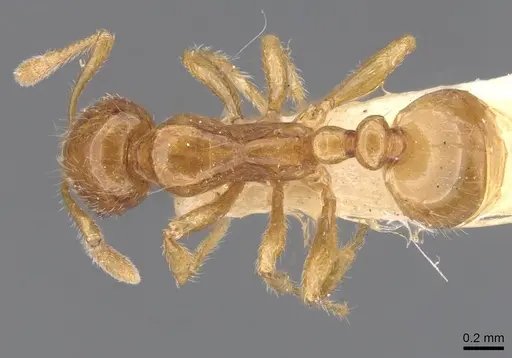
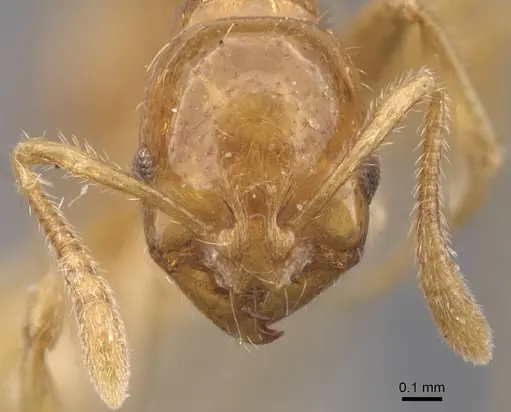
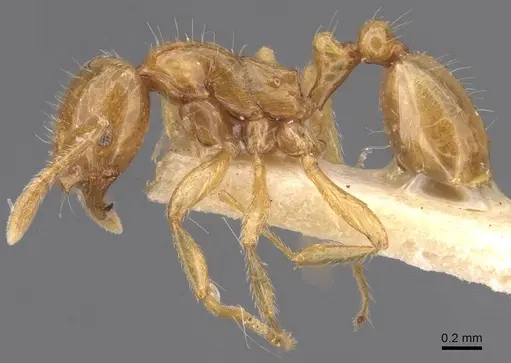
CASENT0914063
Lihat di AntWeb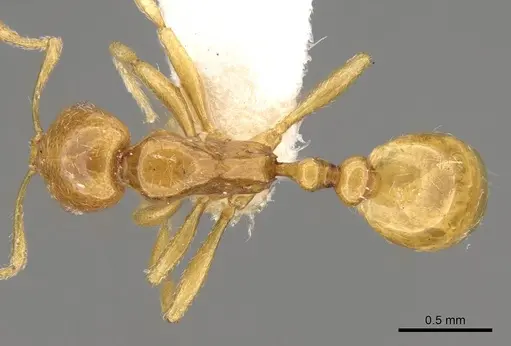
Literatur
Memuat peta distribusi...Memuat produk...