
Oxyepoecus mandibularis
- Nama Ilmiah
- Oxyepoecus mandibularis
- Tribe
- Solenopsidini
- Subfamili
- Myrmicinae
- Penulis
- Emery, 1913
- Distribusi
- Ditemukan di 0 negara
Pendahuluan
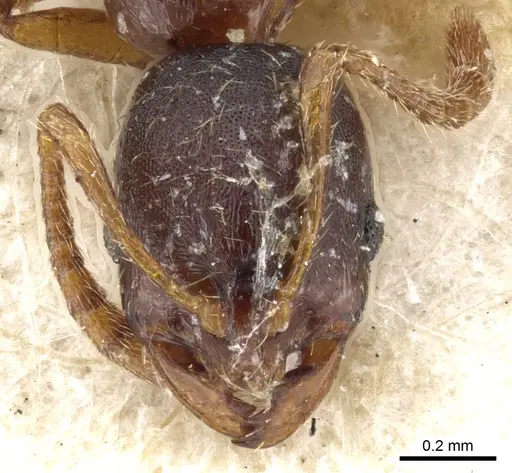
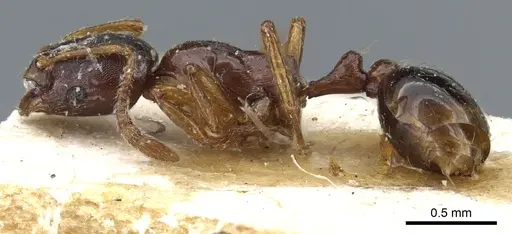
Oxyepoecus mandibularis is a tiny Neotropical ant species known only from a single worker specimen collected in Bolivia over a century ago . Workers measure approximately 3 mm in total length, making them relatively large within the genus . They have distinctive long mandibles with four large teeth, with the basal tooth thickened and clearly separated from the others . The antennal scapes are notably long, nearly reaching the occipital border when at rest . Their coloration is brownish-ferruginous with a darker head and first gastral segment . The sculpture pattern on the head dorsum, promesonotum, and propodeum serves as distinguishing characters that set this species apart from related species like Oxyepoecus rastratus . This species remains one of the most poorly known ants in the world, with no documented colonies, queens, or any biological observations ever recorded .
Quick Summary
- Difficulty: Expert
- Origin & Habitat: Known only from a single collection in Songo, Bolivia [1], in the Neotropical region [2]. The exact habitat is unrecorded.
- Colony Type: Unknown, only a single worker has ever been documented. No queens, males, or colony structure has been observed.
- Size & Growth:
- Queen: Unknown, queens have never been documented for this species
- Worker: 3 mm total length [1]
- Colony: Unknown, no colonies have ever been observed
- Growth: Unknown
- Development: Unknown, no breeding colonies have ever been documented (This species is known from a single worker specimen collected in 1913. No captive colonies exist.)
- Antkeeping:
- Temperature: Unknown, no specific data exists. Based on genus Oxyepoecus patterns [2], start around 24-26°C and observe colony activity.
- Humidity: Unknown, no specific data exists. Based on genus patterns [2], keep nest substrate consistently moist but not waterlogged.
- Diapause: Unknown, no seasonal data exists. As a Neotropical species, it may not require formal hibernation.
- Nesting: Unknown, no natural nesting observations exist. Based on genus patterns [2], likely nests in small chambers in soil, under stones, or in rotting wood.
- Behavior: Behavior is completely unobserved. The genus Oxyepoecus contains small, generally non-aggressive ants that typically forage individually or in small groups [2]. Workers are around 3 mm, so escape prevention should be moderate, they are small but not among the tiniest ants. As members of the Solenopsidini tribe, they likely possess a stinger, but no data on sting potency exists.
- Common Issues: no captive colonies exist, this species has never been kept in captivity and may not be available to hobbyists [1]., complete lack of biological data means all care recommendations are speculative guesses based on genus patterns [2]., extremely rare, only known from a single specimen collected over 100 years ago [1]., no queen or colony structure data means founding behavior cannot be predicted., risk of keeping a species that may have specialized ecological requirements we cannot determine.
A Note on This Extremely Rare Species
Oxyepoecus mandibularis represents one of the most poorly documented ant species in the world. It was originally described by Carlo Emery in 1913 based on a single worker specimen collected in Songo, Bolivia [1]. Since then, no additional specimens have been found, no colonies have ever been observed, and no biological information exists in the scientific literature [1][2]. The holotype specimen is likely housed in the Emery collection in Genoa, Italy, but has not been examined in recent revisions [1]. This means there is essentially no captive husbandry information available, every recommendation for this species must be inferred from what we know about related ants in the genus Oxyepoecus and the broader Solenopsidini tribe [2]. If you somehow obtain this species, you would essentially be pioneering its captive care with no prior guidance. This makes it an expert-level species in the truest sense.
Taxonomy and Identification
This species was originally described as Monomorium (Martia) mandibulare by Emery in 1913 before being transferred to the genus Oxyepoecus by Ettershank in 1966 [1]. The species name 'mandibularis' refers to its distinctive large mandibles [1]. The worker is relatively large for the genus at 3 mm total length [1]. Key identification features include the long mandibles with four large teeth (the basal tooth is thickened and clearly separated from the others), very long antennal scapes that nearly reach the occipital border, and distinctive sculpture patterns on the head, promesonotum, and propodeum [1]. In identification keys, it runs close to Oxyepoecus rastratus but can be distinguished by its longer median tooth, shorter lateral tooth, and different sculpture patterns [1].
Genus-Level Information
The genus Oxyepoecus contains approximately 15 described species distributed throughout the Neotropical region, primarily in South America [2]. They are small to tiny Myrmicinae ants that typically form small colonies [2]. Some species in the genus have been suggested to have socially parasitic relationships with other ants, though this varies by species [2]. Workers are generally modest in size, with some species being among the smallest ants known [2]. The genus is part of the Solenopsidini tribe, which includes fire ants (Solenopsis) and other small Myrmicinae [2]. Based on related genera, Oxyepoecus species likely feed on small invertebrates, honeydew, and nectar [2]. However, specific dietary preferences for O. mandibularis are completely unknown.
Housing and Care Recommendations
Since no specific data exists for O. mandibularis, housing recommendations must be based on what works for similar tiny Neotropical Myrmicinae [2]. Use test tubes for founding colonies, a small chamber with a water reservoir at one end works well [2]. The tube should be kept humid but not flooded. For established colonies, small Y-tong style nests or 3D-printed nests with appropriately scaled chambers work well [2]. Because workers are around 3 mm, use tight-fitting barriers and fine mesh to prevent escapes [1]. Temperature should be in the warm range (24-26°C) with a slight gradient if possible [2]. Humidity should be moderate to high [2]. Feed small protein sources like fruit flies, pinhead crickets, or similar small prey, along with sugar water or honey [2]. However, since this species has never been kept in captivity, all of these recommendations are speculative and should be adjusted based on observed colony behavior.
The Challenge of Documenting New Species Information
If you are fortunate enough to locate or maintain this species, documenting its biology would represent a significant contribution to myrmecology. Keep detailed notes on founding behavior, colony development, worker behavior, temperature and humidity preferences, and dietary acceptance. Photograph queens, workers, and all brood stages if possible. This species represents a genuine opportunity to document biological information that has been unknown for over a century. Consider collaborating with professional myrmecologists to ensure your observations are properly recorded in the scientific literature. The antkeeping community would greatly benefit from any confirmed information about this mysterious species.
Frequently Asked Questions
Is Oxyepoecus mandibularis available in the antkeeping hobby?
No. This species is extremely rare, only a single worker specimen has ever been documented, collected in Bolivia over 100 years ago [1]. It is not known to exist in captivity anywhere in the world. Even the holotype specimen's current location is uncertain.
What do Oxyepoecus mandibularis ants eat?
Unknown, no feeding observations have ever been recorded for this species. Based on genus-level information [2], they likely accept small protein sources like fruit flies, micro-arthropods, and similar tiny prey, along with sugar sources. However, this is entirely speculative.
How big do Oxyepoecus mandibularis colonies get?
Unknown, no colonies have ever been observed [1]. The genus Oxyepoecus is generally known to have small colonies, but specific colony size data for this species does not exist.
What is the queen of Oxyepoecus mandibularis like?
Queens have never been documented for this species [1]. The original description only covers the worker caste. Finding a queen would represent a significant scientific discovery.
Are Oxyepoecus mandibularis good for beginners?
No. This species is not available in the hobby and would be extremely challenging even for expert antkeepers due to the complete lack of biological data [1][2]. All care recommendations would be speculative guesses. There are many better-documented species available for beginners.
Where does Oxyepoecus mandibularis live?
Only known from a single collection in Songo, Bolivia [1]. The exact habitat type is unrecorded. The Neotropical region generally includes tropical and subtropical forests, though more specific microhabitat preferences are unknown.
How long do Oxyepoecus mandibularis workers live?
Unknown, no lifespan data exists for this species or likely for any Oxyepoecus species [2]. Worker longevity in similar small Myrmicinae typically ranges from several months to a few years.
What temperature should I keep Oxyepoecus mandibularis at?
No specific data exists. Based on Neotropical ant patterns [2], start around 24-26°C and observe colony activity. Provide a gentle gradient if possible. This is entirely speculative since no captive colonies have ever been maintained.
Does Oxyepoecus mandibularis need hibernation?
Unknown, no seasonal data exists. As a Neotropical species from Bolivia, it may not require formal hibernation but might slow activity during cooler periods. This is unconfirmed.
Can I keep multiple Oxyepoecus mandibularis queens together?
Unknown, colony structure has never been documented [1]. No data exists on whether this species is single-queen (monogyne) or multi-queen (polygyne). Combining unrelated queens is not recommended given the complete lack of data.
How do I start an Oxyepoecus mandibularis colony?
You cannot. No colonies exist in captivity [1]. Even if a queen were found, no information exists about whether this species is claustral or semi-claustral. This species remains one of the most mysterious ants in the world.
Report an Issue
The current care sheet is based fully on literature. See inconsistencies, or something that's incorrect? Please , it will be resolved after review from an admin. Contributing to the blogs tab also helps providing information, to make us be able to further improve the caresheets. Thank you for your support!
References

Lembar perawatan ini dilisensikan di bawah CC BY-SA 4.0 .
Blog Komunitas
CASENT0904585
Lihat di AntWeb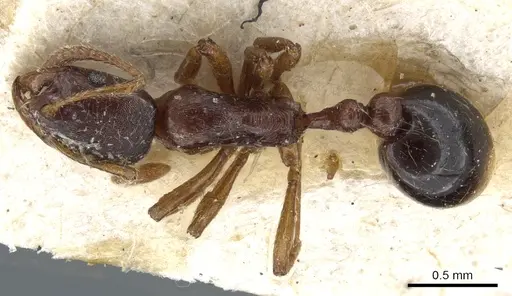
Literatur
Memuat peta distribusi...Memuat produk...