
Oxyepoecus bidentatus
- Nama Ilmiah
- Oxyepoecus bidentatus
- Tribe
- Solenopsidini
- Subfamili
- Myrmicinae
- Penulis
- Delsinne & Mackay, 2011
- Distribusi
- Ditemukan di 0 negara
Pendahuluan
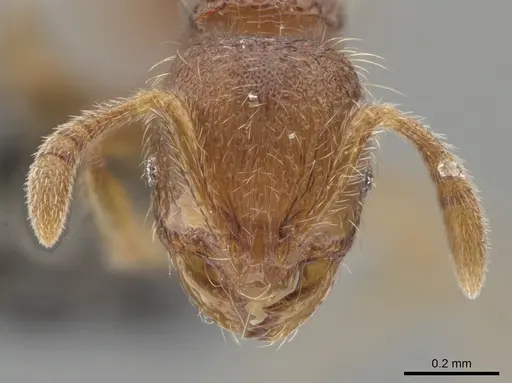
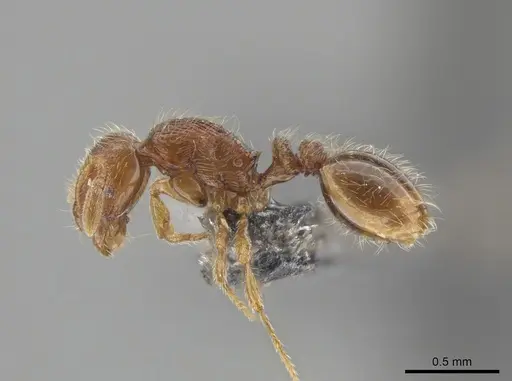
Oxyepoecus bidentatus is a tiny ant species, with workers measuring 1.86-1.94mm in total length . They are a uniform reddish-brown color throughout their body . This species belongs to the rastratus species-group and is unique among Oxyepoecus ants for having both the entire dorsal surface of the head covered by distinctive reticulate-costulate sculpture and a bidentate subpostpetiolar process (two small teeth on the underside of the postpetiole) . The species was described in 2011 from specimens collected in the Paraguayan dry Chaco region . The name 'bidentatus' refers to these distinctive double teeth . This is a cryptic soil-nesting species that forages in leaf litter when conditions are favorable . It is rarely encountered but appears widely distributed in xeromorphic Chacoan forests of Paraguay and northern Argentina . No queens or males have been documented, making captive breeding impossible .
Quick Summary
- Difficulty: Expert
- Origin & Habitat: Paraguayan dry Chaco region, found in three localities: Río Verde, Teniente Enciso National Park, and Garrapatal [1]. Workers nest in soil but forage in leaf litter [1]. Mean annual rainfall is 593-887mm and temperature is 23-25°C [1].
- Colony Type: Unknown, no queens or males have ever been documented [1]. Colony structure is unstudied.
- Size & Growth:
- Queen: Unknown, queens have not been described [1]
- Worker: 1.86-1.94mm total length [1]
- Colony: Unknown, no colony size data exists
- Growth: Unknown, no development data exists
- Development: Unknown, no brood development data exists [1] (This species has never been kept in captivity, so any timeline would be speculation.)
- Antkeeping:
- Temperature: Keep at 23-25°C based on natural habitat conditions [1].
- Humidity: Keep substrate moderately dry with some moisture, as the dry Chaco has low rainfall [1].
- Diapause: Unknown, no data on seasonal behavior exists [1].
- Nesting: Soil-nesting species that forages in leaf litter [1]. In captivity, use a small test tube with moist soil and fine mesh barriers due to tiny size.
- Behavior: No behavioral observations have been published [1]. As a member of Solenopsidini, they likely use a sting for defense. Based on their tribe and small size, they are likely shy, non-aggressive foragers. Their tiny size makes them extremely vulnerable to escape.
- Common Issues: no captive husbandry data exists, this species has never been kept in captivity., queens have never been documented, making wild colony establishment impossible., tiny size (under 2mm) creates extreme escape risk requiring fine mesh barriers., no information on diet or feeding requirements., no data on colony founding or development timeline., distribution is limited to Paraguay and Argentina, making wild collection difficult.
Why This Species Is Not Recommended for Most Antkeepers
Oxyepoecus bidentatus is one of the least suitable species for captive keeping, regardless of your experience level. The fundamental problem is that no one has ever documented a queen of this species, not in the wild, not in research, nowhere [1]. This means you cannot start a colony because there are no queens to collect, no mated females to find, and no documented nuptial flights to predict. The entire global knowledge of this species consists of about a dozen worker specimens collected from leaf litter in Paraguay [1]. Without queens, there is no way to establish a captive breeding colony. Even if you somehow obtained workers, there is zero information about what they eat, how they develop, or what conditions they need to survive. This is not a species to seek out, it's a taxonomic curiosity for researchers only.
Natural History and Identification
Oxyepoecus bidentatus is a member of the rastratus species-group within the cryptic ant genus Oxyepoecus [1]. These ants are tiny, workers measure just 1.86-1.94mm total length, making them among the smallest ants you could potentially keep [1]. They are a uniform reddish-brown color throughout their body [1]. The species gets its name 'bidentatus' (Latin for 'two-toothed') from its most distinctive feature: a bidentate subpostpetiolar process, meaning it has two small blunt teeth on the underside of the postpetiole [1]. Combined with the reticulate-costulate sculpture covering the entire dorsal surface of the head, this makes identification under magnification relatively straightforward for this genus [1]. The species is known only from the dry Chaco of Paraguay and northern Argentina, a harsh subtropical forest environment with low annual rainfall [1].
Habitat and Distribution
This species is known only from the Paraguayan dry Chaco, specifically three localities spanning about 340km: Río Verde in Presidente Hayes department, Teniente Enciso National Park in Boqueron department, and Garrapatal also in Boqueron [1]. The dry Chaco is a xeromorphic (dry-adapted) forest ecosystem with mean annual rainfall of only 593-887mm and temperatures averaging 23-25°C [1]. Workers have been collected using Winkler extraction from leaf litter samples and pitfall traps [1]. This suggests the species nests in the soil but workers venture into the leaf litter layer to forage when conditions are favorable [1]. The species is suspected to be widely distributed but rarely encountered due to its cryptic habits and small colony size [1].
What Would Be Needed If This Species Became Available
While purely hypothetical at this point, if queen specimens were ever discovered and this species became available to keepers, care would need to be based entirely on inference from related Solenopsidini ants and the known habitat conditions. Temperature should be maintained at 23-25°C to match their natural environment [1]. Humidity should be moderate, the dry Chaco is not a rainforest, so avoid overly damp conditions. Nesting would likely be in soil or small cavities, so a small test tube setup with a thin soil layer would be appropriate. Escape prevention would be absolutely critical given their tiny size under 2mm, standard test tube barriers would likely need additional fine mesh. Diet would be speculative but likely includes small insects and honeydew, similar to other small Solenopsidini. However, none of this is confirmed care advice, it is purely informed speculation based on habitat data.
Frequently Asked Questions
Can I keep Oxyepoecus bidentatus as a pet ant?
No. This species is not available to antkeepers and cannot be kept in captivity. No queens or males have ever been documented for this species, meaning there is no way to start a colony [1]. Even if workers were collected, there is zero information about their care requirements.
Where does Oxyepoecus bidentatus live?
Only in the Paraguayan dry Chaco region, specifically in the departments of Presidente Hayes and Boqueron in Paraguay [1]. It may also extend into adjacent parts of northern Argentina, but confirmed records only exist from Paraguay.
How big are Oxyepoecus bidentatus ants?
Workers are extremely tiny at just 1.86-1.94mm total length [1]. This makes them among the smallest ants in the hobby, requiring expert-level escape prevention if they were ever kept.
What makes Oxyepoecus bidentatus different from other ants?
It is the only species in the genus Oxyepoecus that has both the entire dorsal surface of the head covered by reticulate-costulate sculpture AND a bidentate (two-toothed) subpostpetiolar process [1]. The species name 'bidentatus' literally means 'two-toothed' referring to these distinctive teeth.
Are Oxyepoecus bidentatus queens known?
No. Queens (gynes) and males have never been documented for this species [1]. This is why captive breeding is impossible, you cannot establish a colony without a queen.
What do Oxyepoecus bidentatus eat?
Unknown. No feeding observations have been published [1]. Based on being in the Solenopsidini tribe, they likely eat small insects and honeydew from aphids, but this is pure speculation.
Do Oxyepoecus bidentatus need hibernation?
Unknown. No data exists on their seasonal behavior [1]. The Paraguayan dry Chaco has mild winters with temperatures rarely dropping significantly, so they may not require a true hibernation period if kept in captivity.
How many queens does Oxyepoecus bidentatus have?
Unknown. The colony structure (single-queen monogyne vs multi-queen polygyne) has never been studied because no queens have ever been found [1].
What is the difficulty level for keeping Oxyepoecus bidentatus?
Expert/Impossible. This species cannot be kept because no queens exist in captivity or documented nuptial flights to obtain them [1]. Even if available, the complete lack of husbandry data would make success extremely unlikely.
Why can't I find Oxyepoecus bidentatus for sale?
This species has never been kept in captivity by anyone. No queens have ever been described scientifically, so no one can catch or sell them [1]. It remains known only from a handful of worker specimens collected by researchers in Paraguay.
Report an Issue
The current care sheet is based fully on literature. See inconsistencies, or something that's incorrect? Please , it will be resolved after review from an admin. Contributing to the blogs tab also helps providing information, to make us be able to further improve the caresheets. Thank you for your support!
References

Lembar perawatan ini dilisensikan di bawah CC BY-SA 4.0 .
Blog Komunitas
LACMENT685808
Lihat di AntWeb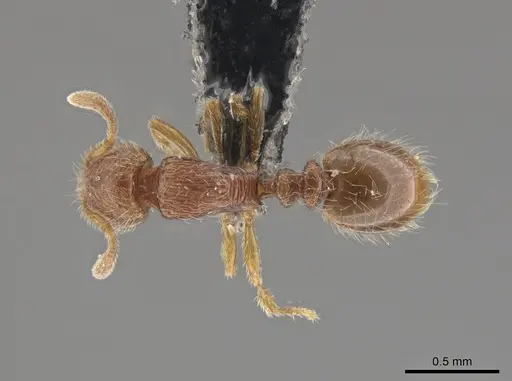
Literatur
Memuat peta distribusi...Memuat produk...