
Odontomachus cornutus
- Nama Ilmiah
- Odontomachus cornutus
- Tribe
- Ponerini
- Subfamili
- Ponerinae
- Penulis
- Stitz, 1933
- Distribusi
- Ditemukan di 1 negara
Pendahuluan
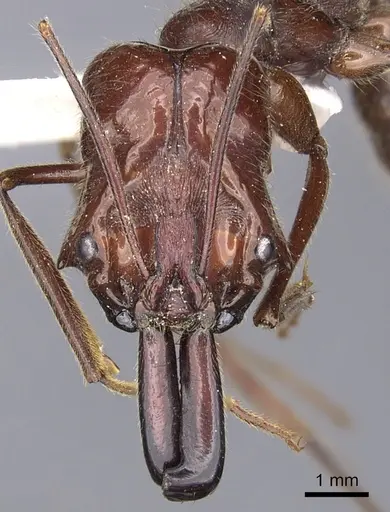
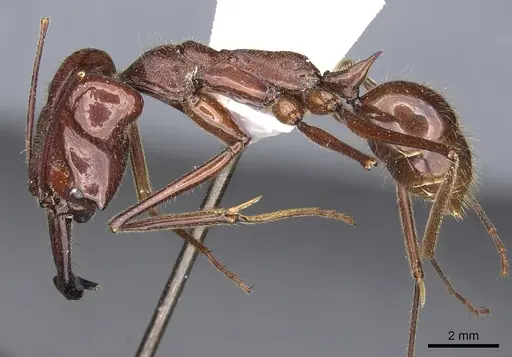
Odontomachus cornutus is a large trap-jaw ant native to the Pacific slope of the Colombian and Ecuadorian Andes . Workers measure 13.68-18.71 mm in total length, with queens reaching 19.16 mm . They are recognized by their ocular prominences that project as stout, acute teeth . Body color is reddish-copper with darker frontal carinae . This species is the sole member of the Odontomachus cornutus group and is rare, known from montane forest habitats in Chocó and Valle del Cauca regions . They are an indicator species for minimally disturbed forest, meaning they require pristine conditions to thrive . In captivity, they need careful attention to humidity and nesting space due to their specific habitat requirements.
Quick Summary
- Difficulty: Expert
- Origin & Habitat: Pacific slope of Colombian and Ecuadorian Andes (Chocó and Valle del Cauca regions). Found in primary montane forest at elevations of 610-850 m. Annual rainfall reaches 4.8 meters per year, with driest months receiving 4.5-16.6 cm [7][5][6][1].
- Colony Type: Unconfirmed, no specific data on queen number from research.
- Size & Growth:
- Queen: 19.16 mm [3]
- Worker: 13.68-18.71 mm [2]
- Colony: Colonies appear small based on field data, maximum observed is few workers per nest [2].
- Growth: Estimated slow, no direct data, but large species likely have extended development.
- Development: Unknown, no species-specific data. Based on Ponerinae patterns, egg to worker may take 8-12 weeks at warm temperatures. (Development timeline has not been scientifically documented for this species.)
- Antkeeping:
- Temperature: Keep warm, around 24-27°C, inferred from tropical habitat [7].
- Humidity: Keep nest substrate consistently moist but not waterlogged, as they nest in soft, deep soil under leaf litter [4][2].
- Diapause: No, tropical species with minimal seasonal variation.
- Nesting: Prefer naturalistic setups with deep, moist substrate (at least 10-15 cm). Use Y-tong, plaster, or soil nests, avoid dry substrates [4][2].
- Behavior: Trap-jaw ants with powerful mandibles for hunting and defense. Predatory, hunting small invertebrates. Relatively calm but can bite if threatened. Escape risk is moderate due to size.
- Common Issues: high humidity maintenance is critical, drying out kills colonies quickly [4]., colonies are naturally small and slow-growing, which may frustrate keepers., rare species means wild-caught colonies are difficult to obtain., deep nesting requirement may be challenging to replicate., prey acceptance may be limited, they are specialized predators.
Housing and Nest Setup
Odontomachus cornutus requires careful attention to humidity and nesting space. In the wild, they excavate nests in soft, deep soil under leaf litter in montane forest [4][2]. For captivity, create a naturalistic setup with at least 10-15 cm of moist, loose substrate (a mix of soil, sand, and organic material works well). Alternatively, a large Y-tong or plaster nest with deep chambers can work if you maintain high humidity through regular misting and a water reservoir. The key is preventing the substrate from drying out, these ants come from one of the wettest regions on Earth. Provide a water dish in the outworld and mist the nest area regularly.
Feeding and Diet
As predatory trap-jaw ants, they hunt and capture small invertebrates. Offer live prey such as small crickets, fruit flies, mealworms, and other appropriately-sized insects. Based on typical Ponerinae behavior, they likely accept a variety of arthropods. Feed protein-rich foods 2-3 times per week, removing uneaten prey after 24 hours to prevent mold. Sugar sources like honey water may be accepted but are not a primary food source for these predatory ants. Always provide a fresh water source.
Temperature and Seasonal Care
Maintain temperatures in the warm range of 24-27°C. Their native habitat in the Chocó region is warm year-round with high humidity [7]. Use a heating cable on one side of the nest to create a gentle gradient if your room temperature falls below this range. No documented diapause requirement exists due to tropical conditions. If you choose to simulate a cooler period, reduce temperatures gradually to around 20-22°C for 2-3 months rather than a full hibernation.
Behavior and Handling
These ants have powerful trap-jaw mandibles capable of snapping shut at extreme speeds for hunting and defense. While not aggressive toward humans, a bite from such a large ant can be painful. They are relatively calm but will readily snap their mandibles if threatened. Avoid sudden vibrations or disturbances near the nest. Escape prevention is important, while large, they can climb smooth surfaces, so use standard barrier methods like fluon on test tube rims or formicarium edges.
Colony Establishment
This is one of the rarest Odontomachus species in captivity. Queens measure approximately 19 mm and are substantial insects. The founding behavior is unconfirmed, but based on Ponerinae patterns, it may be semi-claustral, meaning the queen may need to leave the nest to hunt during founding. If you obtain a newly mated queen, provide her with a deep, moist founding chamber and offer small live prey items. Colonies appear to remain small in the wild, so patience is essential. [3][2]
Frequently Asked Questions
How long does it take for Odontomachus cornutus to produce first workers?
The exact development timeline is unknown for this species. Based on typical Ponerinae development patterns, expect 8-12 weeks from egg to worker at warm temperatures (around 25°C).
What do Odontomachus cornutus ants eat?
They are predatory ants that hunt small invertebrates. Feed live prey such as small crickets, fruit flies, mealworms, and other appropriately-sized insects. Protein should be offered 2-3 times per week.
Are Odontomachus cornutus good for beginners?
No. This is an expert-level species due to its high humidity requirements, need for deep nesting space, slow growth, and rarity. They require conditions that are challenging to maintain consistently. Beginners should start with more hardy species like Lasius niger or Messor barbarus.
How big do Odontomachus cornutus colonies get?
Based on field collection data showing only a few workers per nest, colonies remain relatively small [2]. Do not expect rapid expansion.
What temperature do Odontomachus cornutus need?
Keep them warm at 24-27°C. They come from the warm, humid Chocó region of Colombia and Ecuador [7]. Provide a temperature gradient so the ants can choose their preferred spot.
Do Odontomachus cornutus need hibernation?
No documented diapause requirement exists. These ants come from a tropical region with minimal seasonal temperature variation. Some keepers report reduced activity during winter months, but a full hibernation is not necessary or recommended.
Can I keep multiple Odontomachus cornutus queens together?
This species is likely monogyne based on subfamily patterns, but no specific data exists. Multiple unrelated queens will likely fight. In the wild, only one queen per colony has been documented. Do not attempt to keep multiple foundresses together.
What humidity level do Odontomachus cornutus need?
Keep the nest substrate consistently moist but not waterlogged, as they nest in soft, deep soil under leaf litter [4][2]. Regular misting and a water dish are essential. Drying out quickly kills colonies.
When should I move Odontomachus cornutus to a formicarium?
Wait until the colony has enough workers and the founding setup is becoming cramped. This species needs deep substrate for nesting, so ensure the new setup provides at least 10-15 cm of moist nesting material [4][2].
Report an Issue
The current care sheet is based fully on literature. See inconsistencies, or something that's incorrect? Please , it will be resolved after review from an admin. Contributing to the blogs tab also helps providing information, to make us be able to further improve the caresheets. Thank you for your support!
References

Lembar perawatan ini dilisensikan di bawah CC BY-SA 4.0 .
Blog Komunitas
CASENT0901974
Lihat di AntWeb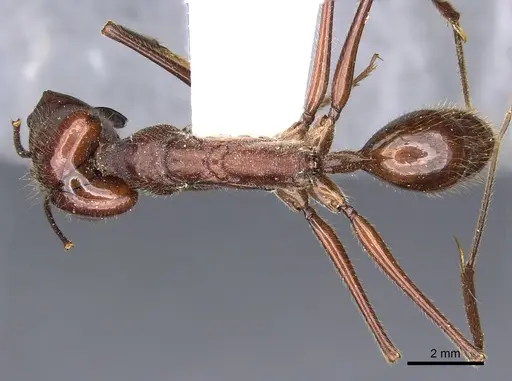
Literatur
Memuat peta distribusi...Memuat produk...