
Nylanderia smythiesii
- Nama Ilmiah
- Nylanderia smythiesii
- Tribe
- Lasiini
- Subfamili
- Formicinae
- Penulis
- Forel, 1894
- Distribusi
- Ditemukan di 1 negara
Pendahuluan
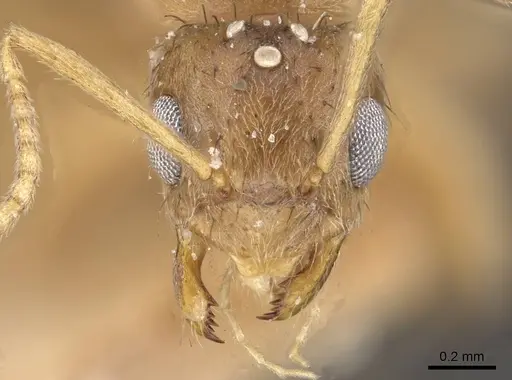
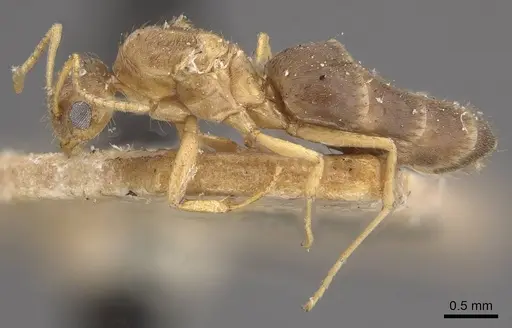
Nylanderia smythiesii is a small ant species native to the low-altitude regions of Northwest India and Nepal. Workers feature a broadly oval head that is distinctly longer than wide, with a very smooth and shiny cuticle that lacks significant pubescence. Their body coloration is distinctive: the head is brown, the gaster ranges from brown to black, and the mesosoma, antennae, and legs are yellowish brown. Queens are larger and feature a subtriangular head with dense pubescence and fine punctulae. This species was first described in 1894,and the worker caste was formally documented in 2014 .
Quick Summary
- Difficulty: Medium
- Origin & Habitat: Endemic to low-altitude areas of Northwest India (Himachal Pradesh, Jammu & Kashmir, Punjab, Uttarakhand) and recently recorded in Nepal [1][2][3][4]. They nest under stones and leaf litter in warm, relatively dry habitats [1][2].
- Colony Type: Colony structure is unconfirmed. Nylanderia species vary between single-queen and multi-queen systems, but research has not documented this for Nylanderia smythiesii.
- Size & Growth:
- Queen: size data unavailable
- Worker: size data unavailable
- Colony: Unknown, no colony size data available
- Growth: Unknown, growth rate has not been studied
- Development: Unknown, development time has not been studied (Estimates are not available.)
- Antkeeping:
- Temperature: Based on their low-altitude Himalayan range, they likely prefer temperatures in the low-to-mid 20s°C (approximately 22-26°C) [1][2]. Start around 24°C and observe colony activity.
- Humidity: Keep the nest substrate consistently moist but not waterlogged. Provide a humidity gradient so the ants can self-regulate [5].
- Diapause: Unknown, diapause requirements have not been studied. Given their Himalayan distribution, a cool period during winter months is likely beneficial, but specific duration and temperature needs are unconfirmed [1][2].
- Nesting: In the wild, they nest under stones and leaf litter. For captivity, a Y-tong (AAC) nest or plaster nest works well. Provide a test tube setup for founding colonies with access to an outworld. They prefer narrow chambers and will readily use test tubes [5].
- Behavior: Workers are active foragers that travel along trails, commonly found on trees and fallen trunks in the wild [1][2]. They are not aggressive and typically flee when disturbed. Their small size means they can escape through tiny gaps, so excellent escape prevention is essential. They likely feed on honeydew, small insects, and sugary substances, following typical Nylanderia foraging patterns [5].
- Common Issues: escape prevention is critical due to their very small size, use fine mesh barriers and tight-fitting lids, colony growth may be slow, which can frustrate beginners expecting rapid development, wild-caught colonies may have parasites that can cause colony collapse in captivity, test tube setups can flood if water reservoirs are overfilled, use appropriate tube sizes, they are sensitive to drying out but also prone to mold in overly humid conditions, balance is key
Identification and Appearance
Nylanderia smythiesii is distinctive among Indian Nylanderia species due to its smooth and shiny cuticle with almost no pubescence. Workers have a broadly oval head that is distinctly longer than wide, slightly wider at the posterior. The eyes are large and oval, covering about one-third of the lateral cephalic margin. Their antennae are long, with the scapes surpassing the posterior margin by two-fifths their length. The body coloration is distinctive: the head is brown, the gaster is brown to black, while the mesosoma, antennae, and legs are yellowish brown. This color pattern helps distinguish them from similar species. Queens are larger with a subtriangular head and denser pubescence. Males are smaller with large, projecting eyes and 13-segmented antennae [1][2].
Natural History and Distribution
This species is endemic to the Himalayan region, specifically found in low-altitude areas of Northwest India including Himachal Pradesh, Jammu and Kashmir, Punjab, and Uttarakhand. The type locality is the Shivalik range of the Northwest Himalaya near Dehradun, Uttarakhand. Recent surveys have also recorded the species in Nepal, expanding its known range. They inhabit warm, relatively drier lowland areas at lower elevations. Nests are typically found underneath stones and leaf litter, making them relatively easy to locate in suitable habitat. Foraging workers are commonly observed on trees and fallen trunks, indicating they are active surface foragers. This arboreal foraging tendency means they will readily explore vertical spaces in captivity [1][2][3][4].
Housing and Nest Setup
For founding colonies, a standard test tube setup works well. Use a small test tube with a water reservoir sealed with a cotton plug, fill only about one-third to one-half with water to prevent flooding. Place the tube in a dark area to encourage the queen to seal herself in a chamber. Once the colony establishes (after first workers emerge), you can connect the test tube to a small outworld using tubing. For established colonies, Y-tong (AAC) nests or plaster nests work well, providing chambers scaled to their tiny size. Because they are small and agile, ensure all connections are secure and use fine mesh on any ventilation. They do best with moderate humidity, not too wet, not too dry. A small water tube connected to the nest helps maintain humidity [5].
Feeding and Diet
Based on typical Nylanderia feeding behavior, they likely accept a varied diet including honeydew, small insects, and sugary solutions. Offer a drop of sugar water or honey diluted with water as a constant sugar source. For protein, offer small insects like fruit flies, pinhead crickets, or other appropriately-sized prey. They are small, so prey items should be tiny, springtails or flightless fruit flies are ideal. Feed small amounts every few days, removing uneaten prey after 24 hours to prevent mold. Observe what they prefer and adjust accordingly. Freshly killed insects are usually more readily accepted than live prey for smaller colonies [5].
Temperature and Seasonal Care
Nylanderia smythiesii originates from the warm lowlands of the Northwest Indian Himalayas, suggesting they prefer temperatures in the low-to-mid 20s°C range. Start around 24°C and observe your colony's behavior, if workers cluster near any heat source, the temperature can be increased slightly, if they avoid heated areas, reduce temperature. Room temperature (20-24°C) is likely suitable for this species. Regarding winter care, the specific diapause requirements are unconfirmed. However, given their Himalayan distribution, a cooler period during winter months is likely beneficial. If you choose to cool them, reduce temperature to around 15-18°C for 2-3 months, ensuring they have access to water and not letting them dry out completely [1][2].
Behavior and Temperament
Workers are active foragers that travel in characteristic trails, a behavior common in the Formicinae subfamily. In the wild, they are frequently observed foraging on trees and fallen trunks, indicating they are comfortable moving across vertical surfaces. They are not aggressive and will typically flee when disturbed rather than engage in defensive behavior. Their small size makes them excellent escape artists, they can squeeze through remarkably small gaps. Excellent escape prevention is essential: use tight-fitting lids, fine mesh barriers, and ensure all connections between nest and outworld are secure. They are fast-moving and can be difficult to contain when foraging [1][2].
Frequently Asked Questions
How long does it take for Nylanderia smythiesii to produce first workers?
The exact development time is unknown for this species. Research has not documented their development timeline. Patience is key, small ant species often develop more slowly than larger species.
Can I keep Nylanderia smythiesii in a test tube setup?
Yes, test tubes work well for founding colonies. Use a small test tube with a water reservoir (fill only one-third to one-half to prevent flooding), seal with a cotton plug, and place in a dark area. Once the colony grows, connect to an outworld using tubing [5].
What do Nylanderia smythiesii ants eat?
Based on typical Nylanderia feeding patterns, they likely accept sugar water or honey as a constant carbohydrate source. For protein, offer small insects like fruit flies, springtails, or tiny crickets. Feed small amounts every few days and remove uneaten food promptly [5].
Are Nylanderia smythiesii good for beginners?
This species is rated as Medium difficulty, making it suitable for intermediate keepers. However, their very small size requires excellent escape prevention, which beginners may find challenging. Their unknown growth rate can also test patience.
What temperature do Nylanderia smythiesii need?
Based on their low-altitude Himalayan origin, aim for temperatures in the low-to-mid 20s°C (approximately 22-26°C) [1][2]. Room temperature (20-24°C) is likely suitable. Start around 24°C and adjust based on colony behavior.
Do Nylanderia smythiesii need hibernation?
Diapause requirements are unknown for this species. However, given their Himalayan distribution, a cool period during winter is likely beneficial. If you choose to hibernate them, reduce temperature to 15-18°C for 2-3 months [1][2].
How big do Nylanderia smythiesii colonies get?
Colony size is unknown, no data is available from scientific literature. Based on typical Nylanderia species, colonies likely reach several hundred workers at maximum.
Why are my Nylanderia smythiesii escaping?
Their very small size makes them excellent escape artists. Use fine mesh barriers, tight-fitting lids, and ensure all connections are secure. Check for gaps as small as 1mm [5].
Report an Issue
The current care sheet is based fully on literature. See inconsistencies, or something that's incorrect? Please , it will be resolved after review from an admin. Contributing to the blogs tab also helps providing information, to make us be able to further improve the caresheets. Thank you for your support!
References

Lembar perawatan ini dilisensikan di bawah CC BY-SA 4.0 .
Blog Komunitas
CASENT0911010
Lihat di AntWeb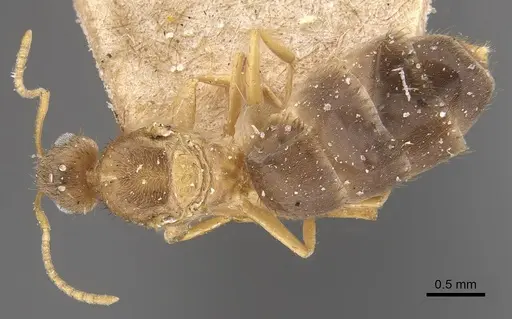
Literatur
Memuat peta distribusi...Memuat produk...