
Myrmica luteola
- Nama Ilmiah
- Myrmica luteola
- Tribe
- Myrmicini
- Subfamili
- Myrmicinae
- Penulis
- Kupyanskaya, 1990
- Distribusi
- Ditemukan di 0 negara
Pendahuluan
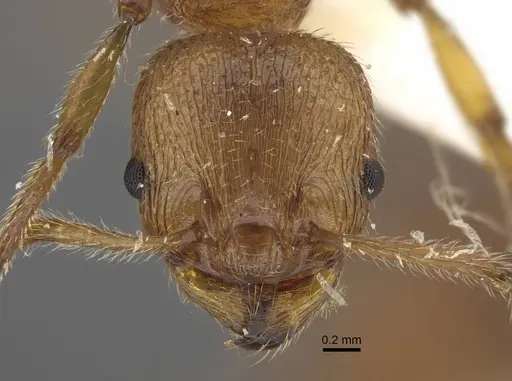
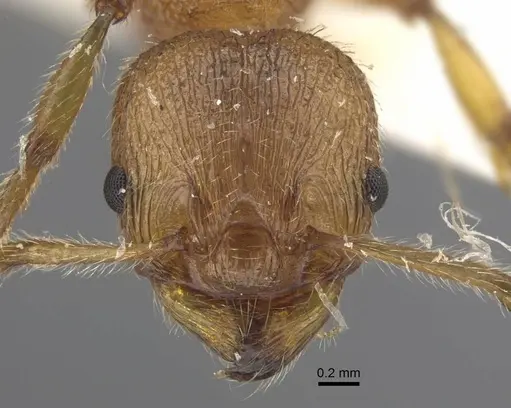
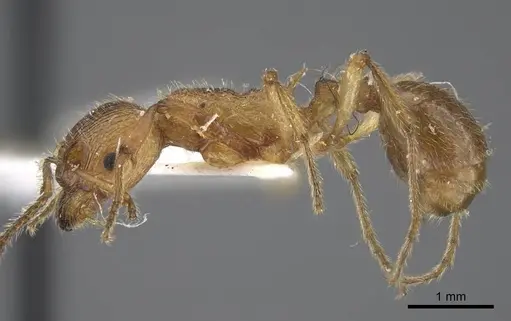
Myrmica luteola is a small, unusual ant species native to temperate East Asia, including the Russian Far East, northeastern China, the Korean Peninsula, and Japan. Workers measure 5.5-6.5mm and are brownish yellow with lighter legs, while queens are even smaller at 5.3-6.0mm - unusually, the queens are smaller than the workers . This species belongs to the luteola group and displays many features typical of social parasites, including reduced tibial spurs, developed ventral petiolar processes, and a very hairy body. The most distinctive trait is that queens lack propodeal spines entirely, having only an angled propodeum - unique among Myrmica species . The first gastral tergite has longitudinal striations at the base, a very rare feature in this genus .
Quick Summary
- Difficulty: Expert
- Origin & Habitat: Native to temperate East Asia, southern Russian Far East (Primorye, Sakhalin, Kurilen Islands), northeastern China, Korean Peninsula, and Japan (Hokkaido, Honshu). Inhabits spruce and southern-type mixed forest, preferring forest glades and meadows bordering rivers and lakes. Also found in sparsely forested rocky sites in Japan. Associated with the taiga zone and boreal ecosystems. Highest altitude recorded is 1820m in North Korea [3][1][4][5].
- Colony Type: Temporary social parasite, queens invade host colonies, kill the host queen, and use host workers to raise their brood. In Japan, confirmed to parasitize Manica yessensis. Over most of its range, the specific host remains uncertain, suggesting it may either parasitize different hosts or establish colonies independently [1][6][5]. Likely single-queen colonies when established.
- Size & Growth:
- Antkeeping:
- Temperature: Keep at room temperature, roughly 20-24°C. This species inhabits temperate forests and should not be kept too warm.
- Humidity: Moderate humidity preferred. In nature, they nest under stones, around tree roots, and in decaying wood in forest habitats. Keep the nest substrate moderately moist but not waterlogged.
- Diapause: Yes, as a temperate species, colonies require a winter rest period. In the wild, sexuals are present in nests from June to September, with nuptial flights from July to September in Primorsky and September to mid-October in Japan. Provide hibernation at 5-10°C for 3-4 months during winter [1][5].
- Nesting: Naturalistic setups work well, they nest under stones, in decaying wood, and around tree roots. In captivity, a Y-tong or plaster nest with some soil/debris works well. Provide access to a water tube and keep nesting area slightly humid.
- Behavior: This is a temporary social parasite, queens must invade a host colony to establish. In laboratory settings, queens have been observed actively invading Manica yessensis nests, showing behaviors like rubbing against host workers and gripping them for extended periods [1]. Queens may mimic host workers in body size and lack of propodeal spines [1]. Workers are not particularly aggressive and are smaller than typical Myrmica. Escape risk is moderate, use standard Myrmica escape prevention. The species is rarely kept in captivity due to its parasitic nature and the difficulty of establishing colonies.
- Common Issues: establishing colonies is extremely difficult, queens need a host colony to succeed., host species is uncertain over most of the range, making successful parasitism challenging., queens die quickly if they fail to integrate into a host colony., the species is rare throughout its range and rarely available to keepers., winter hibernation is required, colonies that fail to enter diapause may decline.
Understanding Myrmica luteola's Parasitic Lifestyle
Myrmica luteola is one of the most unusual Myrmica species due to its temporary social parasitic lifestyle. Unlike typical ants where a queen founds a new colony alone, M. luteola queens must invade an existing host colony. Research shows queens actively approach host workers, gripping them for 15-27 minutes while rubbing against their bodies [1]. The queen then kills or replaces the host queen and uses the host workers to raise her own brood. This behavior was directly observed in laboratory settings with Manica yessensis as the host [1]. However, over most of its range (Russia, China, Korea), there are no Manica species present, meaning either it parasitizes different host species or can establish colonies independently [5]. This uncertainty makes captive establishment extremely challenging.
Housing and Nesting
In the wild, M. luteola nests in decaying wood, under stones, and around tree roots, typically in forest glades, meadows bordering rivers and lakes, or sparsely forested rocky sites [1][5]. For captive care, a naturalistic setup works best, a formicarium with soil, small stones, and decaying wood debris. Alternatively, a Y-tong or plaster nest with a section of damp soil works well. Keep the nesting area moderately humid. Always provide a water tube. Because this is a parasitic species, you would need to provide a host colony for the queen to invade, this makes this species extremely difficult to keep and not recommended for beginners.
Feeding and Diet
Like other Myrmica species, M. luteola workers are omnivorous, feeding on honeydew, small insects, and nectar. In laboratory observations, queens showed interest in host larvae [1]. Feed workers a diet of sugar water or honey water, and protein sources like small insects. Feed protein regularly and provide constant access to sugar sources. However, establishing a feeding regimen is secondary to the primary challenge of establishing the colony itself through parasitism.
Seasonal Care and Hibernation
As a temperate species from East Asia, M. luteola requires a winter diapause. In the wild, sexuals are present in nests from June to September, with nuptial flights occurring from July to September in Primorsky and September to mid-October in Japan [1][5]. This indicates a clear seasonal cycle. Keep colonies at room temperature during the active season, then provide 3-4 months of hibernation at 5-10°C during winter. A refrigerator or cold cellar works well for overwintering. Do not skip hibernation, temperate Myrmica species that fail to enter proper winter rest often decline.
Unique Identification Features
Myrmica luteola is unmistakable among Myrmica ants. The most distinctive feature is the queen's complete lack of propodeal spines, the propodeum is simply angled or rounded, not spined [1]. This is unique among all known Myrmica species. Additionally, queens are smaller than workers, which is highly unusual [1]. Both workers and queens have reduced tibial spurs on middle and hind legs, and developed ventral processes on the petiole and post-petiole, features common in social parasites [1]. The base of the first gastral tergite has longitudinal striations, a very rare feature in Palaearctic Myrmica [2]. Workers are brownish yellow with lighter legs.
Frequently Asked Questions
Is Myrmica luteola a good species for beginners?
No. Myrmica luteola is not recommended for beginners or even most experienced antkeepers. This is a temporary social parasite that requires a host colony to establish. The specific host is uncertain over most of its range, making successful captive establishment extremely difficult. Unless you have access to appropriate host colonies and experience with parasitic ant species, this species should be avoided.
How do I establish a Myrmica luteola colony?
This is the primary challenge. Unlike typical ants, M. luteola queens cannot found colonies independently, they must invade a host colony. Research suggests they may parasitize Manica species or other Myrmica. You would need to introduce a queen to an established colony of a suitable host species and hope she successfully integrates. This is highly complex and rarely successful. Over most of the species' range, the host is unknown, suggesting the biology is not fully understood.
What do Myrmica luteola ants eat?
Like other Myrmica species, they are omnivorous. Workers will accept sugar sources and protein. Feed protein regularly and provide constant access to sugar water. However, feeding is secondary to the challenge of establishing a colony.
Do Myrmica luteola ants sting?
Myrmica ants can sting, though their stingers are small. M. luteola workers are relatively small and their sting is not particularly powerful or painful compared to some other Myrmica.
What temperature and humidity do they need?
Keep at room temperature, roughly 20-24°C. They inhabit temperate forests and should not be kept warm. Provide moderate humidity, keep the nest substrate moist but not waterlogged. They naturally nest under stones and in decaying wood in forest habitats.
Do they need hibernation?
Yes. As a temperate East Asian species, they require a winter diapause. Provide 3-4 months of hibernation at 5-10°C during winter months. This aligns with their natural cycle where sexuals are produced in summer and nuptial flights occur in late summer to fall.
How big do colonies get?
Colony size is not well documented. Based on related Myrmica species, colonies likely reach several hundred workers at most. The parasitic lifestyle may result in smaller colony sizes since the queen relies on host workers.
Can I keep multiple queens together?
This has not been studied. Given their temporary parasitic lifestyle, introducing multiple unrelated queens to a host colony would likely result in conflict. Do not attempt to keep multiple foundress queens together without specific research on this species.
Why are the queens smaller than workers?
This is one of the many parasitic features of M. luteola. Small queen morphology is common among social parasites, small queens are less conspicuous when invading host colonies and require less resources to produce. The reduced size helps the queen mimic host workers and integrate into the host colony [1].
Where can I find Myrmica luteola?
This species is rare throughout its range. It is found in the southern Russian Far East (Primorye, Sakhalin, Kurilen Islands), northeastern China, the Korean Peninsula, and Japan (Hokkaido, Honshu). They prefer forest glades, meadows bordering rivers and lakes, and sparsely forested rocky sites at altitudes up to 1820m. The species is rarely available in the antkeeping hobby.
Report an Issue
The current care sheet is based fully on literature. See inconsistencies, or something that's incorrect? Please , it will be resolved after review from an admin. Contributing to the blogs tab also helps providing information, to make us be able to further improve the caresheets. Thank you for your support!
References

Lembar perawatan ini dilisensikan di bawah CC BY-SA 4.0 .
Blog Komunitas
CASENT0917498
Lihat di AntWeb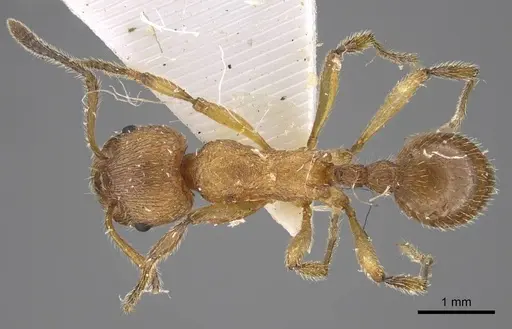
Literatur
Memuat peta distribusi...Memuat produk...