
Myrmecina tridentata
- Nama Ilmiah
- Myrmecina tridentata
- Tribe
- Crematogastrini
- Subfamili
- Myrmicinae
- Penulis
- Okido <i>et al.</i>, 2020
- Distribusi
- Ditemukan di 0 negara
Pendahuluan
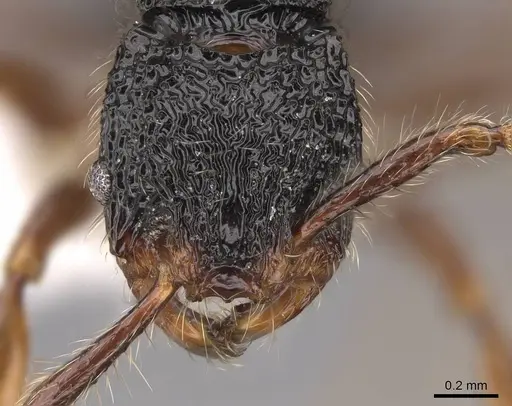
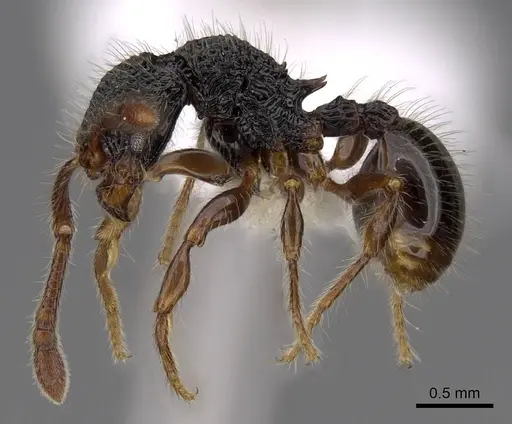
Myrmecina tridentata is a tiny ant species from the Myrmecina genus, recently described in 2020. Workers measure 3.28-3.51mm in total length, making them among the smaller ants you can keep . They belong to the M. spinosa complex and are distinguished by their wavy, irregular rugae on the head and mesosoma, plus distinctive propodeal spines that curve upward . The species is native to Borneo, Malaysia (Sabah and Sarawak), where they live in soil habitats in the humid tropical rainforest environment . These ants have a dark body with reddish-brown gaster and yellowish-brown legs, and their most notable feature is the concave anterior margin of their first gastral segment .
Quick Summary
- Difficulty: Medium
- Origin & Habitat: Borneo, Malaysia (Sabah and Sarawak) in the Indomalaya region. They inhabit soil in what is typically a humid tropical rainforest environment [1][2].
- Colony Type: Colony structure is unconfirmed. Based on typical Myrmecina patterns, likely single-queen colonies with relatively small colony sizes.
- Size & Growth:
- Queen: Unconfirmed, likely 4-6mm inferred from genus patterns
- Worker: 3.28-3.51mm [1]
- Colony: Up to 100 workers estimated based on similar Myrmecina species
- Growth: Moderate, inferred from tropical soil-dwelling habits
- Development: Estimated 6-10 weeks at optimal tropical temperatures based on genus patterns (Direct development data unavailable for this species, estimate based on related Myrmecina species in tropical conditions)
- Antkeeping:
- Temperature: Keep at 24-28°C. Being from tropical Borneo, they need warm conditions. A heating cable on one side of the nest creates a gradient [2].
- Humidity: High humidity required, think damp forest floor. Keep the nest substrate consistently moist but not waterlogged. Provide a water tube for drinking access [2].
- Diapause: Unlikely, being from tropical Borneo, they probably do not require hibernation. However, slight seasonal cooling may trigger reduced activity in winter months.
- Nesting: Soil-dwelling species. A naturalistic setup with moist substrate (like a mixture of soil and sand) works well, or a Y-tong/plaster nest with narrow chambers scaled to their tiny size [2].
- Behavior: These are tiny, docile ants that are not aggressive. They belong to the tribe Crematogastrini, which uses a smear defense mechanism, they have a flattened stinger that wipes venom onto enemies rather than piercing flesh. They are slow-moving and spend most of their time in the nest or foraging quietly through the substrate. Because of their very small size, escape prevention is critical, they can squeeze through the tiniest gaps. They are likely primarily predatory or omnivorous, foraging for small prey in the soil [2].
- Common Issues: escape prevention is critical due to their tiny 3mm size, use fine mesh and tight-fitting lids, high humidity needs can lead to mold if ventilation is poor, slow growth may cause beginners to overfeed or give up, wild-caught colonies may have parasites that are difficult to detect, small size means prey must be appropriately sized, fruit flies and pinhead crickets work well
Housing and Nest Setup
Because Myrmecina tridentata is a soil-dwelling species from humid Borneo, they need a setup that maintains consistent moisture. A naturalistic setup with a soil/sand mixture works well, use a container with drainage if you go naturalistic, or a Y-tong/plaster nest designed for small species. The chambers should be tight and narrow since these ants are only about 3mm long. Provide a water tube or moist cotton as a water source. Because they are so tiny, escape prevention must be excellent, use fine mesh on any ventilation holes and ensure all lids fit tightly. A small outworld connected to the nest allows for feeding without disturbing the colony. [2][1]
Feeding and Diet
Myrmecina tridentata is likely an omnivorous predator like most Myrmecina species. Offer small live prey such as fruit flies, pinhead crickets, small mealworms, or other appropriately sized insects. They will likely accept sugar sources like honey water or sugar water, though protein-rich foods should form the bulk of their diet. Feed small amounts 2-3 times per week, removing any uneaten prey after 24 hours to prevent mold. Because of their tiny size, prey items should be no larger than their head width. [2]
Temperature and Humidity
Being from tropical Borneo, these ants need warm and humid conditions. Keep temperatures in the range of 24-28°C. A heating cable placed on one side of the nest creates a temperature gradient allowing the ants to self-regulate. Humidity should be high, the nest substrate should feel consistently damp but never waterlogged. If using a test tube setup, keep the water reservoir moderate-sized to prevent flooding. Mist the nest occasionally if it appears to be drying out, but ensure good ventilation to prevent mold buildup. [2]
Colony Development
This is a newly described species with limited documented biology. Based on typical Myrmecina patterns, the queen likely seals herself in a claustral chamber and raises the first brood alone without foraging. The first workers (nanitics) will be smaller than normal workers. Expect development from egg to first worker to take approximately 6-10 weeks at optimal temperatures. Colony growth will likely be slow initially, with colony size probably remaining under 100 workers even in mature colonies. Be patient with these ants, they are not fast growers. [1]
Frequently Asked Questions
How long does it take for Myrmecina tridentata to produce first workers?
Based on typical Myrmecina development patterns, expect 6-10 weeks from egg to first worker at optimal temperatures of 24-28°C. This is an estimate since direct development data for this specific species is not available.
What do Myrmecina tridentata ants eat?
They are likely omnivorous predators. Feed small live prey like fruit flies, pinhead crickets, or small mealworms. They will also accept sugar sources like honey water. Offer protein 2-3 times per week and keep sugar water available.
Do Myrmecina tridentata ants sting?
These ants are very small and docile. They are not known to be aggressive. They belong to the Crematogastrini tribe which uses a smear defense mechanism, they wipe venom onto enemies rather than piercing. Their sting is negligible and they are safe to handle gently if needed.
What temperature do Myrmecina tridentata ants need?
Keep them warm at 24-28°C. Being from tropical Borneo, they need consistently warm conditions. A heating cable on one side of the nest can provide the necessary warmth.
How big do Myrmecina tridentata colonies get?
Based on similar Myrmecina species, colonies likely remain relatively small, probably up to 100 workers at maturity. These are tiny ants with modest colony sizes.
Are Myrmecina tridentata good for beginners?
They are rated as medium difficulty. While not aggressive, their small size makes them harder to care for, escape prevention is critical and they require specific humidity and temperature conditions. They may be better suited for keepers with some experience.
Do Myrmecina tridentata need hibernation?
Being from tropical Borneo, they likely do not require hibernation. However, they may show reduced activity during cooler winter months. No formal diapause is documented for this species.
How do I house Myrmecina tridentata?
Use a naturalistic setup with moist soil/sand substrate, or a Y-tong/plaster nest with small chambers. Ensure excellent escape prevention due to their tiny 3mm size. Provide a water source and keep humidity high.
Report an Issue
The current care sheet is based fully on literature. See inconsistencies, or something that's incorrect? Please , it will be resolved after review from an admin. Contributing to the blogs tab also helps providing information, to make us be able to further improve the caresheets. Thank you for your support!
References

Lembar perawatan ini dilisensikan di bawah CC BY-SA 4.0 .
Blog Komunitas
CASENT0922960
Lihat di AntWeb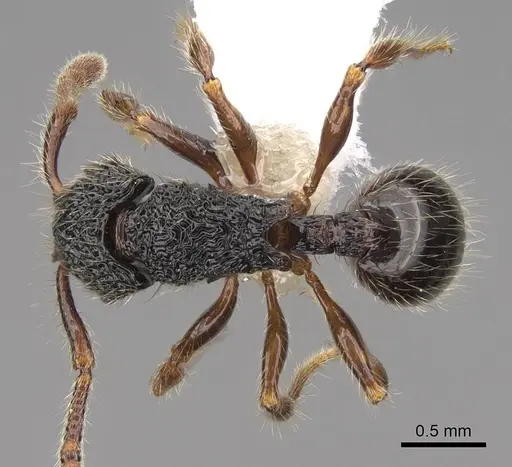
Literatur
Memuat peta distribusi...Memuat produk...