
Toothed Bull Ant
Myrmecia chrysogaster
- Nama Ilmiah
- Myrmecia chrysogaster
- Tribe
- Myrmeciini
- Subfamili
- Myrmeciinae
- Penulis
- Clark, 1943
- Nama Umum
- Toothed Bull Ant
- Distribusi
- Ditemukan di 1 negara
Pendahuluan
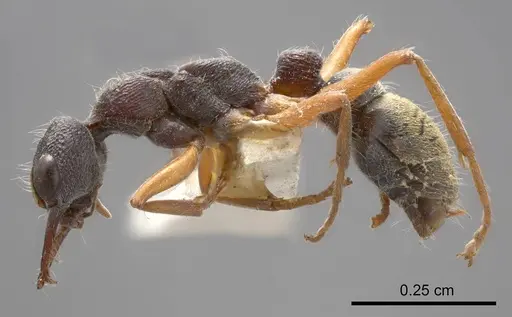
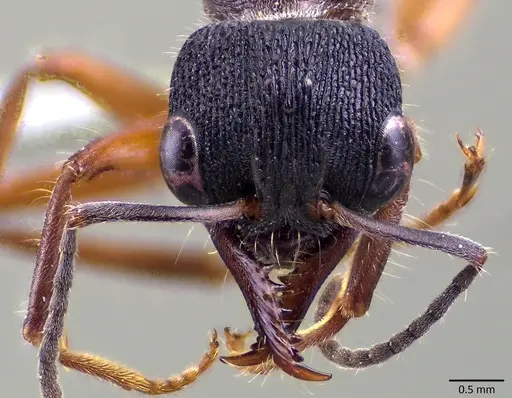
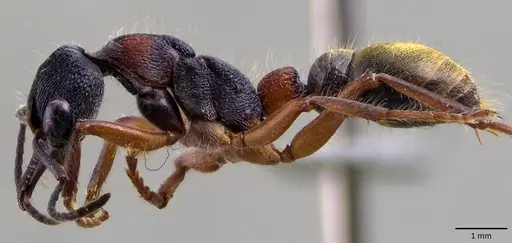
Myrmecia chrysogaster is a large Australian bulldog ant belonging to the pilosula species group . Workers are robust ants with a distinctive golden-yellow to reddish-brown coloration on their gaster (abdomen). These ants are native to eastern Australia, particularly Queensland, where they nest in soil in open woodland and forest habitats . As typical bulldog ants in the Myrmeciinae subfamily, they possess a potent sting and are aggressive defenders of their nest. They are predatory ants that hunt insects and other small invertebrates, using their excellent vision to locate prey during their typically diurnal foraging runs. What makes M. chrysogaster notable is its placement in the pilosula species group, which includes some of the most well-studied bulldog ants. While not as famous as M. pilosula (the jack jumper ant), this species shares many of the same characteristics: large size, aggressive temperament, and medically significant venom from the sting. The golden coloration on the gaster helps distinguish it from similar species.
Quick Summary
- Difficulty: Medium
- Origin & Habitat: Eastern Australia, particularly Queensland (Brisbane area). They nest in soil in open woodland and forest habitats [2].
- Colony Type: Monogyne (single-queen colonies). Founding behavior is unconfirmed but likely claustral based on genus patterns.
- Size & Growth:
- Queen: size data unavailable
- Worker: size data unavailable
- Colony: size data unavailable
- Growth: Moderate
- Development: development timeline unconfirmed (Development time is temperature-dependent. First workers (nanitics) are typically smaller than mature workers.)
- Antkeeping:
- Temperature: Keep nest area at 22-26°C with a slight gradient. Myrmecia are adaptable but prefer warm conditions. Room temperature within this range works well, or use a heating cable on one side of the nest for cooler environments.
- Humidity: Maintain moderate humidity in the nest. Keep substrate consistently moist but not waterlogged. Provide a water tube for drinking access.
- Diapause: Diapause requirements are unconfirmed for this specific species. Many Myrmecia species are temperate/subtropical and may benefit from a winter rest period.
- Nesting: Ground-nesting species. In captivity, they do well in Y-tong (AAC) nests, plaster nests, or naturalistic setups with deep soil. Provide chambers large enough for the colony to move freely.
- Behavior: Myrmecia chrysogaster is an aggressive, defensive species. Workers are highly territorial and will readily attack any perceived threat to the nest. They are diurnal foragers that actively hunt for prey using their excellent vision. These ants can climb smooth surfaces and will explore for weaknesses. They have a potent sting that causes significant pain and can trigger allergic reactions in sensitive individuals. Workers are solitary foragers that hunt alone rather than using recruitment pheromone trails [2].
- Common Issues: sting hazard, these ants have potent venom and can deliver painful stings, handle with extreme caution and wear protective gear when working with the colony, aggressive temperament means colony disturbances can result in mass attacks, minimize nest disruptions and use red light for observation, slow founding phase, claustral queens can take months alone, beginners often give up or disturb the nest prematurely, large colony size means they need significant space as they grow, underestimating enclosure needs leads to escape attempts or stress, specific care requirements are poorly documented in scientific literature, much of antkeeping advice is based on genus-level patterns rather than species-specific research
Housing and Nest Setup
Myrmecia chrysogaster requires spacious housing due to their large size and colony growth potential. For founding colonies, a test tube setup works for the claustral phase, but be prepared to move them to a larger enclosure within a few months as the colony grows. Y-tong (AAC) nests are excellent for Myrmecia, they provide visibility while allowing proper humidity control. Plaster nests or naturalistic setups with deep soil (at least 5-10cm) also work well and allow for natural digging behavior. The nest should have chambers large enough for the colony to cluster together, avoid cramped spaces that can cause stress and aggression. An outworld (foraging area) should be connected to the nest, sized appropriately for the colony size. For adult colonies, a 20x20cm or larger outworld is appropriate. Ensure all connections are secure, Myrmecia can gnaw through soft materials. [2]
Feeding and Diet
Myrmecia chrysogaster is a predatory ant that primarily hunts insects and other small invertebrates. In captivity, their diet should consist mainly of live prey such as crickets, mealworms, cockroaches, and other appropriately-sized insects. Feed prey items roughly equal to the head width of the workers. They typically accept dead prey as well if moved around to simulate movement. Sugar sources are also accepted, offer honey water or sugar water periodically, though protein-rich prey should form the bulk of their diet. Feed adult colonies 2-3 times per week, adjusting based on consumption. Remove uneaten prey after 24-48 hours to prevent mold. A constant water source should be available at all times. [2]
Temperature and Seasonal Care
Maintain nest temperatures between 22-26°C for optimal colony development. Myrmecia are native to temperate and subtropical Australia, so they handle warmth well but can suffer if temperatures exceed 30°C. A heating cable placed on one side of the nest creates a gradient allowing workers to self-regulate. Room temperature within the range is often sufficient. During winter (Southern Hemisphere summer months June-August), consider reducing temperatures to 10-15°C for a 2-3 month diapause period if the colony shows signs of slowing activity. This rest period may be beneficial for colony health. Do not feed during this period but ensure water is available. Resume normal feeding and warming when temperatures rise again. [2]
Behavior and Handling
Myrmecia chrysogaster is one of the more aggressive ant species kept in captivity. Workers are highly defensive and will attack in force when the nest is disturbed. Their vision is excellent, they can track movement across the room and will investigate disturbances. This species forages solitarily rather than in groups, sending workers out to hunt individually. They do not use pheromone trails to recruit nestmates to food sources. The sting is the primary concern, it causes intense pain lasting several hours and can trigger allergic reactions or anaphylaxis in susceptible individuals. Never handle these ants with bare hands. Use tools for any colony maintenance and consider wearing gloves and eye protection. Red film or LED lights allow observation without triggering their defensive responses as strongly. [2]
Colony Growth and Development
A newly mated queen will seal herself into a claustral chamber and lay eggs without eating, she survives entirely on stored fat reserves and metabolic water. The first brood develops through all stages (egg, larva, pupa) over several months depending on temperature. First workers (nanitics) are smaller than mature workers but will immediately begin foraging to feed the colony and the queen. After this point, the queen stops foraging and is fed by workers. Colony growth is initially slow but accelerates once the first batch of workers establishes the colony. Myrmecia colonies can eventually reach several thousand workers over several years. Requeening (replacement of the queen) does not typically occur in Myrmecia, when the founding queen dies, the colony eventually declines. [2]
Frequently Asked Questions
How long does it take for Myrmecia chrysogaster to get their first workers?
Expect 6-10 months from founding to first workers emerging. The queen is claustrally sealed in and raises the first brood alone without eating, this takes time, especially if temperatures are on the cooler side. Warmer conditions (around 25°C) speed development significantly.
Can I keep multiple Myrmecia chrysogaster queens together?
No. This species is monogyne, colonies have only one queen. Introducing additional queens will result in fighting and likely death of all but one.
What do I feed Myrmecia chrysogaster?
Feed them live insects (crickets, mealworms, roaches) roughly matching the head width of workers. They are predatory hunters that prefer live prey. Offer honey or sugar water as a supplemental energy source. Remove uneaten prey after 24-48 hours.
Do Myrmecia chrysogaster need hibernation?
Diapause requirements are unconfirmed for this specific species. Many Myrmecia species benefit from a winter rest period, but more research is needed on M. chrysogaster specifically.
Are Myrmecia chrysogaster good for beginners?
No. While rewarding, they are not recommended for beginners due to their aggressive temperament, potent sting, and specific care requirements. The slow founding phase also tests patience. Experience with less dangerous ant species first is strongly advised.
How big do Myrmecia chrysogaster colonies get?
Mature colonies can reach several thousand workers over several years. They need significant space as they grow, plan for a large formicarium or naturalistic setup.
When should I move Myrmecia chrysogaster from a test tube to a formicarium?
Move them once the first workers have emerged and the colony has grown to 20-30 workers, or when the test tube becomes cramped. Myrmecia need space to expand. A Y-tong or plaster nest works well for the transition.
Why is my Myrmecia chrysogaster colony dying?
Common causes include: disturbance during founding phase, mold from overwatering, temperatures too high or too low, or stress from insufficient space. Check each parameter against their requirements and ensure the queen is still alive and laying eggs.
Report an Issue
The current care sheet is based fully on literature. See inconsistencies, or something that's incorrect? Please , it will be resolved after review from an admin. Contributing to the blogs tab also helps providing information, to make us be able to further improve the caresheets. Thank you for your support!
References

Lembar perawatan ini dilisensikan di bawah CC BY-SA 4.0 .
Blog Komunitas
ANTWEB1008279
Lihat di AntWeb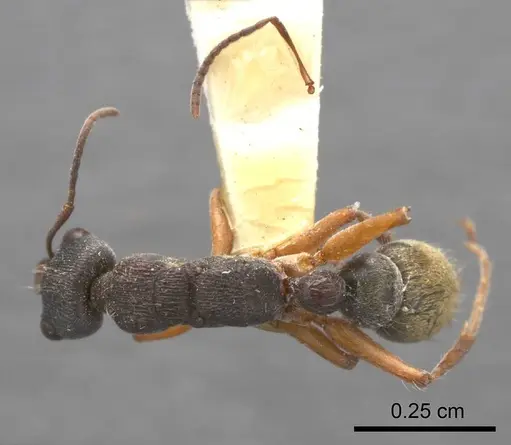
ANTWEB1041865
Lihat di AntWeb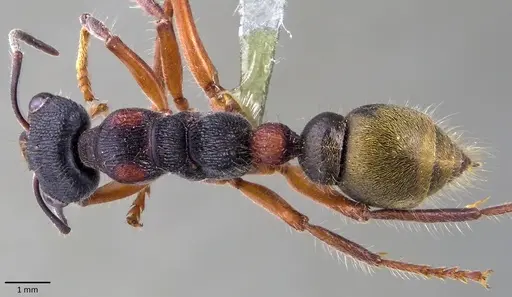
Literatur
Memuat peta distribusi...Memuat produk...