
Myopias chapmani
- Nama Ilmiah
- Myopias chapmani
- Tribe
- Ponerini
- Subfamili
- Ponerinae
- Penulis
- Willey & Brown, 1983
- Distribusi
- Ditemukan di 1 negara
Pendahuluan
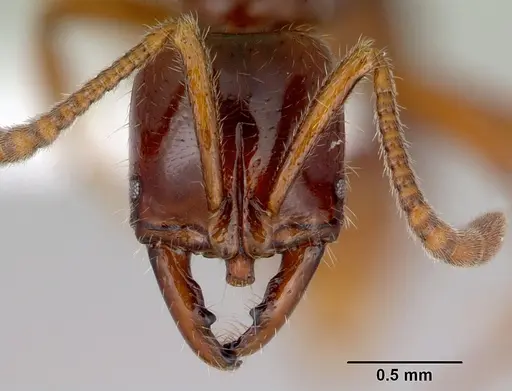
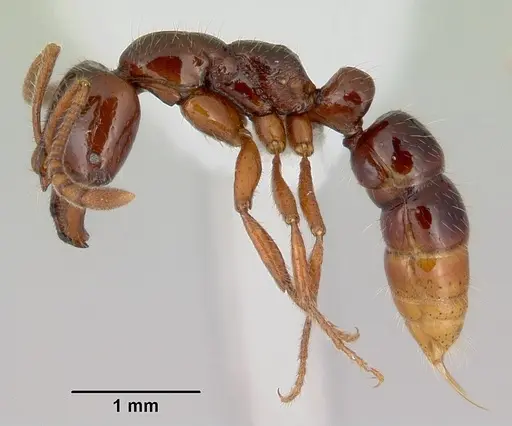
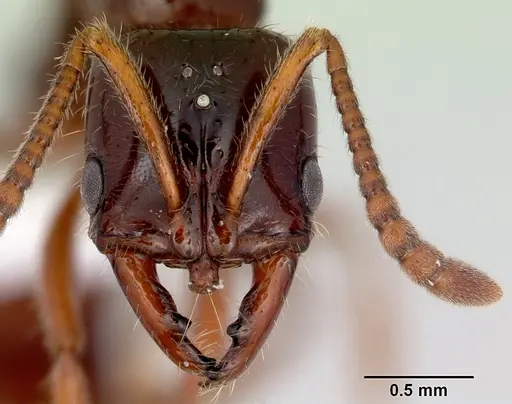
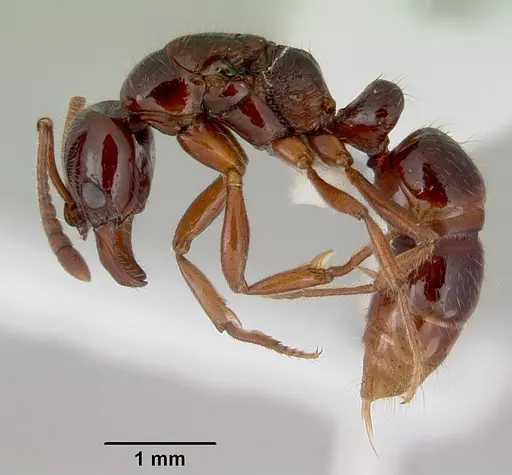
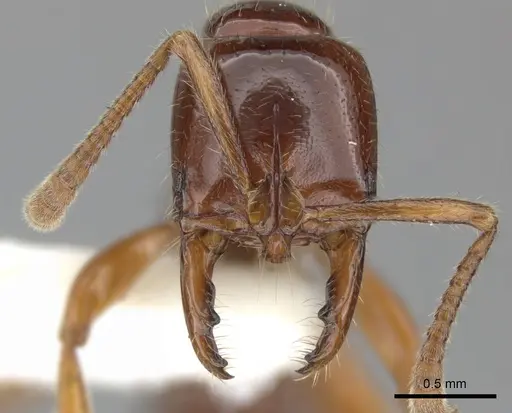
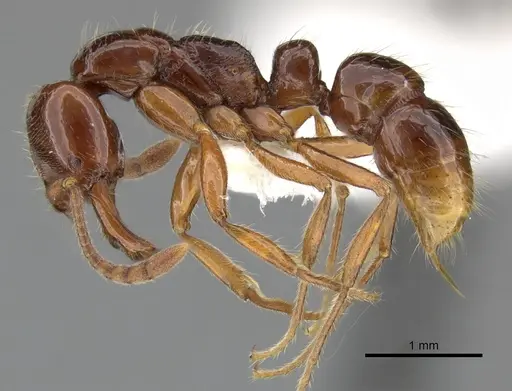
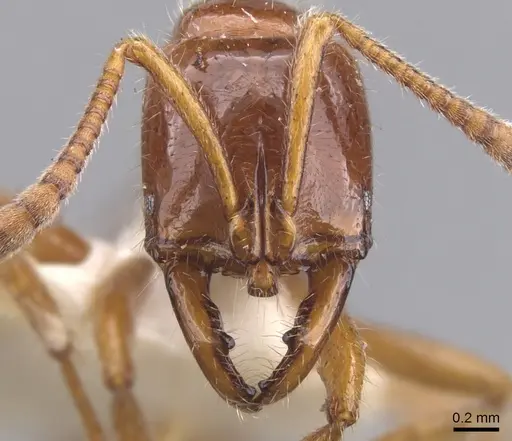
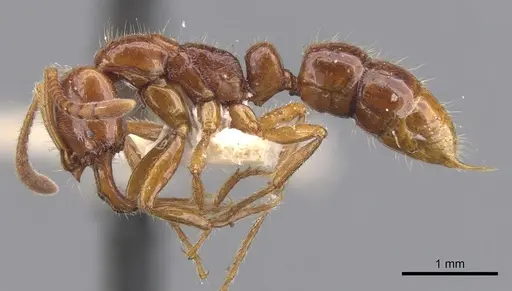
Myopias chapmani is a medium-sized predatory ant from the Ponerinae subfamily, found only in Queensland, Australia. Workers measure 5.2-5.7 mm in total length and have a large, nearly square head, robust body, and light ferruginous red coloration . The species belongs to the 'tenuis group' and is characterized by smooth, shining body sculpture with distinctive punctures. Queens are dealate and measure about 5.2 mm, which can be similar to or slightly smaller than workers .
Quick Summary
- Difficulty: Medium
- Origin & Habitat: Wet rain forest along creeks in Queensland, Australia, specifically in areas like Blackall Range near Montville. Nests in rotting wood fragments on the ground [1].
- Colony Type: Polygyne, multiple queens per colony, as documented in the type colony with two dealate queens and up to 30 workers [1].
- Size & Growth:
- Queen: ~5.2 mm (dealate) [1]
- Worker: ~5.2-5.7 mm [1]
- Colony: Up to 30 workers based on type colony [1]
- Growth: Moderate, inferred from small colony size and Ponerine development patterns
- Development: Estimated 6-10 weeks at optimal temperature, based on typical Ponerine patterns (Direct development data unavailable, keep warm for faster development)
- Antkeeping:
- Temperature: Keep warm, roughly 24-28°C, with a gentle gradient to allow self-regulation [1].
- Humidity: Keep nest substrate consistently moist but not waterlogged, mimicking wet rainforest conditions [1].
- Diapause: No true diapause likely, as species is from subtropical Queensland, may show reduced activity in cooler months [1].
- Nesting: Naturalistic setups with rotting wood or cork work well, as they nested in rotten branches in the wild. Y-tong or plaster nests with moisture chambers are also suitable [1].
- Behavior: Predatory ants that hunt small invertebrates. Workers are moderately active foragers with a functional sting for defense, typical of Ponerinae. Escape risk is moderate due to medium size, use standard barrier methods. Queens are similar in size to workers, which is documented for this species [1].
- Common Issues: small colony size means losses have bigger impact, keep colonies stable, predatory diet requires live prey, ensure consistent small invertebrate food sources, high humidity needs can lead to mold if ventilation is poor, multiple queens may cause tension if disturbed, handle gently, rainforest origin means they are sensitive to drying out
Housing and Nest Setup
You can set up Myopias chapmani in naturalistic environments that mimic their rotting wood habitat. Use cork or rotting wood pieces, as they nested in a thick fragment of a rotten branch in the wild [1]. Y-tong nests with appropriately sized chambers or plaster nests that hold moisture well are also suitable. Provide a humid environment with damp substrate, and avoid too much open space since colonies are small. A small outworld for foraging completes the setup.
Feeding and Diet
You need to offer live invertebrate prey, as these ants are predatory. Provide small live prey like fruit flies, pinhead crickets, or small mealworms 2-3 times per week, adjusting based on consumption. Remove uneaten prey after 24 hours to prevent mold. Sugar water or honey can be offered occasionally, but protein-rich live prey should be the primary food source [1].
Temperature and Humidity
Keep your colony at 24-28°C, mimicking the warm Queensland rainforest. Use a heating cable on one side to create a temperature gradient. Humidity is critical, maintain damp substrate in the nest area, as their natural habitat is wet rain forest along creeks [1]. Mist regularly or use a water reservoir, but ensure good ventilation to prevent mold.
Colony Structure and Behavior
This is a polygyne species, so you can keep multiple queens together, as documented in the type colony with two dealate queens and up to 30 workers [1]. Colony size remains small, likely under 100 workers. Workers are moderately aggressive predators with a functional sting for defense. Avoid disturbing the colony too much, as polygyne colonies can be sensitive to stress.
Growth and Development
Colony growth is moderate but steady. Queens are dealate and about 5.2 mm, similar to workers [1]. Development from egg to worker likely takes several weeks at optimal temperature, following typical Ponerine patterns. Nanitics (first workers) will be functional. Since colonies stay small, growth may seem slow compared to faster-growing genera.
Frequently Asked Questions
How long does it take for Myopias chapmani to produce first workers?
Direct development data is unavailable, but based on typical Ponerine patterns, it may take 6-10 weeks at optimal temperature (24-28°C).
Can I keep multiple Myopias chapmani queens together?
Yes, this is a polygyne species. The type colony naturally had two dealate queens living together with up to 30 workers [1].
What do Myopias chapmani ants eat?
They are predatory ants that need live invertebrate prey. Offer small live prey like fruit flies, tiny crickets, or small mealworms [1].
Do Myopias chapmani ants sting?
Yes, they have a functional sting as typical of Ponerinae, used for defense and subduing prey.
What temperature should I keep Myopias chapmani at?
Keep them warm at 24-28°C, with a temperature gradient to allow self-regulation [1].
How big do Myopias chapmani colonies get?
Colony sizes remain small, the type colony had up to 30 workers [1]. Maximum size is likely under 100 workers.
Are Myopias chapmani good for beginners?
They are rated as medium difficulty. The main challenges are providing high humidity, live prey diet, and maintaining a small stable colony.
What humidity do Myopias chapmani need?
High humidity, they come from wet rainforest. Keep the nest substrate consistently damp but not waterlogged [1].
Do Myopias chapmani need hibernation?
No true hibernation is likely, as they are from subtropical Queensland, they may show reduced activity in cooler months [1].
What nest type is best for Myopias chapmani?
Naturalistic setups with rotting wood or cork work well, they nested in a rotten branch in the wild. Y-tong nests with appropriately sized chambers or moisture-retaining plaster nests are also suitable [1].
Report an Issue
The current care sheet is based fully on literature. See inconsistencies, or something that's incorrect? Please , it will be resolved after review from an admin. Contributing to the blogs tab also helps providing information, to make us be able to further improve the caresheets. Thank you for your support!
References

Lembar perawatan ini dilisensikan di bawah CC BY-SA 4.0 .
Blog Komunitas
CASENT0172093
Lihat di AntWeb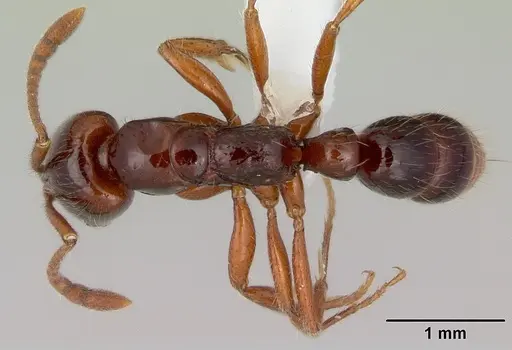
CASENT0172094
Lihat di AntWeb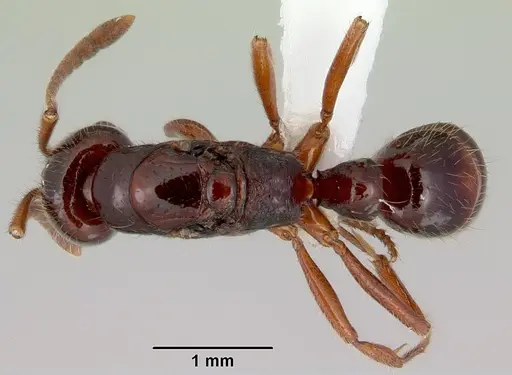
CASENT0270588
Lihat di AntWeb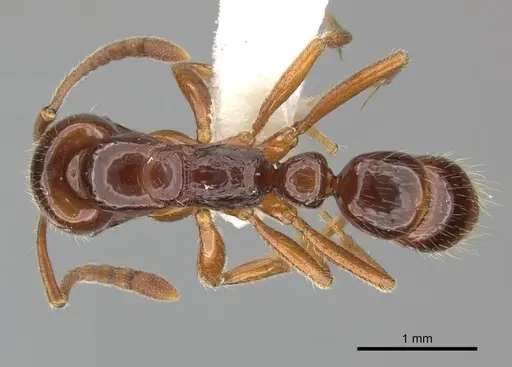
CASENT0902533
Lihat di AntWeb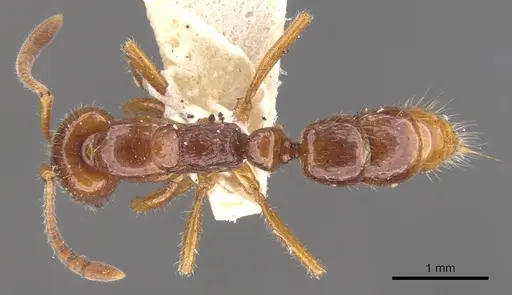
Literatur
Memuat peta distribusi...Memuat produk...