
Mycetophylax bruchi
- Nama Ilmiah
- Mycetophylax bruchi
- Tribe
- Attini
- Subfamili
- Myrmicinae
- Penulis
- Santschi, 1917
- Distribusi
- Ditemukan di 0 negara
Pendahuluan
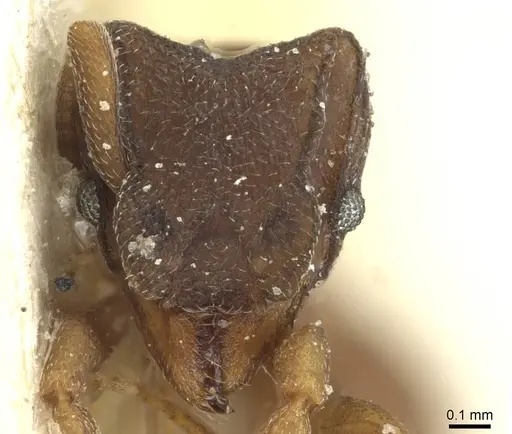
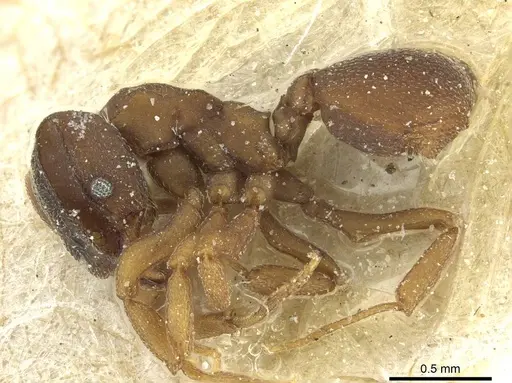
Paramycetophylax bruchi is a small Neotropical fungus-growing ant native to central Argentina. Workers measure 3.9-5.8mm total length and display a distinctive yellow to reddish-brown coloration with a compact, chunky body . They belong to the Attini tribe - the famous leafcutter and fungus-farming ants. This species is recognized by its wide triangular frontal lobes, small pronotal spines, and a unique psammophore (a brush of long stiff hairs) on the mandibles and clypeus used for handling fungal substrate . Unlike their famous relatives (Atta, Acromyrmex), these ants are 'lower agriculture' fungus farmers, cultivating their fungal crop on smaller substrate pieces rather than fresh leaf cuttings . P. bruchi nests in arid sandy soils in areas clear of vegetation, with fungus chambers located 60-100cm deep .
Quick Summary
- Difficulty: Expert
- Origin & Habitat: Endemic to continental Argentina, specifically the Pampean grasslands and Caldenal district. Inhabits arid inland habitats with sandy soil, nesting in areas devoid of vegetation. Found in soybean crops in the Pampean grasslands [1][2][4][5].
- Colony Type: Colony structure is unconfirmed. Most Attini are single-queen (monogyne) colonies, but this has not been directly documented for P. bruchi.
- Size & Growth:
- Queen: 7.09mm total length [2], confirmed from single specimen
- Worker: 3.93-5.82mm total length [1][2]
- Colony: Unknown, no colony size data available
- Growth: Unknown, no development data available
- Development: Unknown, no direct measurements exist. Based on related lower Attini species, development likely takes 6-10 weeks at optimal temperature. (Development timeline has not been studied. Related fungus-growing ants in the Attini typically take 6-12 weeks from egg to worker at warm temperatures.)
- Antkeeping:
- Temperature: No specific thermal data exists for this species. Based on its Argentine distribution (temperate climate with seasonal extremes), provide a moderate temperature range of 20-26°C with a gradient. Room temperature in most homes should fall within acceptable range.
- Humidity: Native to arid inland habitats with sandy soil. Keep nest substrate moderately dry to slightly moist, drier than most tropical ants. Allow portions to dry out between waterings. Avoid constant saturation.
- Diapause: Unknown, no seasonal studies exist. However, Argentine temperate climate suggests they likely experience reduced activity during cooler months. Consider providing a cool period (15-18°C) for 2-3 months during winter if the colony shows slowing activity.
- Nesting: In nature they excavate deep nests (60-100cm) in sandy soil with fungus chambers [1][2]. For captivity, a naturalistic setup with deep sandy substrate (at least 10-15cm) works best. Y-tong or plaster nests with added sand chambers can simulate their natural environment. They need darkness and minimal disturbance.
- Behavior: Workers are slow-moving and non-aggressive. As fungus farmers, they spend most of their time tending their fungal crop rather than foraging aggressively. They possess a stinger but it is not medically significant to humans. Escape risk is moderate, they are small but not particularly fast or prone to climbing. Standard barrier methods should suffice. The most notable behavior is their fungus-cultivation, they maintain a mutualistic relationship with a specific fungal species that serves as their food source [3].
- Common Issues: no documented captive husbandry means all care is experimental, expect trial and error, fungus cultivation is delicate, the fungal crop can die if conditions are wrong, starving the colony, deep nesting requirement is difficult to replicate in captivity, shallow nests may cause stress, no information on acceptable foods, uncertainty around what to feed beyond fungus substrate, slow growth and lack of data means colonies may stagnate without clear cause
Fungus Farming: The Core of Their Diet
Paramycetophylax bruchi belongs to the Attini tribe, the fungus-growing ants. Unlike most ants that hunt insects or collect honeydew, these ants cultivate a fungal garden for food. This is a mutualistic relationship: the ants provide substrate and protection, and the fungus provides food for the colony [3]. In the wild, workers collect plant material to feed their fungal crop. Specifically, P. bruchi workers have been observed collecting fresh leaflets from the Fabaceae plant Prosopis flexuosa to serve as substrate for their fungal cultivar [6]. This makes them 'lower agriculture' fungus farmers, they use smaller substrate pieces rather than the large leaf fragments cut by Atta and Acromyrmex species. In captivity, you must provide suitable substrate for the fungus. This could include small pieces of leaves, flower petals, or other plant matter. The fungus will grow on this substrate, and the ants consume the fungal mycelium. Do not attempt to keep this species without understanding the fungus-farming requirement, they cannot survive on typical ant foods alone.
Housing and Nest Setup
This species presents significant challenges for captive husbandry due to its natural nesting behavior. In the wild, P. bruchi excavates deep nests in sandy soil, with fungus chambers located 60-100cm below ground surface, sometimes even deeper depending on seasonal temperature changes [1][2]. They specifically choose nesting sites in places devoid of vegetation [1][2]. Replicating this in captivity is difficult. A naturalistic setup with deep sandy substrate (at least 10-15cm, deeper is better) is ideal. The substrate should be sandy and well-draining, avoid compacted clay or overly moist soil. You can create a formicarium with a deep sand chamber or use a DIY setup with a container filled with sandy soil. Provide darkness and minimize disturbances, as these ants are adapted to deep, quiet nests. Some keepers have success with Y-tong nests filled with sand or a sand-filled container within an outworld setup. The key is providing enough depth for the fungus chambers and allowing the colony to regulate its own humidity by moving between areas.
Feeding and Nutrition
The primary food source for P. bruchi is their fungal cultivar, not typical ant foods. Workers maintain and tend the fungus, consuming the mycelium as their main food source [3]. In addition to plant substrate for the fungus, you may occasionally offer small amounts of protein (tiny insects) or sugar sources (honey water), but these are secondary to the fungus. The most important aspect is providing appropriate substrate for the fungal garden. Offer small pieces of leaves, flower petals, grass clippings, or other plant matter. The ants will process this and place it in their fungus chamber. The quality and variety of substrate likely affects colony health. Avoid overfeeding other foods that might spoil or mold in the nest. Fresh plant material should be provided regularly but removed before it decomposes. The specific fungal species is unknown, in captivity, the fungus may need to be acquired from an existing colony or may need to establish from whatever fungal spores are present.
Temperature and Seasonal Care
No specific thermal studies exist for P. bruchi, but we can make educated inferences from its geographic range. This species is found in central Argentina (Pampean grasslands and Caldenal district), which experiences a temperate climate with distinct seasons [1][2][4]. Summer temperatures can reach 30°C or higher, while winter temperatures regularly drop below 10°C, with occasional frosts. Based on this, provide a moderate temperature range in captivity, aim for roughly 20-26°C. Room temperature in most homes should fall within this range. A heating cable on one side of the nest can create a gradient if your room runs cool. During the cooler months (roughly May-August in the Southern Hemisphere equivalent), the colony may naturally slow activity. If you observe reduced foraging and movement, consider providing a cool period around 15-18°C for 2-3 months. This mimics their natural seasonal cycle. Do not allow temperatures to drop below 10°C or rise above 30°C for extended periods.
Understanding the Knowledge Gaps
This caresheet must be honest about the significant gaps in our knowledge. The scientific literature explicitly states 'Nothing is known about the biology of this species' [7]. We have taxonomic descriptions, distribution records, and some morphological data, but no studies on colony founding, development times, queen behavior, or captive husbandry. Every piece of husbandry advice in this caresheet is either inferred from related species or is an educated guess. This makes P. bruchi an expert-level species, only attempt to keep it if you have extensive experience with fungus-growing ants or are prepared for experimental husbandry. Document your observations carefully. What works, what doesn't, and what the colony needs to thrive are all unknown. You may be pioneering the captive husbandry of this species. Expect setbacks and be prepared to adjust your approach based on colony response rather than established protocols.
Frequently Asked Questions
Can I keep Paramycetophylax bruchi in a test tube?
Test tubes are not recommended. This species requires deep nesting (60-100cm in the wild) with space for fungus chambers. A test tube provides neither the depth nor the substrate volume needed. Use a naturalistic setup with deep sandy soil (at least 10-15cm deep) or a custom formicarium designed for deep-nesting species.
What do Paramycetophylax bruchi eat?
They are fungus farmers, their primary food is the fungal mycelium they cultivate. Provide small plant matter (leaf pieces, flower petals, grass clippings) as substrate for the fungal garden. The ants will process this and tend the fungus, then consume the mycelium. You can occasionally offer tiny insects or honey water as supplements, but the fungus is essential.
How long does it take for first workers to appear?
Unknown, no development data exists for this species. Based on related lower Attini species, expect 6-10 weeks at warm temperatures (around 24-26°C), but this is purely an estimate. The actual timeline could be faster or slower.
Are Paramycetophylax bruchi good for beginners?
No. This is an expert-level species. There is essentially no captive husbandry information available, the scientific literature states 'nothing is known about the biology of this species.' They require deep nesting, fungus cultivation, and experimental care. Only keep this species if you have significant experience with ant keeping and are prepared for trial-and-error husbandry.
How big do Paramycetophylax bruchi colonies get?
Unknown, no colony size data exists. Related lower Attini species typically reach several hundred to a few thousand workers. The maximum size for this species has not been documented.
Can I keep multiple queens together?
Not recommended and likely unnecessary. The colony structure is unconfirmed, but most Attini are single-queen colonies. Combining unrelated queens has not been studied for this species. If you obtain a queen, house her alone in a founding setup until she establishes workers.
Do Paramycetophylax bruchi need hibernation?
Possibly. They are native to temperate Argentina with distinct seasons. If the colony shows reduced activity during cooler months, providing a cool period (15-18°C) for 2-3 months may be beneficial. However, this has not been studied specifically for this species.
When should I move them to a formicarium?
Move them when the colony reaches moderate size (50+ workers) and the founding setup becomes cramped. However, given their deep-nesting requirement, consider using a deep naturalistic setup from the beginning rather than a traditional formicarium.
Why is my colony dying?
Without documented husbandry, diagnosing problems is extremely difficult. Common likely issues include: fungus death (the fungal crop can die from improper humidity or mold), insufficient depth causing stress, wrong humidity levels (they prefer arid conditions), or insufficient plant substrate for the fungus. Document your conditions and experiment with adjustments.
Report an Issue
The current care sheet is based fully on literature. See inconsistencies, or something that's incorrect? Please , it will be resolved after review from an admin. Contributing to the blogs tab also helps providing information, to make us be able to further improve the caresheets. Thank you for your support!
References

Lembar perawatan ini dilisensikan di bawah CC BY-SA 4.0 .
Blog Komunitas
CASENT0912499
Lihat di AntWeb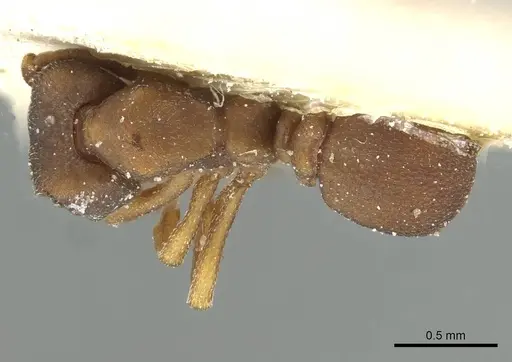
Literatur
Memuat peta distribusi...Memuat produk...