
Monomorium longi
- Nama Ilmiah
- Monomorium longi
- Tribe
- Solenopsidini
- Subfamili
- Myrmicinae
- Penulis
- Forel, 1902
- Distribusi
- Ditemukan di 0 negara
Pendahuluan
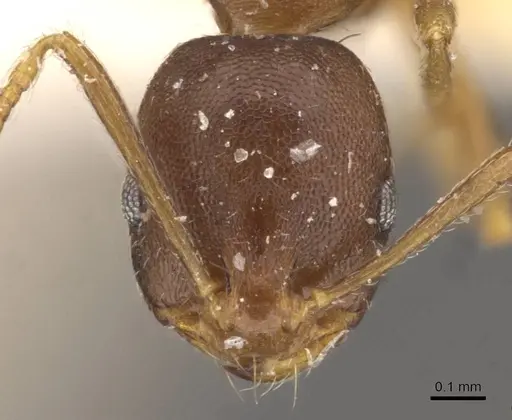
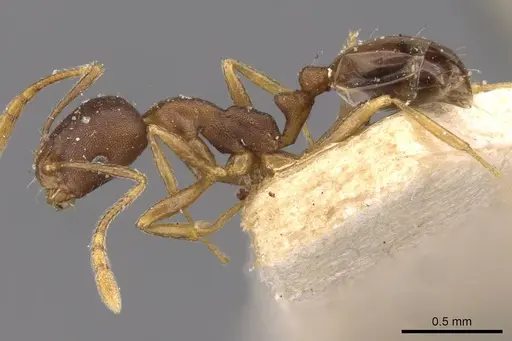
Monomorium longi is a small reddish-brown ant native to South Asia, specifically India and Pakistan. Workers measure 2.5-3mm and have a distinctive appearance with a dull, finely roughened head and thorax contrasting against a smooth, shiny abdomen. Their antennae are notably long, with the scape extending beyond the top of the head. This species belongs to the Monomorium salomonis species group (pharaonis complex) and is found in grasslands, agricultural fields, and orchards where it forages among crops like maize and wheat . This ant is relatively unstudied in captivity, with no specific research on its colony structure or behavior. As a member of the Myrmicinae subfamily, it possesses a stinger but its small size makes it unlikely to penetrate human skin. The species has been recorded across multiple Indian states, Pakistan, and even New Caledonia, suggesting it can adapt to varied conditions .
Quick Summary
- Difficulty: Unknown, likely Easy to Medium based on genus patterns
- Origin & Habitat: India, Pakistan, and New Caledonia, found in grasslands, agricultural fields (maize and wheat crops), and apple orchards [1][3][4]
- Colony Type: Unconfirmed colony structure, single queen vs multiple queens has not been documented in scientific literature
- Size & Growth:
- Queen: size data unavailable, no documented measurements for queens
- Worker: 2.5-3mm [2][1]
- Colony: Unknown, no colony size data available from research
- Growth: Unknown, estimated moderate based on related species
- Development: Unconfirmed, estimated 5-8 weeks based on typical Monomorium development patterns (No direct development studies exist for this species, estimates based on genus-level data from related ants)
- Antkeeping:
- Temperature: Likely prefers warm conditions, inferring from subtropical distribution in India/Pakistan. Start around 22-26°C and observe colony activity.
- Humidity: Moderate, found in agricultural fields and orchards suggesting tolerance to varied moisture. Keep nest substrate moderately moist but not waterlogged.
- Diapause: Unknown, may require a mild winter rest period given temperate-to-subtropical origin, but this is not confirmed
- Nesting: Likely nests in soil or under stones in nature based on habitat records. In captivity, standard test tubes or small formicaria should work well.
- Behavior: Behavior is not well-documented, but Monomorium species are typically generalist foragers that readily accept sugar and protein foods. Workers are small (2.5-3mm) so escape prevention should focus on sealing any small gaps. This species has a stinger but due to its very small size, it is unlikely to penetrate human skin or cause noticeable pain [6]. The small eye size suggests they may rely more on chemical cues than visual navigation.
- Common Issues: limited availability, this species is rarely available in the antkeeping hobby, no established captive care protocols, keepers must experiment with conditions, small size means escape prevention matters despite being non-aggressive, unknown diapause requirements may lead to seasonal colony losses if improperly managed, wild-caught colonies may carry parasites or pathogens not yet characterized
Appearance and Identification
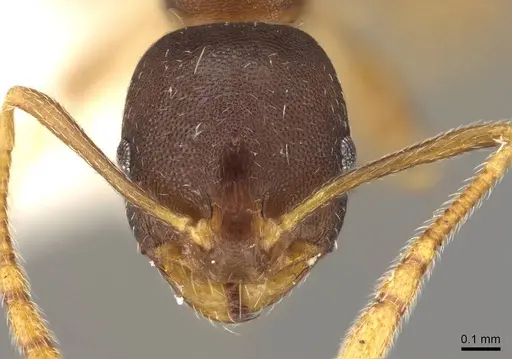
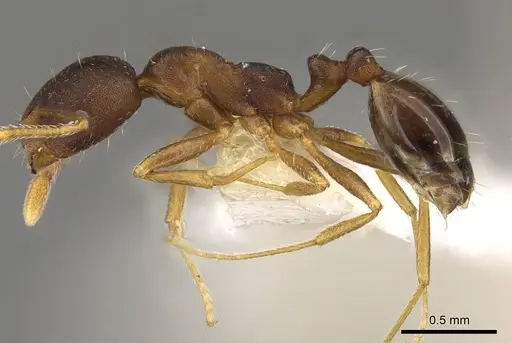
Monomorium longi workers are small ants measuring 2.5-3mm in length. They have a distinctive appearance with a dull, chestnut-brown to reddish-brown coloration. The head, thorax, and pedicel nodes are finely and densely rugulose (covered with fine wrinkles), giving them an opaque texture. In contrast, the abdomen is smooth and shining. The head is rectangular with rounded corners, longer than it is broad. Their most notable feature is the extremely long antennae, with the scape extending well beyond the top of the head. The eyes are very small and placed slightly forward of the middle of the head [2][1].
This species belongs to the Monomorium salomonis species group, specifically the pharaonis complex. This grouping suggests it shares characteristics with other small, generalist Monomorium species.
Natural Distribution and Habitat
Monomorium longi is found across South Asia and the Pacific. In India, it has been recorded in multiple states including Assam, Meghalaya (East Khasi and Jaintia hills), Arunachal Pradesh, Rajasthan, and Tripura [3]. In Pakistan, it has been documented in Islamabad, Mansehra, and the Potohar Plateau region [7][8][9]. Interestingly, the species has also been recorded from New Caledonia [4][5].
The species inhabits grasslands, agricultural fields growing maize and wheat crops, and apple orchards [1]. This suggests it prefers open habitats with some vegetation cover rather than dense forest. The association with agricultural land indicates it can tolerate human-disturbed environments.
Housing and Nesting
In captivity, Monomorium longi can be kept in standard setups suitable for small Myrmicinae ants. Test tubes work well for founding colonies, while small formicaria accommodate established colonies. Based on their natural habitat in grasslands and agricultural fields, they likely prefer nesting in soil or under stones.
For substrate, use a moderately moist but not waterlogged mixture. A 50/50 blend of sand and soil works well. Ensure some dry areas exist within the nest so ants can self-regulate their humidity preferences. Given their small size (2.5-3mm), ensure all connections and barriers are secure, these ants can squeeze through surprisingly small gaps.
Lighting should be moderate, avoid direct sunlight on the nest as it can cause overheating and drying. Ambient room lighting is sufficient.
Feeding and Diet
While specific dietary studies for M. longi do not exist, Monomorium species are typically generalist feeders that readily accept both sugar sources and protein. In their natural habitat of agricultural fields, they likely forage for honeydew from aphids and other homopterans, as well as small insects and seeds.
In captivity, offer a varied diet including sugar water or honey as a constant energy source. Protein can be provided through small insects such as fruit flies, pinhead crickets, or mealworms. Given their small worker size, prey items should be appropriately sized. Feed protein 2-3 times per week, and keep sugar water available at all times. Remove uneaten prey after 24-48 hours to prevent mold.
Temperature and Seasonal Care
Monomorium longi originates from India and Pakistan, which have subtropical to temperate climates. This suggests they prefer warmer conditions but can tolerate some seasonal variation. Based on related species, aim for temperatures in the low-to-mid 20s Celsius (around 22-26°C).
You can create a temperature gradient by placing the nest on one side of the enclosure with a heating cable or mat on low setting. This allows ants to move between warmer and cooler areas as they prefer. Monitor colony behavior, if workers cluster consistently in warmer areas, slightly increase heat, if they avoid heated areas, reduce it.
Winter care is uncertain due to lack of specific data. If your colony shows reduced activity during winter months, this may indicate a need for a cooler rest period (around 15-18°C) for several weeks. However, many Monomorium species remain active year-round in captivity if temperatures are maintained.
Colony Development and Growth
Specific development timelines for Monomorium longi have not been documented in scientific literature. Based on typical Monomorium genus patterns, expect the following approximate timeline: egg stage lasts 1-2 weeks, larval stage 2-3 weeks, and pupal stage 2-3 weeks, for a total of approximately 5-8 weeks from egg to worker emergence at optimal temperatures (around 24°C).
Queens likely lay eggs at a moderate rate. The first workers (nanitics) will be smaller than mature workers but should quickly begin foraging and caring for subsequent broods. Colony growth is typically moderate, don't expect rapid expansion like some faster-growing genera.
Patience is key with this species. Small Myrmicinae colonies often grow steadily but slowly.
Frequently Asked Questions
How long does it take for Monomorium longi to produce first workers?
The exact timeline is unconfirmed for this species, but based on typical Monomorium development patterns, expect 5-8 weeks from egg to first worker at optimal temperatures around 24°C. This includes approximately 1-2 weeks for eggs,2-3 weeks for larvae, and 2-3 weeks for pupae.
What do Monomorium longi ants eat?
While not specifically studied, Monomorium species are generalist feeders. Offer sugar water or honey constantly for energy, and protein sources like small fruit flies, pinhead crickets, or mealworms 2-3 times per week.
What temperature should I keep Monomorium longi at?
Based on their subtropical origin in India and Pakistan, aim for temperatures in the low-to-mid 20s Celsius (22-26°C). Create a slight gradient so ants can choose their preferred temperature zone.
How big do Monomorium longi colonies get?
Colony size data is not available for this specific species. Based on related small Monomorium species, colonies likely reach several hundred workers at maximum, with moderate growth rates over time.
Can I keep multiple Monomorium longi queens together?
The colony structure (monogyne vs polygyne) is unconfirmed for this species. It is not recommended to combine unrelated queens unless you observe them naturally tolerating each other.
What humidity level do Monomorium longi ants need?
Based on their habitat in grasslands and agricultural fields, they likely prefer moderate humidity. Keep the nest substrate moderately moist but not waterlogged, with some drier areas available for the ants to self-regulate.
Do Monomorium longi need hibernation?
Diapause requirements are unconfirmed for this species. Their origin in subtropical India/Pakistan suggests they may not require a true hibernation, but a cooler rest period (15-18°C) during winter months may benefit established colonies.
Are Monomorium longi good for beginners?
Difficulty level is not established since this species is rarely kept in captivity. However, based on typical Monomorium genus patterns, they are likely manageable for beginners once basic parameters are understood. The main challenge is obtaining colonies, as this species is rarely available in the antkeeping hobby.
What size formicarium should I use for Monomorium longi?
Start with a test tube setup for founding colonies. Once the colony reaches 20-30 workers, you can transition to a small formicarium. Given their small worker size (2.5-3mm), ensure chambers and passages are appropriately scaled.
Where can I find Monomorium longi ants for sale?
This species is rarely available in the commercial antkeeping market. It may occasionally be found through specialty breeders or hobbyist exchanges, but availability is limited compared to more common species like Monomorium pharaonis.
Is Monomorium longi invasive anywhere?
There is no documentation of Monomorium longi being invasive. Its native range is limited to India, Pakistan, and New Caledonia. As with all ant species, never release captive colonies into non-native environments.
Report an Issue
The current care sheet is based fully on literature. See inconsistencies, or something that's incorrect? Please , it will be resolved after review from an admin. Contributing to the blogs tab also helps providing information, to make us be able to further improve the caresheets. Thank you for your support!
References

Lembar perawatan ini dilisensikan di bawah CC BY-SA 4.0 .
Blog Komunitas
CASENT0908730
Lihat di AntWeb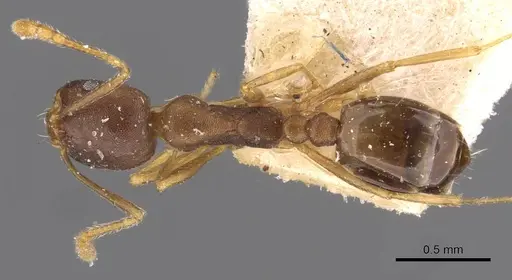
CASENT0914322
Lihat di AntWeb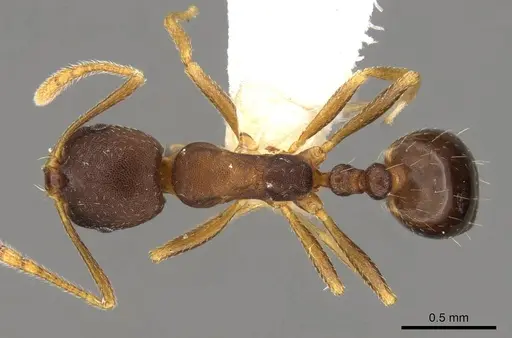
Literatur
Memuat peta distribusi...Memuat produk...