
Monomorium grassei
- Nama Ilmiah
- Monomorium grassei
- Tribe
- Solenopsidini
- Subfamili
- Myrmicinae
- Penulis
- Tohmé & Tohmé, 1980
- Distribusi
- Ditemukan di 0 negara
Pendahuluan
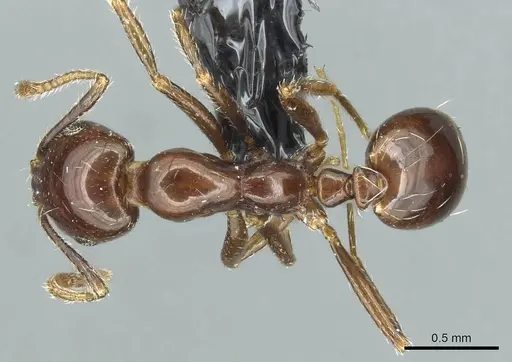
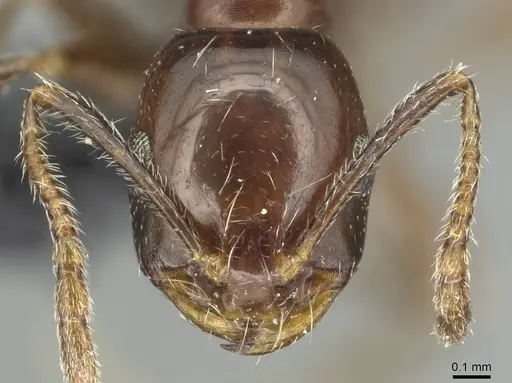
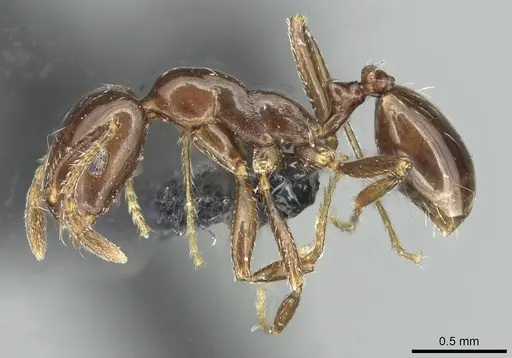
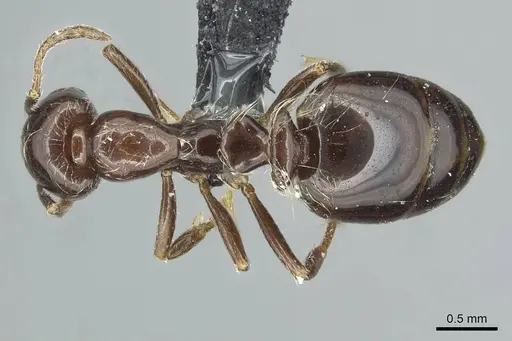
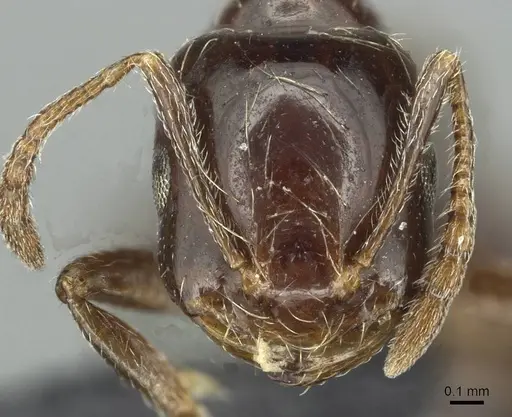
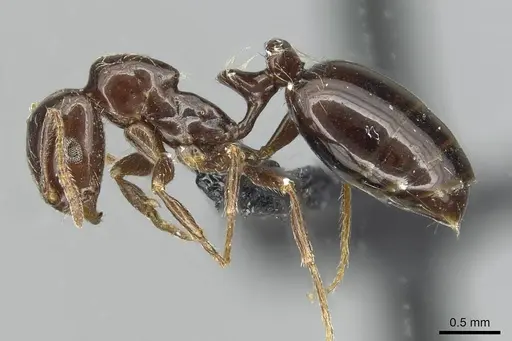
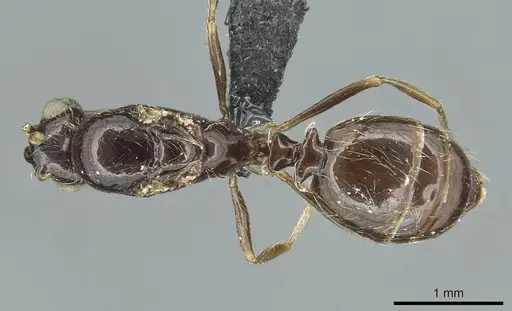
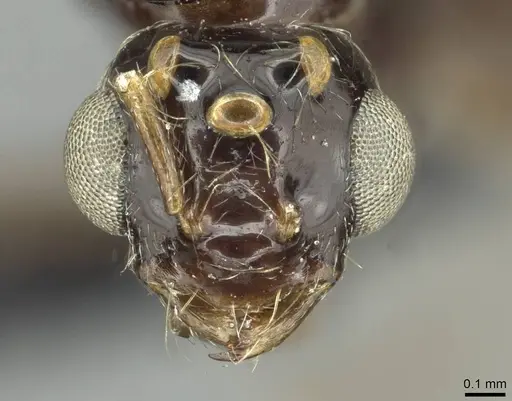
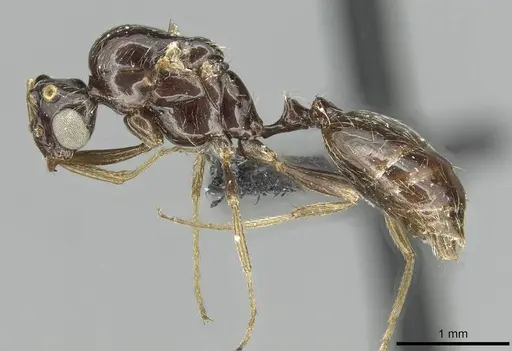
Monomorium grassei is a small, dark ant originally described from Lebanon as Epixenus grassei. Workers are tiny (estimated 2–4 mm based on the genus) and dark brown to black . The species is native to the eastern Mediterranean and has only been recorded in Israel and Lebanon, where it lives in mountainous areas at 910–1150 m elevation . It belongs to the tribe Solenopsidini, which uses a sting as its primary defense – though the sting is barely noticeable to humans. Because very little specific care information is available, this ant is better suited for keepers who are comfortable adapting from general ant‑keeping knowledge.
Quick Summary
- Difficulty: Hard
- Origin & Habitat: Eastern Mediterranean: Israel and Lebanon. Found at elevations of 910–1150 m in the Central Béqaa valley (Turbol, Tell‑Amara) and Col de Baydar, as well as the Golan Heights in Israel [2][3][4].
- Colony Type: Unconfirmed. Colony structure has not been documented for this species.
- Size & Growth:
- Antkeeping:
- Temperature: Keep at room temperature (20–26 °C). Based on their mountain habitat (910–1150 m elevation) they likely prefer cooler conditions. Start around 22–24 °C and observe colony activity [3].
- Humidity: Moderate humidity. Their natural habitat in the Lebanese mountains experiences Mediterranean humidity. Keep the nest substrate lightly moist but allow some drying between waterings. Avoid overly damp conditions.
- Diapause: Likely yes. Their temperate Mediterranean distribution with cold winters at higher elevations suggests they benefit from a winter rest period. If you see reduced activity, drop the temperature to 10–15 °C for 2–3 months.
- Nesting: In nature they probably nest in soil or under stones. For captivity, a test tube works well for founding. Once the colony grows, use a Y‑tong or plaster nest with small, tight chambers scaled to their tiny size. Avoid large open spaces.
- Behavior: Tiny, generally non‑aggressive ants. They have a stinger, but it is barely perceptible to humans. Workers are active foragers. Because they are so small, escape prevention is critical – use fine mesh and tight‑fitting lids. They are peaceful but may be outcompeted by larger species in mixed setups.
- Common Issues: tiny size makes escape prevention critical – they can squeeze through standard mesh., very little species‑specific care information exists, so keepers must adapt from genus knowledge., unknown colony size and growth rate make it hard to plan housing and feeding., wild‑caught colonies may carry parasites that are hard to detect., higher‑elevation origin means they likely need cooler conditions than typical tropical ants.
Natural History and Distribution
Monomorium grassei is an eastern Mediterranean species that has only been recorded in Israel and Lebanon. It was originally described in 1980 as Monomorium grassei and later moved to Monomorium [2][3][4]. The species has been documented at higher elevations in the Lebanon mountains, such as Turbol and Tell‑Amara (around 910 m) and Col de Baydar (1150 m) [3]. In Israel it is known from the Golan Heights [4]. This limited, mountain‑dwelling distribution suggests they are adapted to cooler, more temperate conditions than many other Mediterranean ants.
Housing and Nesting
Because species‑specific nesting preferences are unknown, start with a standard test tube setup for a newly caught queen. Make sure the cotton plug is tight – these ants are tiny and can slip through small gaps. Once the colony has a few dozen workers, you can move them to a small formicarium. Y‑tong or plaster nests with narrow chambers work well. Scale everything to their small size, large, open spaces can stress a small colony. Provide a shallow foraging area and check all seals regularly to prevent escapes.
Feeding and Diet
Based on what other Monomorium eat, these ants are likely omnivorous. Offer a few drops of sugar water or honey 2–3 times a week, and provide small protein sources like fruit flies, pinhead crickets, or pieces of mealworm once or twice a week. Because the workers are tiny, cut prey into pieces smaller than them. Remove uneaten food after 24 hours to prevent mold. Watch the colony’s reaction to adjust portion sizes.
Temperature and Seasonal Care
Temperature needs are not directly documented, but their mountain habitat (910–1150 m) points to cooler, temperate conditions [3]. Keep the nest around 22–24 °C as a starting point. They can tolerate room temperature (20–22 °C). Since they come from an area with cold winters, they likely need a winter diapause. If you see the colony slow down in late autumn, reduce the temperature to 10–15 °C for 2–3 months. Reduce feeding during this period, but keep a small water source available.
Colony Development
Founding behavior has not been recorded for Monomorium grassei. If the queen follows typical patterns for the genus, she may seal herself in a claustral chamber and raise her first brood without foraging. However, this is unconfirmed. The first workers (nanitics) will be smaller than mature workers. Colony growth rate and maximum size are both unknown, so be patient and avoid overfeeding or disturbing the nest often.
Frequently Asked Questions
How long does it take for Monomorium grassei to have first workers?
This has not been documented for this species. You will need to observe and adapt – typical Monomorium development under warm conditions might be 6–8 weeks, but this is only a guess.
What temperature do Monomorium grassei ants need?
Based on their mountain distribution (910–1150 m), they likely prefer cool room temperatures (20–26 °C). Start at 22–24 °C and adjust based on activity [3].
How big do Monomorium grassei colonies get?
Colony size is not documented for this species. It is unknown whether colonies stay small or can reach hundreds of workers.
Do Monomorium grassei need hibernation?
Likely yes – their temperate mountain habitat suggests they experience cold winters. If you notice reduced activity in autumn, give them 2–3 months at 10–15 °C. Reduce food during this period.
Can I keep multiple Monomorium grassei queens together?
This has not been studied for this species. Since most Monomorium are single‑queen (monogyne), it is best not to combine foundress queens unless you are willing to risk failure.
What do Monomorium grassei eat?
They are probably omnivorous. Offer sugar water or honey 2–3 times a week and small protein sources (fruit flies, tiny cricket pieces) once or twice a week. Remove leftovers after 24 h.
Are Monomorium grassei good for beginners?
No – they are not recommended for complete beginners because so little is known about their specific needs. Their tiny size also makes escape prevention challenging.
How do I prevent Monomorium grassei from escaping?
Use the finest mesh you can find (tight weave) and seal every joint. Even a gap of 1 mm may be enough for these tiny ants. Check the nest and outworld regularly.
Where is Monomorium grassei found in the wild?
This species is endemic to Israel and Lebanon. In Lebanon it has been recorded at 910–1150 m (Central Béqaa, Col de Baydar). In Israel it is known from the Golan Heights [2][3][4].
Report an Issue
The current care sheet is based fully on literature. See inconsistencies, or something that's incorrect? Please , it will be resolved after review from an admin. Contributing to the blogs tab also helps providing information, to make us be able to further improve the caresheets. Thank you for your support!
References

Lembar perawatan ini dilisensikan di bawah CC BY-SA 4.0 .
Blog Komunitas
Literatur
Memuat peta distribusi...Memuat produk...