
Mesostruma laevigata
- Nama Ilmiah
- Mesostruma laevigata
- Tribe
- Attini
- Subfamili
- Myrmicinae
- Penulis
- Brown, 1952
- Distribusi
- Ditemukan di 1 negara
Pendahuluan
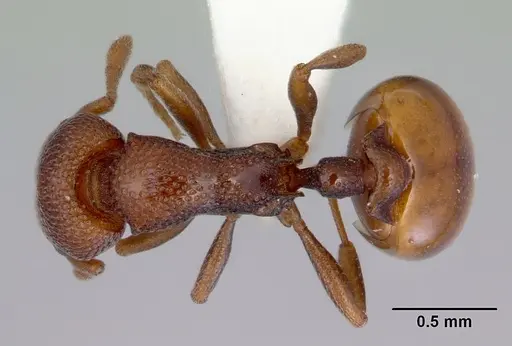
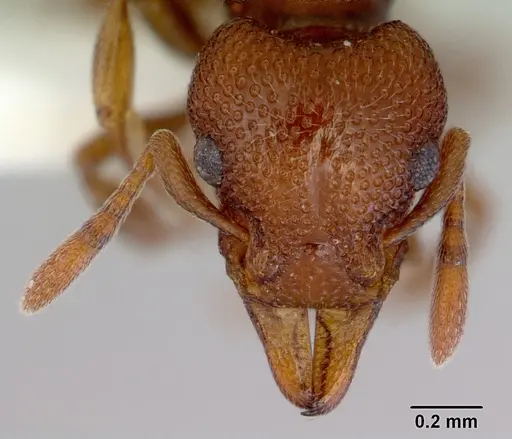
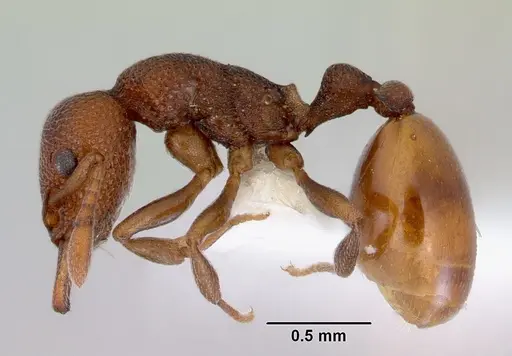
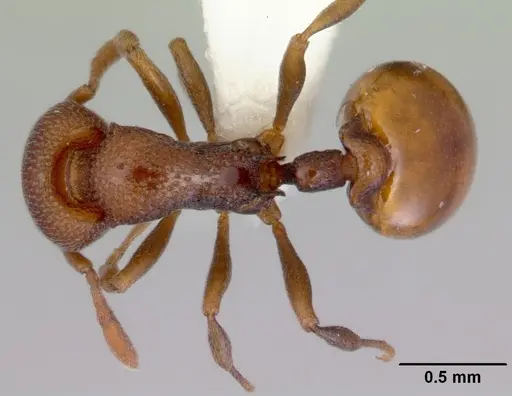
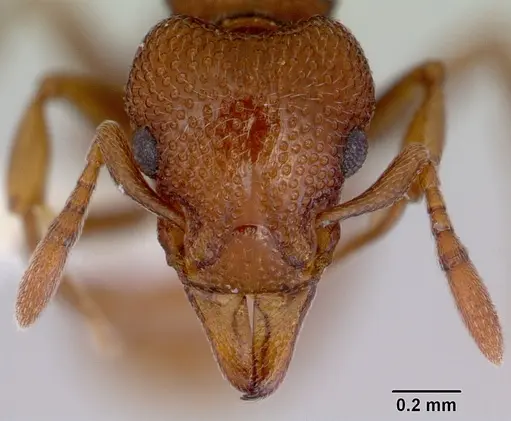
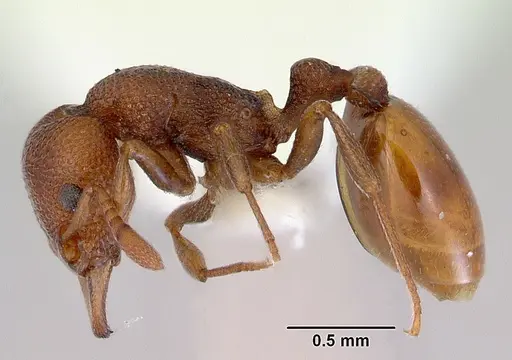
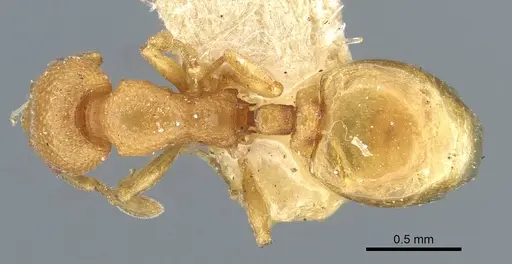
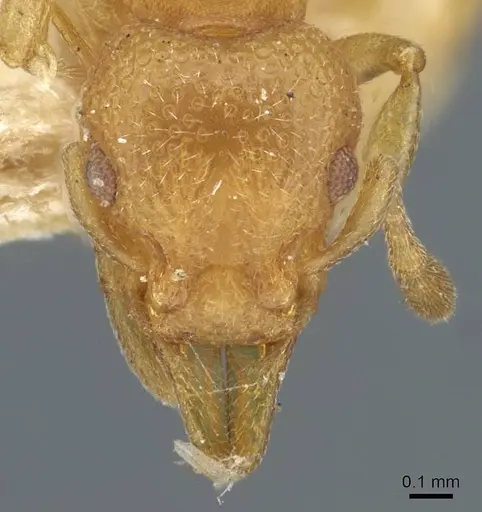
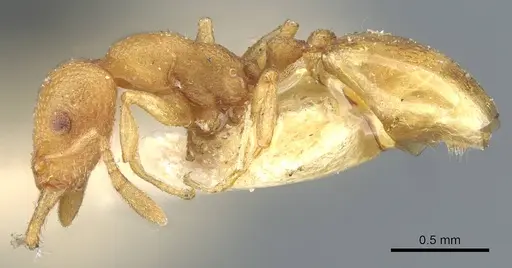
Mesostruma laevigata is a small predatory ant native to southern Australia. Workers measure 2.9-4.2mm in total length and are weakly polymorphic, with some colonies producing slightly larger individuals with broader heads. They have distinctive morphology: sharp angles or short teeth on the pronotal corners and wing-like projections on the postpetiole. Their body is smooth and shiny, colored yellow-red to dark red-brown with a lighter abdomen. Queens are larger at 4.7-5.4mm total length . This species belongs to the Dacetini tribe, a group of small, predatory ants known for hunting small arthropods. They are widely distributed throughout southern Australia, particularly in dry mallee regions of Victoria and Western Australia .
Quick Summary
- Difficulty: Medium
- Origin & Habitat: Southern Australia, widely distributed throughout the region. Found in dry mallee woodland of Victoria (Sea Lake area) and Western Australia (collected from bark traps on Powderbark Wandoo trunks at Dryandra). Inhabits warm, dry areas, typically under stones or logs in shrubby mallee woodland dominated by Eucalyptus species [1][2].
- Colony Type: Colony structure is unconfirmed for this species. Specific documentation on queen number does not exist in available literature.
- Size & Growth:
- Antkeeping:
- Temperature: Keep at warm room temperature, roughly 22-26°C. Based on their dry, warm Australian habitat, they prefer temperatures in the low-to-mid 20s°C [1].
- Humidity: Low to moderate humidity. These ants come from dry mallee regions, so keep the nest substrate moderately dry with some moisture available. Avoid overly damp conditions.
- Diapause: Diapause requirements are unconfirmed. Southern Australian species may tolerate cooler winter temperatures but true hibernation has not been documented for this species.
- Nesting: Natural nesting is under stones or logs in dry, warm areas. In captivity, a Y-tong (AAC) nest or plaster nest with moderate dryness works well. They prefer tight chambers scaled to their small size.
- Behavior: Dacetine ants are predatory, using their mandibles to hunt small arthropods. They are generally not aggressive toward keepers but may bite if handled. Their small size means escape prevention is important, they can slip through small gaps. Workers are active foragers, hunting for small prey. They are not known to be particularly aggressive or defensive.
- Common Issues: escape prevention is critical due to their tiny size, use fine mesh and tight-fitting lids, predatory diet means they need regular live prey, failure to provide adequate protein can stunt colony growth, dry habitat requirements mean overwatering can cause mold and kill colonies, slow growth compared to common pet ants may frustrate beginners, wild-caught colonies may have parasites that cause problems in captivity
Housing and Nest Setup
Mesostruma laevigata is a small ant that needs appropriately scaled housing. In the wild, they nest under stones or logs in dry mallee woodland, so they prefer warm, relatively dry conditions. For captivity, a Y-tong (AAC) nest or plaster formicarium works well. The chambers should be tight and narrow, scaled to their tiny worker size. Avoid tall, open spaces that can make them feel exposed. A small outworld for foraging allows you to observe their predatory behavior. Escape prevention is critical, these tiny ants can squeeze through surprisingly small gaps. Use fine mesh on any ventilation and ensure all lids fit tightly. [1][2]
Feeding and Diet
As dacetine ants, M. laevigata are predatory and need a protein-rich diet. Feed them small live prey such as fruit flies, pinhead crickets, small mealworms, or other tiny arthropods. They are likely specialized hunters of micro-arthropods in the wild, so live prey is ideal for maintaining healthy colonies. Sugar sources like honey or sugar water may be accepted occasionally but should not be the primary food. Feed protein prey several times per week, removing any uneaten prey after 24-48 hours to prevent mold. A constant water source should be available.
Temperature and Seasonal Care
These ants come from the warm, dry mallee regions of southern Australia, so they prefer temperatures in the low-to-mid 20s°C. A heating cable on one side of the nest can create a temperature gradient, allowing the ants to choose their preferred zone. Room temperature within this range is usually sufficient. The humidity should be low to moderate, think dry woodland floor, not rainforest. Allow the nest substrate to dry out between waterings. Winter care is not well documented, but southern Australian species typically tolerate cooler temperatures. [1]
Behavior and Colony Dynamics
Mesostruma laevigata workers are weakly polymorphic, meaning some colonies may have slightly larger soldiers with broader heads alongside regular workers. This is subtle compared to highly polymorphic species. Workers are active foragers that hunt small prey using their mandibles. They are not particularly aggressive toward humans and rarely bite unless handled roughly. The colony will likely grow slowly. Queens are larger and should be well-cared-for once they establish a colony. The species has distinctive morphology with pronotal teeth and postpetiolar wings that make identification straightforward for experienced antkeepers. [1]
Frequently Asked Questions
How long does it take for Mesostruma laevigata to produce first workers?
The exact timeline is unconfirmed. Based on typical Myrmicinae development at warm temperatures, expect several months from egg to worker. Growth is likely slower than common pet ants.
What do Mesostruma laevigata ants eat?
They are predatory ants that need live protein prey. Feed small insects like fruit flies, pinhead crickets, or small mealworms. Sugar water or honey may be accepted occasionally but should not be their main food.
Are Mesostruma laevigata good for beginners?
This species is rated as medium difficulty. They are not as straightforward as common ants like Lasius or Camponotus. Their predatory diet and specific habitat needs require more attention than typical pet ants.
How big do Mesostruma laevigata colonies get?
Colony size is not well documented for this species.
Can I keep multiple Mesostruma laevigata queens together?
This is not recommended. Colony structure is unconfirmed for this species, and combining unrelated queens has not been documented as successful.
What temperature do Mesostruma laevigata need?
Keep them warm at 22-26°C. They come from warm Australian regions and will do best at room temperature in the low-to-mid 20s.
Do Mesostruma laevigata need hibernation?
Hibernation requirements are unconfirmed. Southern Australian species may tolerate cooler winter temperatures but true diapause has not been documented for this species.
Why are my Mesostruma laevigata dying?
Common causes include: overwatering (they need dry conditions), insufficient protein prey (they need live food), escape through small gaps (use fine mesh), or temperatures too cold (keep warm).
When should I move Mesostruma laevigata to a formicarium?
Wait until the colony has a decent number of workers. This species is small, so a test tube setup works well for founding colonies. Move to a small formicarium or Y-tong nest once the colony outgrows the test tube.
Report an Issue
The current care sheet is based fully on literature. See inconsistencies, or something that's incorrect? Please , it will be resolved after review from an admin. Contributing to the blogs tab also helps providing information, to make us be able to further improve the caresheets. Thank you for your support!
References

Lembar perawatan ini dilisensikan di bawah CC BY-SA 4.0 .
Blog Komunitas
Literatur
Memuat peta distribusi...Memuat produk...