
Meranoplus spinosus
- Nama Ilmiah
- Meranoplus spinosus
- Tribe
- Crematogastrini
- Subfamili
- Myrmicinae
- Penulis
- Smith, 1859
- Distribusi
- Ditemukan di 0 negara
Pendahuluan
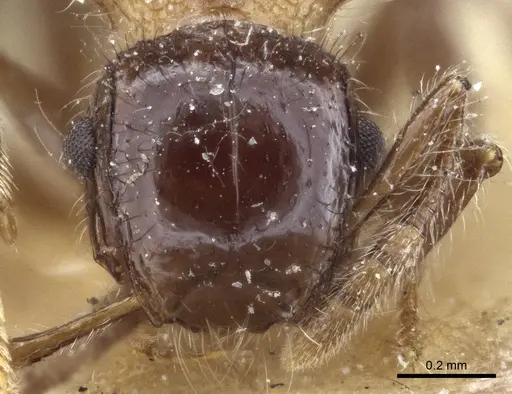
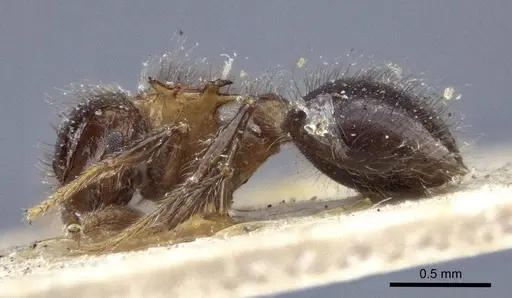
Meranoplus spinosus is a Myrmicinae ant species originally described from the Aru Islands in Indonesia. The original type specimen has been lost, and there's significant confusion surrounding the species identification - the specimen labeled as the holotype is actually a queen of a Neotropical Procryptocerus species. Despite this taxonomic uncertainty, the species has been recorded in Papua New Guinea, confirming its presence in the Australasian/Indomalayan region. This ant belongs to the Crematogastrini tribe, which uses a smear defense mechanism - a modified flattened stinger wipes venom onto enemies rather than piercing flesh. Little detailed biological information exists for this specific species, but it occupies tropical forest habitats in its known range.
Quick Summary
- Difficulty: Unknown
- Origin & Habitat: Aru Islands (Indonesia) and Papua New Guinea, tropical forest environments in the Australasian and Indomalayan regions [1]
- Colony Type: Colony structure is unconfirmed for this species.
- Size & Growth:
- Queen: Size data unavailable
- Worker: Size data unavailable
- Colony: Unknown, no colony size data available
- Growth: Unknown
- Development: Unknown, no development data available for this species (Development timeline cannot be estimated from available data.)
- Antkeeping:
- Temperature: Based on its tropical distribution in Papua New Guinea, aim for warm conditions around 24-28°C.
- Humidity: Tropical forest habitat suggests high humidity needs. Keep the nest substrate consistently moist but not waterlogged.
- Diapause: Unlikely, tropical species from Papua New Guinea do not typically require hibernation. Keep them at stable warm temperatures year-round.
- Nesting: Natural nesting habits are unconfirmed. Meranoplus species typically nest in soil or under stones in forest habitats.
- Behavior: Behavior is unstudied for this specific species. They likely nest in soil and forage on the forest floor. Their small size means escape prevention should be taken seriously, use fine mesh and tight-fitting lids.
- Common Issues: very limited species-specific information makes care recommendations uncertain, type specimen loss means morphological measurements are unavailable, no documented colony founding behavior, tropical humidity requirements may be challenging in dry indoor environments, small size creates escape risk
Taxonomic History and Identification Challenges
Meranoplus spinosus was originally described by Frederick Smith in 1859 from worker specimens collected from the Aru Islands by Alfred Russell Wallace. Unfortunately, the holotype worker has been lost or misidentified, the specimen labeled as the holotype in the Oxford University Museum is actually a queen of a Neotropical Procryptocerus species, not a Meranoplus worker. This creates significant confusion for identification. Despite this, the species has been recorded in modern surveys in Papua New Guinea, confirming the species exists and is distinct. The original description by Smith was sufficient to confirm it was a Meranoplus worker, but without the type specimen, exact measurements and detailed morphological features are unavailable. This makes M. spinosus a species known primarily from historical records rather than well-studied biological specimens. [1]
Distribution and Natural Habitat
The confirmed distribution covers the Australasian region, particularly Papua New Guinea, and extends into the Indomalayan region through the Aru Islands in Indonesia. These locations are both in the tropical zone, characterized by warm temperatures year-round and high humidity. The ant fauna of Papua New Guinea has been studied extensively, with Meranoplus species typically found in ground-foraging communities in forest environments. While specific microhabitat data for M. spinosus is unavailable, the genus generally prefers forest floor habitats where they can nest in soil or under stones and forage among leaf litter and debris. [1]
Care Recommendations
Since species-specific biological data is unavailable for M. spinosus, care recommendations must be based on typical Meranoplus genus behavior and the known tropical distribution. Keep the nest environment warm at 24-28°C with high humidity, think damp tropical forest floor. Use a naturalistic setup with moist substrate, or a test tube setup for founding colonies with a water reservoir. Feed small protein sources like fruit flies, pinhead crickets, or other tiny insects. Sugar water or honey can be offered occasionally. Because this is a tropical species, do not attempt hibernation, maintain stable temperatures year-round. The small worker size means escape prevention is important, use fine mesh barriers and ensure any gaps in the enclosure are sealed. [1]
Research Gaps and Future Directions
Meranoplus spinosus represents a species where significant biological knowledge gaps exist. No published studies document colony size, queen morphology, worker measurements, nesting behavior, or any aspect of captive care for this specific species. The loss of the type specimen further complicates accurate identification. For antkeepers, this means starting with a higher degree of uncertainty than usual, be prepared to experiment with care conditions and adjust based on colony response. Documenting any colonies obtained and sharing observations with the antkeeping community would help build knowledge about this poorly understood species. [1]
Frequently Asked Questions
How do I care for Meranoplus spinosus ants?
Since specific care data is unavailable, provide conditions matching their tropical distribution: warm temperatures (24-28°C), high humidity, and moist nest substrate. Feed small insects and offer sugar sources. This is essentially an experimental species in captivity with no established care protocols.
What do Meranoplus spinosus eat?
Diet is unconfirmed for this species, but Meranoplus genus members are typically predatory and may also tend aphids for honeydew. Offer small live prey like fruit flies, and occasionally sugar water or honey.
How big do Meranoplus spinosus colonies get?
Colony size is unknown, no published data exists on maximum colony size for this species.
Do Meranoplus spinosus ants need hibernation?
No, as a tropical species from Papua New Guinea, they do not require hibernation. Keep them at warm, stable temperatures year-round.
What is the difficulty level for keeping Meranoplus spinosus?
Difficulty is unknown due to limited species-specific data. The lack of established care protocols makes this an advanced or experimental species, only attempt if you're comfortable adjusting care conditions based on colony behavior.
Can I keep multiple Meranoplus spinosus queens together?
Colony structure is unconfirmed for this species. Do not combine unrelated foundress queens without careful monitoring, as aggression is likely.
What size is a Meranoplus spinosus queen?
Queen size is unknown, the original type specimen was lost, and no subsequent measurements have been published.
How long does it take for Meranoplus spinosus to develop from egg to worker?
Development timeline is unconfirmed, no published data exists for this species.
Do Meranoplus spinosus ants sting?
Sting capability is unconfirmed for this specific species. Most small Myrmicinae ants can sting but often cannot penetrate human skin. Handle with care regardless.
Where can I find Meranoplus spinosus ants for sale?
This species is rarely available in the antkeeping hobby due to limited distribution and lack of established captive breeding. It is not commonly traded.
Report an Issue
The current care sheet is based fully on literature. See inconsistencies, or something that's incorrect? Please , it will be resolved after review from an admin. Contributing to the blogs tab also helps providing information, to make us be able to further improve the caresheets. Thank you for your support!
References

Lembar perawatan ini dilisensikan di bawah CC BY-SA 4.0 .
Blog Komunitas
CASENT0916665
Lihat di AntWeb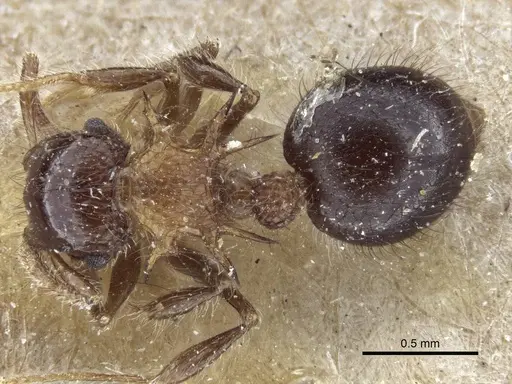
Literatur
Memuat peta distribusi...Memuat produk...