
Meranoplus mcarthuri
- Nama Ilmiah
- Meranoplus mcarthuri
- Tribe
- Crematogastrini
- Subfamili
- Myrmicinae
- Penulis
- Schödl, 2007
- Distribusi
- Ditemukan di 1 negara
Pendahuluan
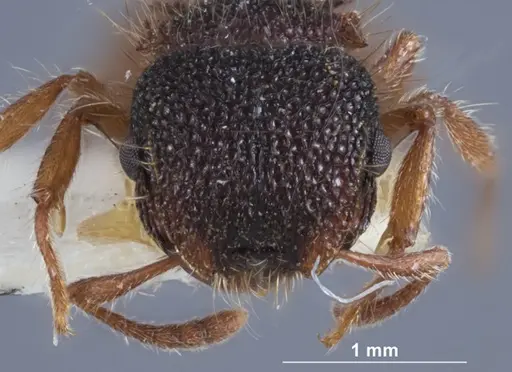
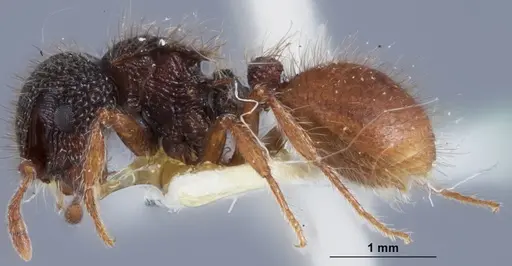
Meranoplus mcarthuri is a medium-sized myrmicine ant native to central and southern Australia. Workers measure 4.9-6.5mm with a distinctly bicolored appearance and characteristic features including five-toothed mandibles, a deeply excavated clypeus with acute lateral projections, and well-developed mesonotal projections that form a shield-like structure. The propodeal spines are moderately long, narrow, and curved. This species is part of the Meranoplus diversus group and is named in honor of Archie McArthur, a significant contributor to Australian ant research . These ants are ground-nesters with a granivorous diet, meaning they collect and eat seeds. They are widely distributed throughout central and southern Australia, with a single record from Western Australia near Morowa . The genus Meranoplus is known for its unusual shield-like mesonotum structure, which gives these ants a distinctive appearance compared to other Myrmicinae.
Quick Summary
- Difficulty: Medium
- Origin & Habitat: Native to central and southern Australia. This species nests in the ground and is adapted to arid to semi-arid conditions typical of inland Australia [1].
- Colony Type: Colony structure is unconfirmed. No published data on queen number or colony social organization exists for this specific species.
- Size & Growth:
- Queen: Undescribed, queen measurements not available in original species description [1].
- Worker: 4.9-6.5mm [1].
- Colony: Unknown, no colony size data published.
- Growth: Unknown, development times have not been studied.
- Development: Unconfirmed, no direct development data available for this species. (Growth timeline must be estimated from related Meranoplus species or typical Myrmicinae patterns.)
- Antkeeping:
- Temperature: Based on Australian distribution (central to southern regions), aim for warm conditions around 24-28°C. Provide a temperature gradient allowing workers to self-regulate. Room temperature in heated homes (22-26°C) is likely suitable.
- Humidity: Adapted to drier Australian conditions. Keep nest substrate moderately moist but allow some drying between waterings. Avoid constant saturation. A gradient from damp to drier areas mimics their natural arid habitat.
- Diapause: Unknown for this species. Many Australian ants reduce activity during cooler winter months, but specific hibernation requirements are unconfirmed. Consider reducing temperatures to 15-20°C for 2-3 months during winter if the colony shows reduced activity.
- Nesting: Ground-nesting species. In captivity, a Y-tong (AAC) nest or plaster/formicarium with soil substrate works well. Provide a chamber depth of 5-10mm scaled to worker size. A small outworld for foraging allows them to collect seeds and protein prey.
- Behavior: Granivorous diet means they actively collect and process seeds. Workers are moderately sized and can handle various protein sources including small insects. They are not typically aggressive but will defend the nest. Escape prevention should be moderate, their size (up to 6.5mm) makes them manageable with standard barriers, but ensure connections are secure. They are likely diurnal foragers, active during warmer parts of the day.
- Common Issues: colony founding is challenging, no data on queen founding behavior makes it difficult to establish wild-caught queens, granivorous diet requires appropriate seed offerings, may reject unfamiliar seeds initially, humidity control is critical, too wet causes fungal issues, too dry stresses the colony, slow growth due to unknown development timeline may frustrate keepers expecting fast development, limited availability, this species is rarely available in the antkeeping hobby
Housing and Nest Setup
Meranoplus mcarthuri is a ground-nesting ant that requires a nest with soil or soil-like substrate. A Y-tong (AAC) formicarium with a dirt chamber works well, as does a plaster nest with a soil fill. The chambers should be appropriately sized for workers of 4.9-6.5mm, not too large, but spacious enough for the colony to move freely. Provide a connected outworld for foraging where you can offer seeds and protein. Ensure all connections between nest areas are secure, though escape risk is moderate due to their larger worker size compared to tiny ants. A water test tube connected to the nest provides drinking water. [1]
Feeding and Diet
This species is granivorous, meaning seeds form a significant part of their diet. Offer a variety of small seeds such as grass seeds, millet, or commercial ant seed mixes. They will also accept protein sources like small insects (fruit flies, small crickets, mealworms). Sugar water or honey can be offered occasionally, though granivorous ants may not prioritize carbohydrates. Provide fresh protein 2-3 times per week and ensure seeds are always available. Remove uneaten seeds periodically to prevent mold. The seed-based diet is unusual among common antkeeping species, making M. mcarthuri an interesting choice for keepers interested in observing seed-processing behavior. [1]
Temperature and Humidity
As an Australian species from central to southern regions, M. mcarthuri prefers warm conditions. Maintain temperatures around 24-28°C during the active season. A heating cable on one side of the nest creates a gradient allowing workers to self-regulate. Place the heating element on top of the nest to avoid evaporating moisture too quickly. For humidity, these ants are adapted to drier conditions than many tropical species. Keep the nest substrate moderately moist, damp but not waterlogged. Allow portions to dry between waterings. Mist the nest sparingly and monitor for mold. During winter, if the colony shows reduced activity, lowering temperatures to 15-20°C for 2-3 months may be appropriate. [1]
Colony Establishment
Establishing M. mcarthuri colonies can be challenging due to limited information on their founding behavior. Wild-caught queens may be difficult to find since the species is not commonly collected. If you obtain a queen, she should be housed in a test tube setup with moist cotton or small soil chamber. The founding type (whether claustral or semi-claustral) is unconfirmed for this species. Based on typical Myrmicinae patterns, claustral founding is possible, the queen seals herself in and raises the first brood alone on stored energy. However, this is an inference and not confirmed. Provide a small protein source once workers emerge. Growth is expected to be slow given the lack of development data, patience is essential. [1]
Behavior and Observation
Meranoplus mcarthuri workers are moderately active foragers that will venture into the outworld to collect seeds and hunt prey. Their distinctive appearance, the shield-like mesonotum and bicolored body, makes them visually interesting in captivity. They are not typically aggressive toward keepers but will defend the colony if threatened. The species is part of the M. diversus group, characterized by their unusual mesonotal projections. Observing workers process seeds (breaking them down for consumption) provides unique viewing opportunities not available with predatory or honeydew-feeding species. They are likely diurnal, being most active during daylight hours when temperatures are warmest. [1]
Frequently Asked Questions
How long does it take for Meranoplus mcarthuri to produce first workers?
The egg-to-worker timeline is unconfirmed for this species. No published development data exists. Based on typical Myrmicinae patterns, expect 6-10 weeks at optimal temperature (24-28°C), but this is an estimate. Growth is likely slow, so patience is essential.
What do Meranoplus mcarthuri ants eat?
They are granivorous, seeds form their primary diet. Offer grass seeds, millet, or commercial ant seed mixes. They also accept small insects like fruit flies and small crickets for protein. Sugar water or honey may be accepted but is not a primary food source.
Can I keep Meranoplus mcarthuri in a test tube?
A test tube is suitable for a founding queen and small colony. For established colonies, transfer to a formicarium with a dirt chamber or Y-tong nest to accommodate their ground-nesting behavior and provide space for seed storage.
Do Meranoplus mcarthuri ants sting?
As Myrmicinae, they have a stinger but their typical non-aggressive behavior means stings are rare. They are not considered dangerous to humans.
Are Meranoplus mcarthuri good for beginners?
This species is rated as Medium difficulty. While not the most challenging, the lack of published care information and unknown development timeline make it better suited for keepers with some experience who can adapt to the species' specific needs.
Do Meranoplus mcarthuri need hibernation?
Diapause requirements are unconfirmed for this species. Based on their Australian distribution, they likely experience cooler winters and may benefit from a reduced temperature period (15-20°C) for 2-3 months during winter if the colony shows decreased activity.
How big do Meranoplus mcarthuri colonies get?
Maximum colony size is unknown, no published colony size data exists for this species. Based on worker size and genus patterns, colonies likely reach several hundred workers but probably not supercolony levels.
When should I move Meranoplus mcarthuri to a formicarium?
Move from a test tube setup to a formicarium when the colony reaches 20-30 workers and the test tube becomes crowded. Ensure the new nest has appropriate chamber sizes and a connected foraging area for seed collection.
Can I keep multiple Meranoplus mcarthuri queens together?
Colony structure (monogyne vs polygyne) is unconfirmed for this species. No data exists on whether multiple queens can establish colonies together. Combining unrelated queens is not recommended without evidence they tolerate each other.
What temperature is best for Meranoplus mcarthuri?
Keep nest temperatures around 24-28°C. A gradient allowing workers to choose warmer or cooler areas is ideal. Room temperature (22-26°C) in heated homes is likely suitable. Avoid temperatures below 18°C or above 32°C for extended periods.
Report an Issue
The current care sheet is based fully on literature. See inconsistencies, or something that's incorrect? Please , it will be resolved after review from an admin. Contributing to the blogs tab also helps providing information, to make us be able to further improve the caresheets. Thank you for your support!
References

Lembar perawatan ini dilisensikan di bawah CC BY-SA 4.0 .
Blog Komunitas
ANTWEB1041386
Lihat di AntWeb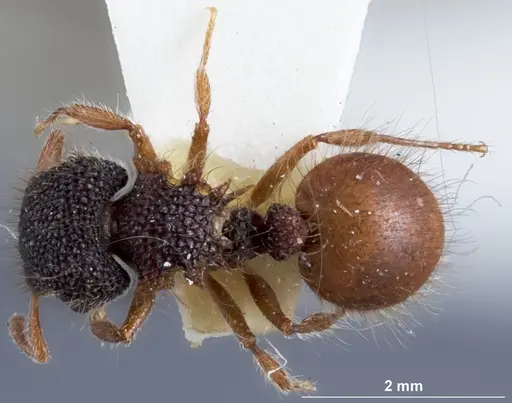
Literatur
Memuat peta distribusi...Memuat produk...