
Meranoplus borneensis
- Nama Ilmiah
- Meranoplus borneensis
- Tribe
- Crematogastrini
- Subfamili
- Myrmicinae
- Penulis
- Schödl, 1998
- Distribusi
- Ditemukan di 0 negara
Pendahuluan
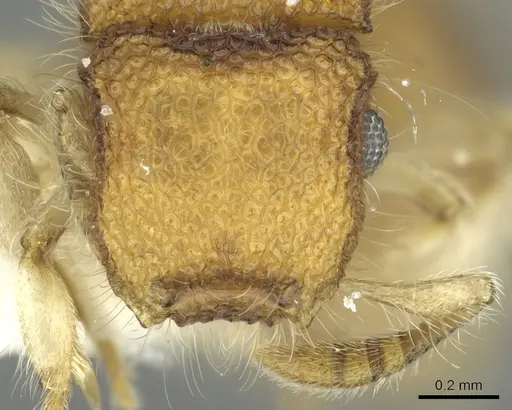
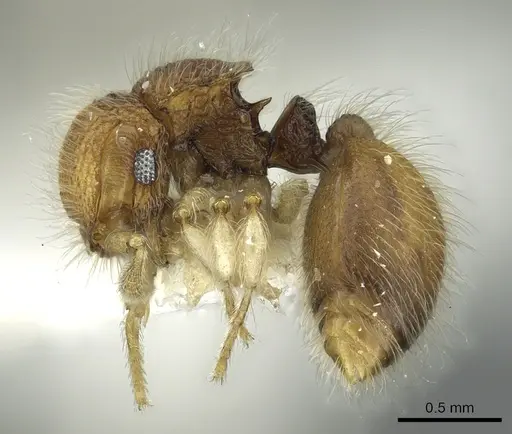
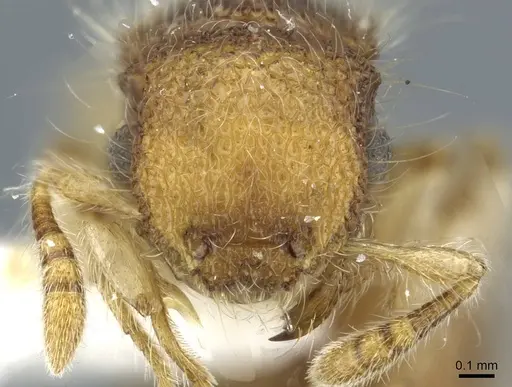
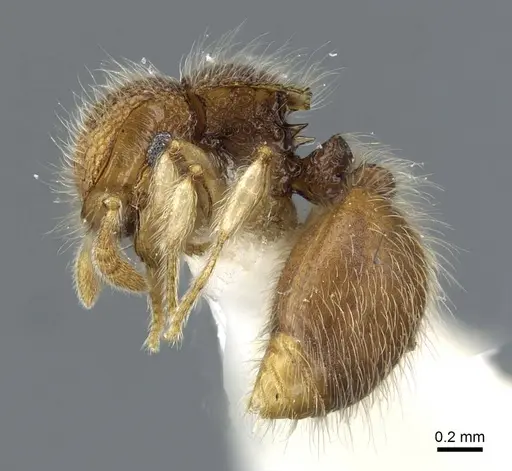
Meranoplus borneensis are tiny shield ants measuring 2.55-3.0 mm in total length, instantly recognizable by the rectangular armored plate covering their thorax . This 'shield' features unusual transparent windows called fenestrae along its sides, and the ants have a rough, grainy texture on their gaster (abdomen) . They are known only from the Crocker Range National Park in Sabah, Borneo, where they were collected at elevations between 1270-1600 meters . This species belongs to the subfamily Myrmicinae, tribe Crematogastrini. Like other members of this tribe, they have a modified, flattened stinger used to smear venom onto enemies rather than piercing flesh. Despite their striking appearance, these ants remain a complete mystery to science. No one has ever found a queen, observed a colony's behavior, or documented what they eat . The species was described in 1998 from worker specimens, and nothing is known about their biology in the wild or how they might fare in captivity .
Quick Summary
- Difficulty: Expert
- Origin & Habitat: Crocker Range National Park, Sabah, Borneo (Malaysia), montane tropical forest at 1270-1600m elevation [1]
- Colony Type: Unknown, natural colony structure and queen number have never been documented [3]
- Size & Growth:
- Queen: Unknown, queens have never been described [3]
- Worker: 2.55-3.0 mm [1]
- Colony: Unknown [3]
- Growth: Unknown
- Development: Unconfirmed, development time is undocumented for this species (No data exists for development timeline. Similar small Myrmicinae may develop in 6-10 weeks at warm temperatures, but this is purely speculative.)
- Antkeeping:
- Temperature: Likely 20-25°C based on montane tropical habitat, this is an estimate since no captive data exists [1]
- Humidity: Moderate to high humidity suggested by cloud forest habitat, keep nest substrate damp but not waterlogged [1]
- Diapause: No, tropical species does not require winter rest [3]
- Nesting: Unknown in captivity, in nature likely nest in soil or leaf litter in montane forest based on general Meranoplus genus patterns [1]
- Behavior: Activity patterns and temperament are undocumented [3]. Their extremely small size (under 3mm) means they can escape through the tiniest gaps [1].
- Common Issues: queens have never been described, making captive founding impossible unless you collect an entire wild colony, extremely small size requires exceptional escape prevention with fine mesh and tight seals, no published care information exists, so you are essentially working blind, wild-caught colonies from montane forests may carry mites or fungi that thrive in captive conditions, slow growth or colony failure is likely due to completely unknown dietary and nesting requirements
Identification and Appearance
Meranoplus borneensis belongs to the 'shield ant' group, named for the prominent rectangular plate covering their thorax [1]. Workers are tiny, ranging from 2.55 to 3.0 mm in total length, with a uniform pale to dark brown coloration [1].
The most distinctive features are the two pairs of transparent windows (fenestrae) on each side of the thorax shield, plus a wide translucent area at the back edge of the shield that overhangs the rear section [1]. The petiole (the narrow waist segment) appears distinctly cut off at an angle when viewed from the side, and the gaster has a rough, shagreened texture that looks grainy under magnification [1][2]. The entire body is covered with short white hairs and longer outstanding hairs [1].
If you somehow acquire these ants, verify the identification by checking for the rectangular unarmed shield (no spines), the obliquely truncate petiole, and the shagreened gaster. No other Meranoplus species shares this exact combination [1].
Natural Habitat
This species is known from a single location: the Crocker Range National Park in Sabah, East Malaysia [1]. All specimens were collected in montane forest at elevations between 1270 and 1600 meters [1].
This cloud forest habitat suggests the ants prefer cool, humid conditions with stable temperatures. The type specimens were collected in May, but this does not indicate nuptial flight timing [1]. The lack of any further collections suggests they are either extremely rare, cryptic (hidden), or both. In the wild, they likely nest in soil or leaf litter, but this is speculation based on general Meranoplus genus patterns rather than direct observation.
Captive Care Considerations
You should not attempt to keep Meranoplus borneensis unless you are an experienced antkeeper prepared to deal with complete uncertainty. Since queens have never been described, you cannot start a colony from a single queen [3]. Your only option would be to collect an entire wild colony, which is impractical given their rarity and remote montane habitat.
If you somehow obtain workers, house them in a small naturalistic setup with tight-fitting lids. Their 2.5-3 mm size means standard escape barriers may not work, you need fine mesh (under 0.5 mm) and Fluon or talcum powder barriers [1].
Maintain temperatures around 20-25°C based on their montane origin, though this is unconfirmed [1]. Keep humidity moderate to high by using damp (not wet) substrate and providing a water source. Avoid stagnant air to prevent mold, but do not let the nest dry out.
Feeding and Diet
The natural diet of Meranoplus borneensis is completely unknown [3]. Related Meranoplus species are often generalist predators or seed collectors, but this varies widely by species.
If attempting to feed these ants, offer a variety of small prey items like springtails, fruit flies, or tiny insect pieces. Provide sugar water or honey as a carbohydrate source. Observe carefully to see what they accept, you are essentially conducting original research since no one has documented their feeding behavior.
Frequently Asked Questions
Can I keep Meranoplus borneensis in a test tube?
You cannot found a colony in a test tube because queens have never been described for this species [3]. If you have workers, a test tube is too small for long-term housing. Use a small naturalistic setup instead.
How long until Meranoplus borneensis gets their first workers?
The egg-to-worker timeline is completely unknown. No data exists for this species.
What do Meranoplus borneensis eat?
Their diet is undocumented. Try offering small live prey like springtails and fruit flies, plus sugar water, but accept that their specific needs are unknown [3].
Do Meranoplus borneensis need hibernation?
No. They come from tropical Borneo and do not require a winter rest period [3].
How big do Meranoplus borneensis colonies get?
Colony size is unknown. No one has studied wild colonies to count workers [3].
Are Meranoplus borneensis good for beginners?
No. They are unsuitable for beginners because queens are undescribed, no care information exists, and their tiny size makes them difficult to contain [1][3].
Where can I buy Meranoplus borneensis?
You likely cannot. They are known only from a single remote location in Borneo and have never been available in the ant trade [1].
Do Meranoplus borneensis sting?
Like most Myrmicinae, they probably have a stinger but are too small to penetrate human skin effectively. However, this is unconfirmed [3].
Report an Issue
The current care sheet is based fully on literature. See inconsistencies, or something that's incorrect? Please , it will be resolved after review from an admin. Contributing to the blogs tab also helps providing information, to make us be able to further improve the caresheets. Thank you for your support!
References

Lembar perawatan ini dilisensikan di bawah CC BY-SA 4.0 .
Blog Komunitas
CASENT0902030
Lihat di AntWeb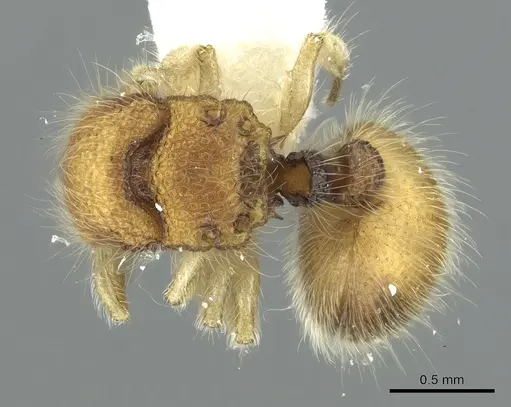
CASENT0911193
Lihat di AntWeb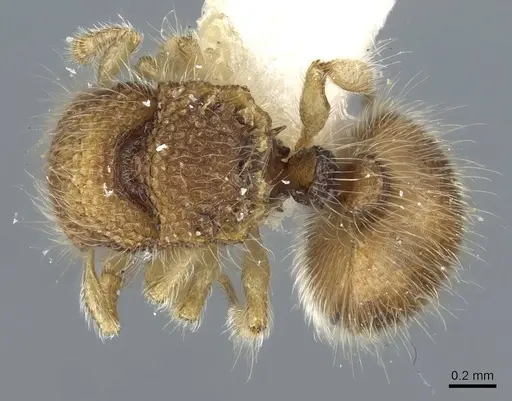
Literatur
Memuat peta distribusi...Memuat produk...