
Lophomyrmex kali
- Nama Ilmiah
- Lophomyrmex kali
- Tribe
- Crematogastrini
- Subfamili
- Myrmicinae
- Penulis
- Rigato, 1994
- Distribusi
- Ditemukan di 0 negara
Pendahuluan
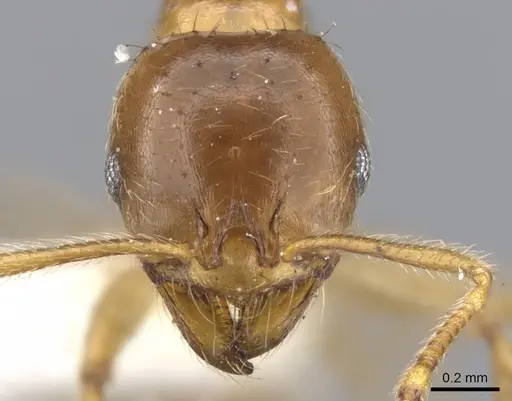
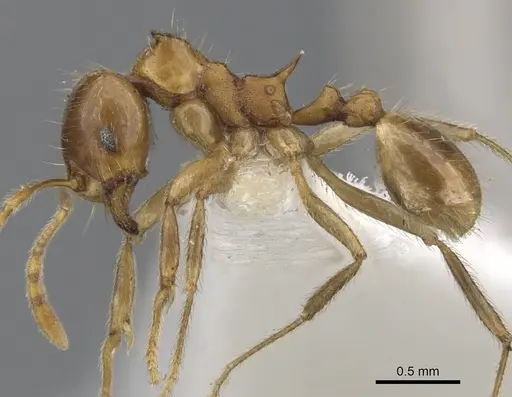
Lophomyrmex kali is a tiny, rare ant species endemic to India, with workers measuring just 3.2mm in total length. They are bright brownish yellow with a slightly darker head, characterized by slender appendages and distinctive pronotal spines (two small teeth on the front of the thorax) that place them in the quadrispinosus group. Their eyes are notably elongate and they have propodeal spines that curve slightly upward. This species was described from a single specimen collected in Northeast India in 1994 and remained virtually unknown until rediscovered in West Bengal's Buxa Tiger Reserve in 2008,making it one of the rarest ants known to science.
Quick Summary
- Difficulty: Expert
- Origin & Habitat: Endemic to the Himalayan regions of India, specifically recorded from Arunachal Pradesh, Assam, and West Bengal at elevations around 1000 meters above sea level. They inhabit mountainous terrain and have been collected from the ground in forested areas. [4][3][1]
- Colony Type: Unknown, only a single worker specimen has ever been documented, so colony structure (single-queen or multi-queen) has not been studied. [1][2]
- Size & Growth:
- Queen: Unknown, only workers have been described. Based on related Lophomyrmex species, queens would likely be larger than workers but this is unconfirmed.
- Worker: 3.2mm total length (TL) [5]
- Colony: Unknown, no colony data exists for this species.
- Growth: Unknown, no development data available.
- Development: Unknown, no direct observations. Based on related Lophomyrmex species, development from egg to worker may take 4-8 weeks at optimal temperatures, but this is an estimate for L. kali. (No development data exists for this species. Estimates based on genus-level patterns for closely related species.)
- Antkeeping:
- Temperature: Based on Himalayan distribution (1000m elevation), they likely prefer moderate temperatures in the range of 20-26°C. Related tropical Lophomyrmex species tolerate warmer conditions, but this mountain species probably prefers cooler, stable temperatures. Start around 22-24°C and observe colony activity.
- Humidity: Based on collection from ground in forested Himalayan regions, they likely require moderate to high humidity. Keep the nest substrate consistently moist but not waterlogged, with some drier areas for the ants to self-regulate.
- Diapause: Likely, Himalayan species typically experience seasonal temperature drops. A mild winter rest period at 10-15°C for 2-3 months is probably beneficial, similar to other Indian mountain ants.
- Nesting: In nature they nest in soil or ground. For captive care, a test tube setup with moist cotton or a small plaster, Y-tong, or soil nest with narrow chambers would work well. Given their tiny 3.2mm size, they need appropriately scaled small spaces.
- Behavior: No behavioral observations have been documented for this species. Based on genus-level patterns, Lophomyrmex ants are typically ground-nesting, non-aggressive, and form small to moderate colonies. Based on their subfamily (Myrmicinae, tribe Crematogastrini), they likely use a smearing defense mechanism where venom is wiped onto enemies rather than pierced. Their tiny size (3.2mm) means escape prevention is critical, they can squeeze through extremely small gaps. Exercise extreme caution with barrier methods.
- Common Issues: extreme data scarcity means no verified care protocols exist, all husbandry will be experimental., escape prevention is critical due to their tiny 3.2mm size., no information on founding behavior or colony establishment, starting from a queen may be extremely challenging., no documented diet preferences, keepers must experiment with various protein and sugar sources., rarity in the wild means wild-caught colonies are essentially impossible to obtain.
Rarity and Collection History
Lophomyrmex kali is one of the rarest ant species in the world, known from only a handful of specimens across three decades. The original description came from a single worker collected in Northeast India in 1994 by Rigato. For 14 years, no additional specimens were found, leading to its classification as extremely rare. In 2008,researchers Soumyendra Nath Ghosh and Saroj Sheela rediscovered the species in Buxa Tiger Reserve, West Bengal, the first confirmed sighting since the original description. This second record came from a specimen collected at approximately 1000 meters elevation in the Himalayan foothills. The species remains endemic to India, with confirmed records from Arunachal Pradesh, Assam, and West Bengal. [1][2][3][4]
Identification and Physical Characteristics
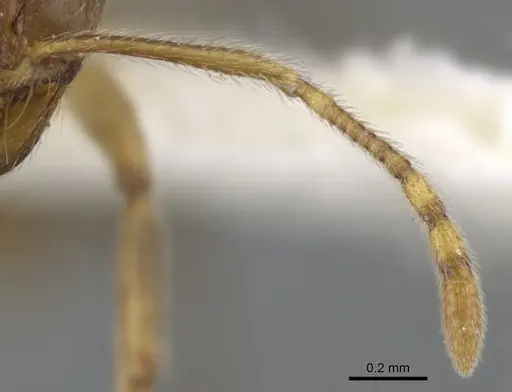
Workers measure just 3.2mm in total length, making them one of the smaller ant species in the Myrmicinae subfamily. They belong to the Lophomyrmex quadrispinosus group, which is characterized by two distinctive anterodorsal pronotal spines (teeth on the front of the thorax). What makes L. kali distinct from related species is its remarkably slender appendages, including elongated eyes whose anterior point sits unusually close to the mandibular insertion. The pronotal spines appear raised above the pronotal dorsum with thin, sharp divergent tips. In profile, the propodeal spines are relatively long and slightly upcurved. The body is bright brownish yellow with the head slightly darker, and the entire ant has a shining appearance with only faint surface sculpture. [5]
Housing and Nest Setup
Given the complete absence of captive husbandry data for this species, recommendations must be based on genus-level patterns and related species. Use a test tube setup for founding colonies, a small test tube with a water reservoir (cotton ball) provides the humidity control these ants likely need. The chambers should be appropriately scaled to their tiny 3.2mm size. Once the colony establishes, a small plaster, Y-tong, or soil nest with narrow tunnels and chambers works well. Ensure the nest material can retain moisture without becoming waterlogged. Provide an outworld for foraging with a sugar water station and protein food offerings. Escape prevention is absolutely critical, these tiny ants can squeeze through gaps that seem impossible. Use fluon on tube rims and ensure all connections are sealed. [5]
Feeding and Diet
No specific dietary observations exist for Lophomyrmex kali. However, Lophomyrmex species in general are omnivorous, typically foraging for nectar, honeydew, and small insects. For captive care, offer sugar water or honey water in a shallow container as a constant energy source. For protein, small live prey items appropriate to their size (fruit flies, pinhead crickets, small mealworms) should be offered. Given their tiny 3.2mm worker size, prey items must be very small. Observe whether workers accept the offered foods and adjust accordingly. Remove uneaten prey after 24-48 hours to prevent mold. The experimental nature of keeping this species means you may need to try various food items to determine preferences. [5]
Temperature and Seasonal Care
Based on their Himalayan distribution at approximately 1000 meters elevation, Lophomyrmex kali likely experiences seasonal temperature variation in the wild. Related species from similar elevations prefer moderate temperatures in the range of 20-26°C. A room temperature setup around 22-24°C is likely suitable, with a slight heat gradient if the colony shows interest in warmer areas. For overwintering, a mild diapause period of 2-3 months at 10-15°C is probably appropriate, mimicking the cooler winter conditions in their mountain habitat. Monitor colony activity levels, if workers become sluggish and cluster together, they may be entering dormancy. Avoid sudden temperature fluctuations. [4][5]
Challenges of Keeping Extremely Rare Species
Lophomyrmex kali presents unique challenges that set it apart from more commonly kept ant species. First and foremost is the complete absence of documented captive care information, there are no established protocols, no known successful breeding records in captivity, and no community knowledge to draw upon. Every aspect of husbandry will be experimental. Second, the extreme rarity in the wild means obtaining a founding queen is exceptionally difficult. This species has been recorded only a handful of times across three decades. Third, their tiny 3.2mm size demands specialized equipment and excellent escape prevention. For these reasons, Lophomyrmex kali should only be attempted by expert antkeepers with the resources to conduct careful experiments and document their findings. Success with this species would represent a genuine contribution to antkeeping knowledge. [1][2]
Frequently Asked Questions
How long does it take for Lophomyrmex kali to develop from egg to worker?
This is completely unknown, no development data exists for this species. Based on typical Lophomyrmex genus patterns, it may take 4-8 weeks at optimal temperatures, but this is a rough estimate with no confirmation.
What do Lophomyrmex kali ants eat?
No specific dietary observations exist for this species. Based on related Lophomyrmex species, they likely accept sugar sources (honey water) and small protein prey. You will need to experiment to determine accepted foods.
Are Lophomyrmex kali good for beginners?
No. This is an expert-level species due to extreme data scarcity, with no established care protocols. Only a single worker has ever been documented in scientific literature. Every aspect of husbandry is experimental.
Do Lophomyrmex kali ants sting?
No species-specific observations exist, but as a member of Crematogastrini, they likely use a smearing defense with a modified stinger rather than typical stinging. The effect on humans is unknown but probably negligible due to their tiny size.
What temperature should I keep Lophomyrmex kali at?
Based on their Himalayan distribution at 1000m elevation, aim for moderate temperatures around 22-24°C. A mild diapause at 10-15°C for 2-3 months during winter is likely beneficial.
How big do Lophomyrmex kali colonies get?
Unknown, no colony size data exists for this species. Related Lophomyrmex species typically form small to moderate colonies, but L. kali remains unstudied.
Can I keep multiple Lophomyrmex kali queens together?
Unknown, colony structure has not been documented. Without data on whether they are single-queen or multi-queen species, combining queens is not recommended.
Where does Lophomyrmex kali live in the wild?
They are endemic to India, specifically the Himalayan regions at around 1000 meters elevation. Confirmed records exist from Arunachal Pradesh, Assam, and West Bengal (Buxa Tiger Reserve). They nest in ground soil in forested areas.
Is Lophomyrmex kali claustral or semi-claustral?
Unknown, founding behavior has never been documented for this species. Without observations of how queens establish colonies, this cannot be determined.
Why is Lophomyrmex kali so rare in ant collections?
This species was known from only a single specimen for 14 years after its 1994 description. It was rediscovered in 2008 but remains one of the rarest ant species globally. Wild collection is extremely limited, and no captive breeding protocols exist.
Report an Issue
The current care sheet is based fully on literature. See inconsistencies, or something that's incorrect? Please , it will be resolved after review from an admin. Contributing to the blogs tab also helps providing information, to make us be able to further improve the caresheets. Thank you for your support!
References

Lembar perawatan ini dilisensikan di bawah CC BY-SA 4.0 .
Blog Komunitas
CASENT0901264
Lihat di AntWeb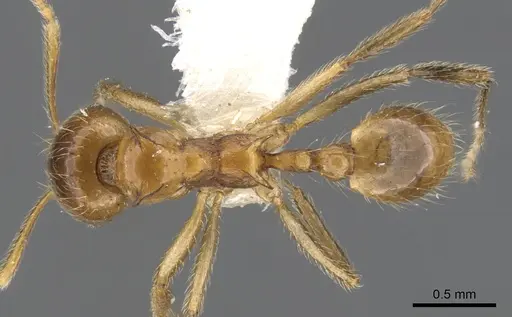
Literatur
Memuat peta distribusi...Memuat produk...