
Lioponera coxalis
- Nama Ilmiah
- Lioponera coxalis
- Subfamili
- Dorylinae
- Penulis
- Arnold, 1926
- Distribusi
- Ditemukan di 0 negara
Pendahuluan
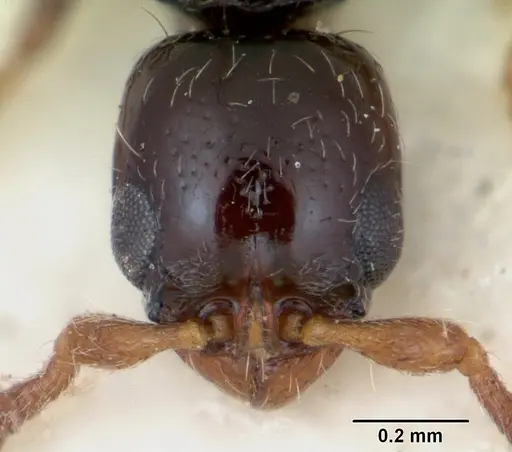
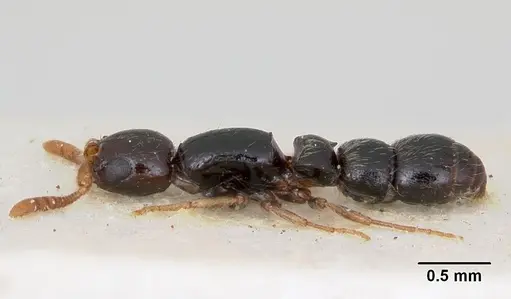
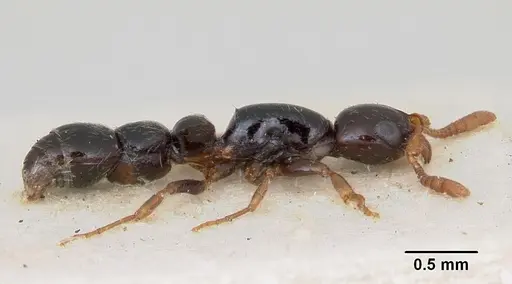
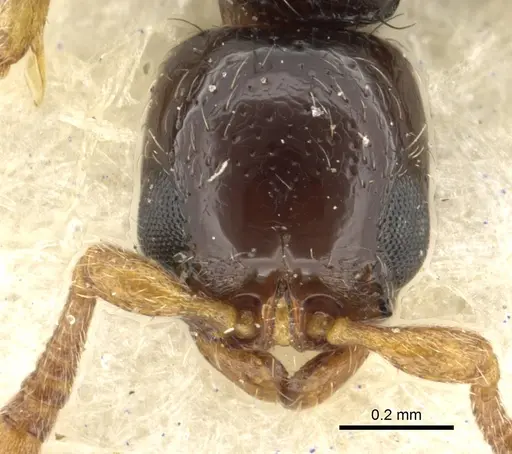
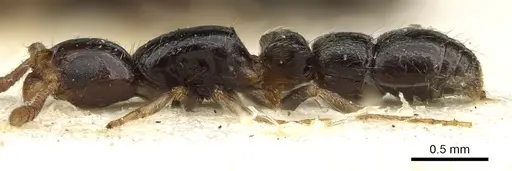
Lioponera coxalis is a small predatory ant belonging to the Dorylinae subfamily, formerly known as Cerapachys coxalis. Originally described from Zimbabwe in 1926,this species has been recorded in Cameroon and appears to be a ground-nesting predator typical of army ants. Workers are modest in size with dark coloration. The species is rarely encountered, with a relative frequency of only 0.01% in non-invaded areas in Cameroon in 2007,and absent in the same areas when surveyed again in 2017 . Much of the biology remains unconfirmed, and keepers should expect to experiment with care conditions.
Quick Summary
- Difficulty: Unknown, limited data available
- Origin & Habitat: Afrotropical region, Cameroon and Zimbabwe. Found in garden environments in Cameroon, suggesting ground-nesting habits in shaded areas [2][1].
- Colony Type: Colony structure is unconfirmed. Dorylinae species typically have single-queen colonies, but this has not been documented for this species.
- Size & Growth:
- Queen: Size data unavailable, no specific measurements exist for this species
- Worker: Size data unavailable, worker described by Arnold 1926 but exact measurements not recorded in available literature
- Colony: Unknown, no colony size data available
- Growth: Unknown, no development data available
- Development: Unconfirmed, no specific development data exists for this species (No direct development data exists for this species.)
- Antkeeping:
- Temperature: Start around 22-26°C and observe colony activity. No specific thermal data exists for this species [3].
- Humidity: Keep substrate moderately moist. Based on garden habitat in Cameroon, they likely prefer damp but not waterlogged conditions [2].
- Diapause: Unknown, no seasonal data available for this species
- Nesting: Likely ground-nesting based on garden observations. A naturalistic setup with moist substrate or a Y-tong/plaster nest works well for Dorylinae species [3].
- Behavior: As a Dorylinae species, they are likely predatory and may forage in raids. Army ants typically have aggressive hunting behavior. Escape prevention should be manageable with standard methods, Dorylinae are not particularly known for escaping. Their small size means standard barriers should suffice.
- Common Issues: very limited availability, this species is rarely collected or available in the antkeeping hobby, no specific care data exists, keepers will need to experiment with conditions, colonies may be sensitive to disturbance, army ants often prefer stable conditions, wild-caught colonies may have low survival rates due to stress from collection
General Biology and Identification
Lioponera coxalis was originally described as Lioponera coxalis by Arnold in 1926 from specimens collected in Zimbabwe. The species was later moved to Cerapachys by Brown in 1975,and finally to Lioponera by Borowiec in 2016 as part of a major revision of the Dorylinae subfamily [3]. Workers are modest-sized ants typical of the army ant group, with dark coloration. The species has been recorded in two countries in the Afrotropical region: Cameroon and Zimbabwe. Survey data from Cameroon shows this species is rarely encountered, with a relative frequency of only 0.01% in non-invaded areas in 2007,and it was absent from the same areas when surveyed again in 2017 [1]. This rarity makes it a challenging species to acquire and study.
Natural Habitat and Distribution
Lioponera coxalis is found in the Afrotropical region, specifically Cameroon and Zimbabwe. In Cameroon, the species has been found in garden environments rather than inside houses, suggesting it prefers outdoor ground habitats [2]. The garden habitat indicates these ants likely nest in soil or under ground cover in shaded, moderately damp areas. Zimbabwe specimens were collected from the Umgusa River area at Sawmills, which suggests riparian or forest-edge habitats [3]. The limited distribution data makes it difficult to determine precise habitat preferences, but being a Dorylinae species, they are likely ground-nesting predators that prefer humid, shaded microhabitats.
Feeding and Diet
As a Dorylinae species, Lioponera coxalis is likely a predatory ant that feeds primarily on other small invertebrates. Dorylinae army ants are known for their raiding behavior, where workers coordinate to hunt prey items including other ants, springtails, and various soil arthropods. In captivity, offer small live prey such as fruit flies, pinhead crickets, mealworms, and other small insects. Since specific feeding data does not exist for this species, start with small live prey and observe acceptance. Sugar sources may be accepted occasionally, but protein-rich prey should form the primary diet. Feed every 2-3 days with prey items, removing any uneaten prey after 24 hours. [3]
Nest Preferences and Housing
Based on the garden habitat records and typical Dorylinae behavior, Lioponera coxalis likely nests in soil or under ground cover in nature. For captivity, a naturalistic setup with moist substrate or a Y-tong/plaster nest works well. The nest should have chambers scaled to their size with moderate humidity. Since specific nesting data is lacking, provide a setup with a moisture gradient, some damp areas and slightly drier areas for the ants to choose. Test tube setups can work for founding colonies, but established colonies may benefit from more spacious formicarium-style nests that allow for brood chambers and foraging areas. [2][3]
Temperature and Seasonal Care
No specific temperature requirements exist in the scientific literature for this species. Based on the Cameroon location (tropical climate) and typical Dorylinae preferences, aim for temperatures in the low-to-mid 20s Celsius (22-26°C). Observe your colony's behavior, if workers are clustered near heat sources, increase temperature slightly, if they avoid heated areas, reduce temperature. No data exists regarding diapause or hibernation requirements. Given the African distribution, they may not require a true hibernation period but might benefit from a slight cool period during winter months if colony activity slows naturally. [1][3]
Behavior and Temperament
Dorylinae ants are known for their predatory behavior and often exhibit raiding foraging patterns. Lioponera coxalis likely displays similar behavior, with workers hunting cooperatively for prey. Army ants in this subfamily are typically not aggressive toward humans but will defend their nest vigorously. Escape risk appears moderate, while not specifically documented as escape artists, standard barrier methods (Fluon, petroleum jelly) should suffice. The main behavioral note is that this is a rarely encountered species in the wild, suggesting colonies may be sensitive to disturbance and require stable conditions in captivity. [3]
Frequently Asked Questions
How long does it take for Lioponera coxalis to produce first workers?
The egg-to-worker timeline is unconfirmed for this species. No specific development data exists.
What do Lioponera coxalis ants eat?
As a Dorylinae species, they are predatory. Feed small live prey including fruit flies, pinhead crickets, small mealworms, and other tiny insects. Protein should form the primary diet. Sugar sources may be occasionally accepted but are not required.
Are Lioponera coxalis ants good for beginners?
This species is not recommended for beginners due to the complete lack of specific care data. Very little is known about their requirements, and they are rarely available in the antkeeping hobby. This species is best suited for experienced keepers who enjoy experimenting with novel species.
What temperature should I keep Lioponera coxalis at?
No specific temperature data exists. Start around 22-26°C and adjust based on colony behavior. If workers cluster near heat, increase slightly, if they avoid heated areas, reduce. The Cameroon origin suggests they prefer warm, stable conditions.
How big do Lioponera coxalis colonies get?
Colony size is unknown, no colony size data exists in the scientific literature.
Can I keep multiple Lioponera coxalis queens together?
Colony structure is unconfirmed for this species. Dorylinae typically have single-queen colonies, but combining unrelated queens has not been documented. Do not attempt pleometrosis (multiple queen founding) without further research.
Do Lioponera coxalis need hibernation?
Diapause requirements are unknown. Given the African distribution (Cameroon, Zimbabwe), they likely do not require true hibernation. A slight cool period during winter may be beneficial if the colony naturally slows activity.
Where does Lioponera coxalis nest?
Nesting behavior is unconfirmed. Based on garden habitat observations in Cameroon, they likely nest in soil or under ground cover in shaded, damp areas. Provide a naturalistic setup with moist substrate or a Y-tong/plaster nest.
Is Lioponera coxalis available in the antkeeping hobby?
This species is very rarely available. It has a limited distribution (Cameroon and Zimbabwe) and appears to be uncommon even in its native range, with only 0.01% relative frequency in survey data. Acquiring this species would likely require connecting with specialized collectors.
Report an Issue
The current care sheet is based fully on literature. See inconsistencies, or something that's incorrect? Please , it will be resolved after review from an admin. Contributing to the blogs tab also helps providing information, to make us be able to further improve the caresheets. Thank you for your support!
References

Lembar perawatan ini dilisensikan di bawah CC BY-SA 4.0 .
Blog Komunitas
CASENT0173076
Lihat di AntWeb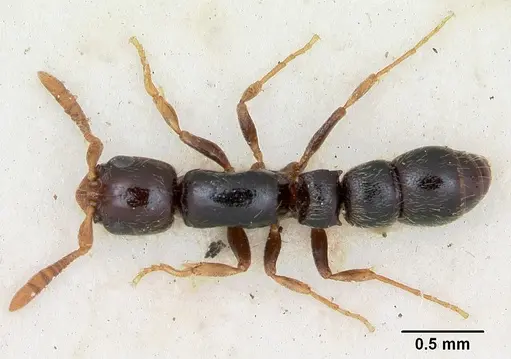
CASENT0902705
Lihat di AntWeb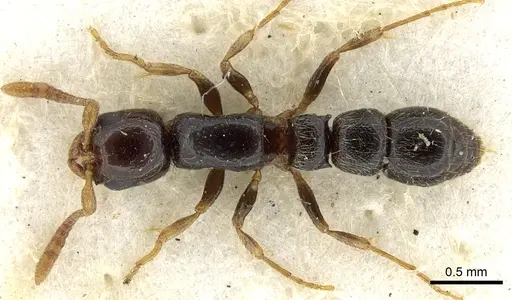
Literatur
Memuat peta distribusi...Memuat produk...