
Lioponera clarki
- Nama Ilmiah
- Lioponera clarki
- Subfamili
- Dorylinae
- Penulis
- Crawley, 1922
- Distribusi
- Ditemukan di 1 negara
Pendahuluan
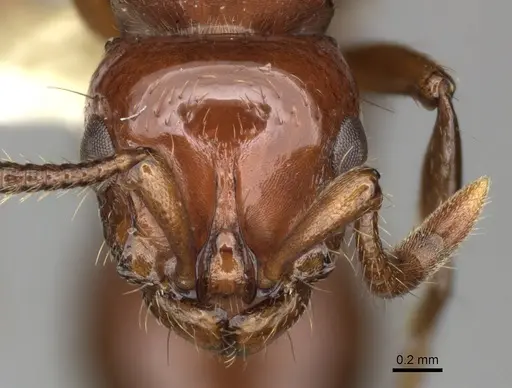
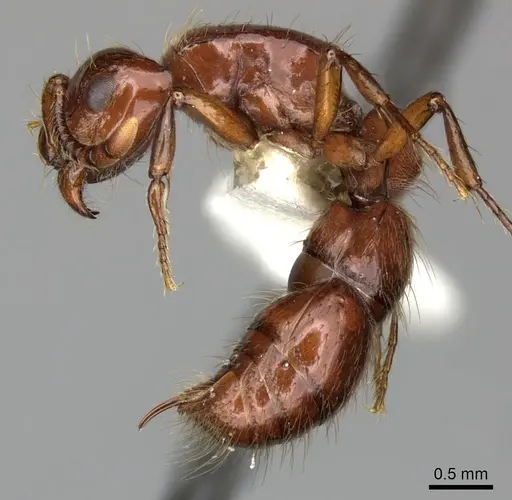
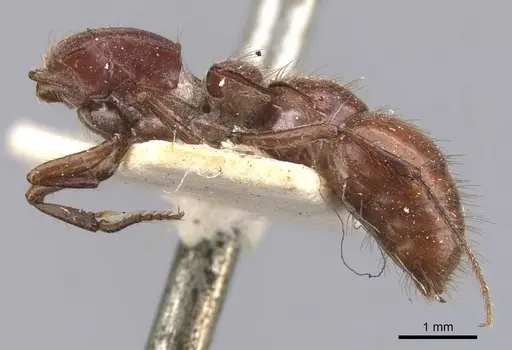
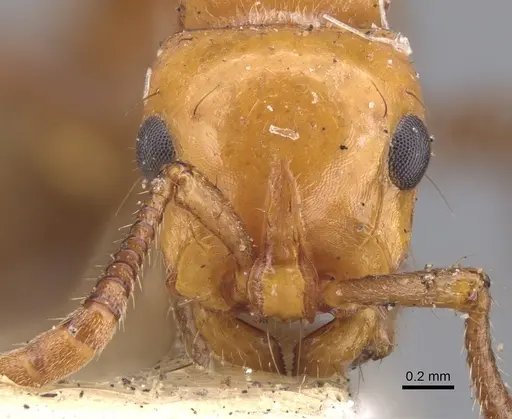
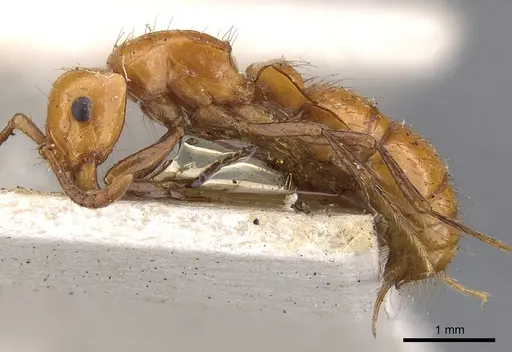
Lioponera clarki is a small ant belonging to the Dorylinae subfamily (army ants). Workers are distinguished by their lack of a dorsolateral cephalic carina curving towards the eye, absence of ocelli, and a wide petiolar node with posterior angles that extend laterally beyond its anterior margin in dorsal view . The dorsum of the petiolar node is often punctate . This species is predominantly found in sand-plain habitats across Australia, including Western Australia, the Northern Territory, and drier areas of south-eastern Australia . As a Dorylinae species, these ants are predatory and exhibit raiding behavior - one observed raid in the Northern Territory showed workers conducting loose raids against small Iridomyrmex colonies in open eucalypt woodland .
Quick Summary
- Difficulty: Unknown, limited keeper experience data available
- Origin & Habitat: Australia (Western Australia, Northern Territory, south-eastern Australia). Predominantly a sand-plain species found in drier areas [1].
- Colony Type: Colony structure is unconfirmed. Dorylinae ants typically have single-queen colonies, but specific data for L. clarki is lacking.
- Size & Growth:
- Queen: Size data unavailable, no measurements exist for this species
- Worker: Size data unavailable, no measurements exist for this species
- Colony: Unknown, Dorylinae colonies can range from hundreds to thousands
- Growth: Unknown
- Development: Unconfirmed, no specific development data available for this species (No specific development data available for this species)
- Antkeeping:
- Temperature: Inferred: Keep at low-to-mid 20s°C (22-26°C). Australian ants generally tolerate room temperature. Monitor colony activity for preferences.
- Humidity: Inferred: Moderate humidity (50-70%). Sand-plain habitat suggests they tolerate drier conditions than rainforest species. Provide a moisture gradient.
- Diapause: Unknown, Australian species may have reduced activity during dry/hot seasons rather than true hibernation
- Nesting: Inferred: Use a naturalistic setup with sand substrate or a Y-tong/plaster nest. They likely prefer enclosed spaces with some humidity control. Avoid overly wet conditions.
- Behavior: Dorylinae ants are predatory and form raiding columns. One documented raid showed loose raiding behavior against Iridomyrmex nests in bright morning sunlight [3]. They are likely more active and aggressive than typical house ants. Escape prevention is important, use standard mesh barriers. Temperament is likely defensive given their predatory nature.
- Common Issues: limited species-specific information makes care recommendations uncertain, predatory diet may be challenging to maintain, requires live prey, colony structure and founding behavior unconfirmed, DNA barcoding has failed for this species, suggesting identification challenges, wild-caught colonies may have parasites or fail to adapt to captivity
Identification and Appearance
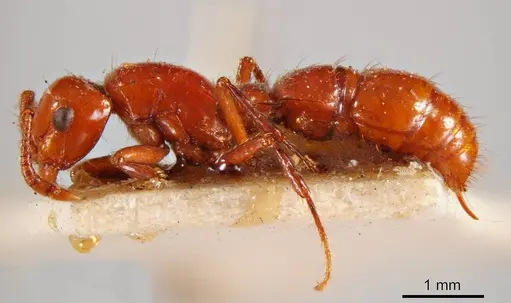
Lioponera clarki workers can be identified by several distinctive features: they lack the dorsolateral cephalic carina that curves toward the eye in many related species, they have no ocelli (simple eyes), and they have a notably wide petiolar node whose posterior angles extend laterally beyond the anterior margin when viewed from above [1]. The dorsum of the petiolar node often has a punctate (dotted) texture [2]. Exact body measurements are not documented in available literature. The species was originally described as Lioponera clarki by Crawley in 1922 and later moved through Cerapachys before being placed in Lioponera [3].
Natural Habitat and Distribution
This species is predominantly found in sand-plain habitats across Australia, with confirmed presence in Western Australia, the Northern Territory, and drier areas of south-eastern Australia [1]. The type locality is Darlington in Western Australia. An observed raid near Darwin (Berrimah) occurred in open eucalypt woodland over bare soil, suggesting they inhabit areas with sparse ground cover [3]. The sand-plain preference indicates they are adapted to drier, well-drained soils rather than moist forest floors.
Feeding and Diet
As a member of the Dorylinae subfamily, Lioponera clarki is predatory like other army ants. The observed raid against a small Iridomyrmex nest confirms they attack other ant colonies [3]. In captivity, you should offer small live prey such as fruit flies, pinhead crickets, mealworms, and other small insects. Their predatory nature means they likely require regular protein input. Sugar sources may be accepted but are not a primary food source for predatory Dorylinae. Feed protein prey 2-3 times per week and remove uneaten prey within 24 hours.
Behavior and Colony Structure
The single documented raid observation provides our best insight into their behavior. In 1951 near Darwin, researchers watched L. clarki workers conducting a loose raid against a nest of small Iridomyrmex ants in bright morning sunlight. Only 3-4 raiding workers were observed, suggesting this was the final stage of what may have been a longer operation [3]. This loose, small-scale raiding pattern differs from the massive swarm raids of some New World army ants. Dorylinae species typically have single-queen colonies, though this specific trait is unconfirmed for L. clarki. Workers are likely moderately aggressive when defending the colony.
Nest Preferences and Housing
Based on their sand-plain habitat preference, these ants likely prefer well-drained nesting substrates. A naturalistic setup with a sandy soil mixture works well for simulating their natural conditions. Alternatively, a Y-tong (AAC) nest with narrow chambers provides good visibility and humidity control. Avoid overly humid or waterlogged conditions, they appear adapted to drier environments. Provide a test tube water reservoir connected to the nest area for humidity control. Use standard escape prevention with fine mesh, as workers are small enough to escape through standard gaps.
Temperature and Seasonal Care
No specific thermal data exists for this species. As an Australian ant from varied climates (sand-plain areas of WA, NT, and southeastern Australia), they likely tolerate a range of temperatures. Start with room temperature (22-25°C) and observe colony behavior. If workers cluster near the heated side, increase slightly, if they avoid it, reduce heat. Australian ants may have reduced activity during extreme heat or dry seasons rather than true hibernation. Monitor for seasonal changes in activity levels and adjust feeding accordingly.
Frequently Asked Questions
How long does it take for Lioponera clarki to produce first workers?
The egg-to-worker timeline is unconfirmed for this species. Without specific data, monitor your colony's growth and adjust conditions as needed.
What do Lioponera clarki ants eat?
They are predatory Dorylinae ants that hunt other insects. In captivity, offer small live prey like fruit flies, pinhead crickets, mealworms, and other tiny insects. Remove uneaten prey within 24 hours. Sugar water may be accepted but protein prey is essential.
Are Lioponera clarki ants aggressive?
As predatory army ants (Dorylinae), they are likely defensive and will attack threats. Their documented raiding behavior against other ant colonies confirms predatory tendencies. Use caution when maintaining their enclosure.
Do Lioponera clarki ants sting?
Many Dorylinae ants have stingers, though the sting may be mild for humans. Use standard precautions when handling or working with the colony.
What is the best nest type for Lioponera clarki?
A naturalistic setup with sandy substrate or a Y-tong/plaster nest works well. They prefer drier conditions than many ants, so ensure good drainage. Provide a humidity gradient so they can choose their preferred zone.
How big do Lioponera clarki colonies get?
Colony size is unconfirmed. Dorylinae colonies typically range from hundreds to thousands of workers. Without specific data for this species, expect moderate growth over months to years.
Do Lioponera clarki need hibernation?
Diapause requirements are unknown. Australian species may have reduced activity during hot/dry seasons rather than cold-induced hibernation. Monitor your colony's activity and adjust temperature if they become less active.
Can I keep multiple Lioponera clarki queens together?
Colony structure is unconfirmed. Without data on whether they are monogyne (single queen) or polygyne (multiple queens), avoid combining unrelated queens. Stick to single-queen colonies unless you observe otherwise.
Is Lioponera clarki good for beginners?
This species is not recommended for beginners due to limited species-specific care information and their predatory diet requirements. They are best suited for experienced antkeepers who can provide live prey and adapt care based on observed behavior.
Where is Lioponera clarki found in the wild?
They are found across Australia in sand-plain and drier areas: Western Australia (including the type locality Darlington), the Northern Territory (near Darwin), and south-eastern Australia [1].
How do I identify Lioponera clarki?
Look for: no dorsolateral carina curving toward the eye, no ocelli (simple eyes), and a wide petiolar node whose posterior angles extend beyond the anterior margin when viewed from above [1]. The petiolar node dorsum is often punctate [2]. DNA barcoding has failed for this species, making morphological identification important [4].
Why are my Lioponera clarki dying?
Common issues include: overhumidity (they prefer drier sand-plain conditions), inadequate prey (they need regular protein), and stress from insufficient space. Ensure proper ventilation, provide live prey regularly, and avoid disturbing the colony. Wild-caught colonies may carry parasites.
Report an Issue
The current care sheet is based fully on literature. See inconsistencies, or something that's incorrect? Please , it will be resolved after review from an admin. Contributing to the blogs tab also helps providing information, to make us be able to further improve the caresheets. Thank you for your support!
References

Lembar perawatan ini dilisensikan di bawah CC BY-SA 4.0 .
Blog Komunitas
ANTWEB1008228
Lihat di AntWeb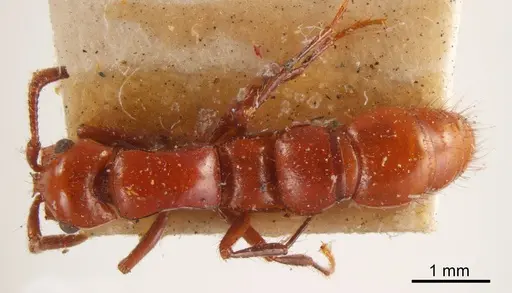
CASENT0249290
Lihat di AntWeb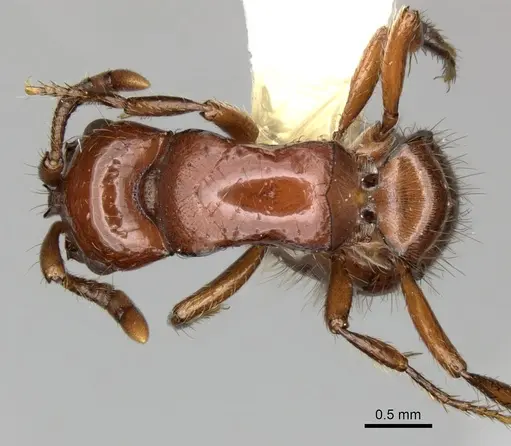
CASENT0902750
Lihat di AntWeb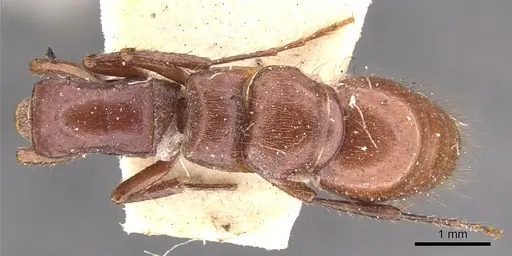
CASENT0902751
Lihat di AntWeb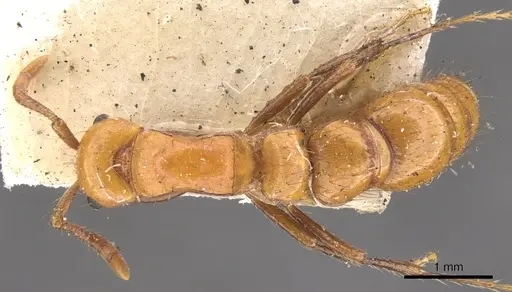
Literatur
Memuat peta distribusi...Memuat produk...