
Leptogenys socorda
- Nama Ilmiah
- Leptogenys socorda
- Tribe
- Ponerini
- Subfamili
- Ponerinae
- Penulis
- Lattke, 2011
- Distribusi
- Ditemukan di 0 negara
Pendahuluan
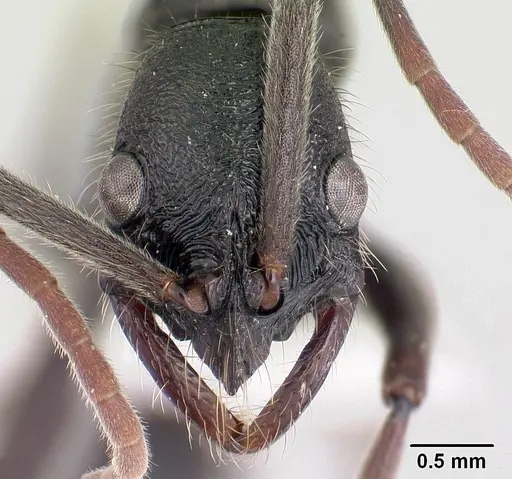
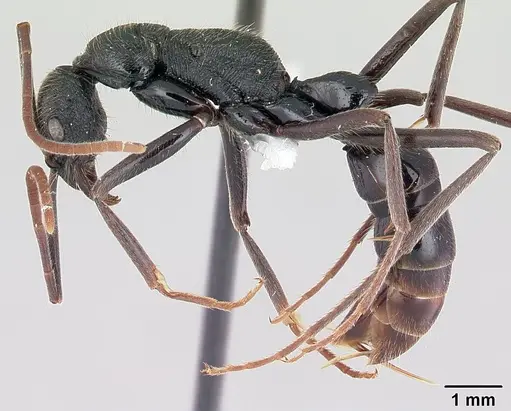
Leptogenys socorda is a medium-sized ponerine ant species described from the Serranía de Perijá mountain range in Colombia. Workers belong to the ingens species group and have a distinctive elongated black body with very dark brown to black legs and a brown mandible . The smooth petiolar node distinguishes this species from similar species like Leptogenys carbonaria which has rough sculpturing . This is one of the least documented ant species in existence - the queen and male castes remain unknown, and no biological observations have been published since the original description in 2011.
Quick Summary
- Difficulty: Unknown
- Origin & Habitat: Known only from the Serranía de Perijá in Cesar, Colombia, at approximately 1400m elevation in the Sierra de Perijá mountain range [2][3]. The region features humid tropical forest environments.
- Colony Type: Unconfirmed, the colony structure of this species has not been documented.
- Size & Growth:
- Queen: Unknown, queen caste has not been described [1]
- Worker: Approximately 10-12mm, inferred from Leptogenys genus patterns [1]
- Colony: Unknown, no colony size data exists for this species
- Growth: Unknown
- Development: Unknown, no development data exists for this species (Leptogenys genus members typically require 6-10 weeks for development, but this is an estimate based on related species.)
- Antkeeping:
- Temperature: Unconfirmed, likely 22-26°C based on the tropical mountain habitat of Colombia. Start in the mid-20s°C range and observe colony activity.
- Humidity: Unconfirmed, the Serranía de Perijá region is humid tropical forest. Aim for moderate to high humidity (60-80%) with a moist but not waterlogged nest substrate.
- Diapause: Unknown, no data on overwintering requirements. Given the Colombian origin near the equator, this species likely does not require diapause, but this is unconfirmed.
- Nesting: Unconfirmed, no natural nesting observations exist. Leptogenys species typically nest in soil, rotting wood, or under stones in forest habitats.
- Behavior: Undocumented, no behavioral observations exist for this species. As a Ponerine ant, it likely uses its stinger for defense [1]. Escape risk cannot be assessed without behavioral data.
- Common Issues: this species has never been kept in captivity, no husbandry information exists, queen and male castes are unknown, making captive breeding impossible to document, colony size and growth rate are completely unstudied, no information exists on diet or feeding requirements, the lack of basic biological data makes this species unsuitable for antkeeping
Species Identification and Taxonomy
Leptogenys socorda was described by Lattke in 2011 based on worker specimens collected from the Socorda Mission in the Serranía de Perijá mountain range of Colombia at approximately 1400m elevation [1]. The species belongs to the ingens species group within the genus Leptogenys, which is part of the subfamily Ponerinae. Workers can be identified by their elongated body, subglobular eyes placed slightly dorsomesad, and the distinctive smooth petiolar node that separates them from the similar Leptogenys carbonaria which has rough sculpturing [1]. The queen and male castes remain undescribed.
Distribution and Habitat
This species is known only from the type locality in the Serranía de Perijá (also known as Serranía de Motilones on the Colombian side), specifically in the Cesar department of Colombia [2][3]. The collection site at Socorda Mission sits at approximately 1400m elevation in this mountain range, which spans the border between Colombia and Venezuela. The region features humid tropical forest environments, though specific microhabitat preferences for L. socorda remain unknown.
Why This Species Is Not Recommended for Antkeeping
Leptogenys socorda is one of the least studied ant species in existence, the scientific literature contains only the original species description from 2011 and a few distribution records. Nothing is known about its colony structure, founding behavior, diet, temperature requirements, humidity preferences, or any aspect of its biology. The queen caste has never been described, meaning there is no way to identify a founding queen or establish captive breeding programs. For these reasons, this species is completely unsuitable for antkeeping. There are no established husbandry guidelines, no documented care requirements, and no way to assess whether captive conditions would be appropriate. [1]
What We Don't Know
The gaps in our knowledge about Leptogenys socorda are nearly complete. We do not know: the queen size or morphology, the male caste description, colony size and structure, founding behavior, diet preferences, temperature and humidity requirements, whether they require diapause, nuptial flight timing, development time from egg to worker, defensive behaviors or sting potency, foraging patterns, or any aspect of their natural history. This species was described from specimens collected in 1968,and no additional observations have been published since. Any care recommendations would be pure speculation with no scientific basis. [1]
Frequently Asked Questions
Can I keep Leptogenys socorda as a pet ant?
No. This species is not suitable for antkeeping. Nothing is known about its biology, queen identification has never been documented, and no captive husbandry information exists.
What does Leptogenys socorda look like?
Workers are medium-sized at approximately 10-12mm. They have an elongated body that is mostly black, with very dark brown to black legs and scape. The mandibles are brown. The petiolar node is smooth, which distinguishes them from similar species like Leptogenys carbonaria that have rough node sculpturing.
Where does Leptogenys socorda live?
This species is known only from the Serranía de Perijá mountain range in Cesar, Colombia, at approximately 1400m elevation. It has only been collected from the Socorda Mission area.
How big do Leptogenys socorda colonies get?
Unknown, no colony size data exists for this species. The maximum colony size has never been documented in the scientific literature.
What do Leptogenys socorda ants eat?
Unconfirmed. While most Leptogenys species are predatory on small invertebrates, no specific dietary observations exist for L. socorda.
How long does it take for Leptogenys socorda to raise first workers?
Unknown, no development data exists for this species. The egg-to-worker timeline has never been studied.
Do Leptogenys socorda queens need to hibernate?
Unknown. Given the Colombian origin near the equator, hibernation may not be required, but this has not been studied.
Can I keep multiple Leptogenys socorda queens together?
Unknown, colony structure has not been documented for this species. The number of queens per colony is unconfirmed.
Is Leptogenys socorda a good species for beginners?
No. This species is completely unsuitable for any antkeeper, including experts, due to the complete lack of biological and husbandry data. There are no documented care requirements to follow.
Report an Issue
The current care sheet is based fully on literature. See inconsistencies, or something that's incorrect? Please , it will be resolved after review from an admin. Contributing to the blogs tab also helps providing information, to make us be able to further improve the caresheets. Thank you for your support!
References

Lembar perawatan ini dilisensikan di bawah CC BY-SA 4.0 .
Blog Komunitas
CASENT0178780
Lihat di AntWeb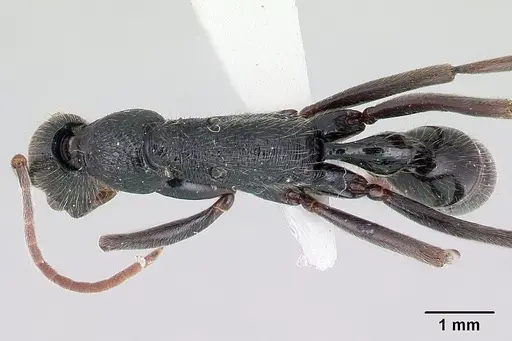
Literatur
Memuat peta distribusi...Memuat produk...