
Leptogenys harmsi
- Nama Ilmiah
- Leptogenys harmsi
- Tribe
- Ponerini
- Subfamili
- Ponerinae
- Penulis
- Donisthorpe, 1935
- Distribusi
- Ditemukan di 0 negara
Pendahuluan
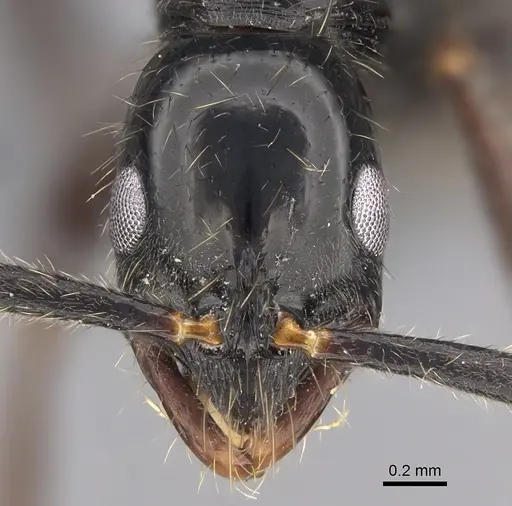
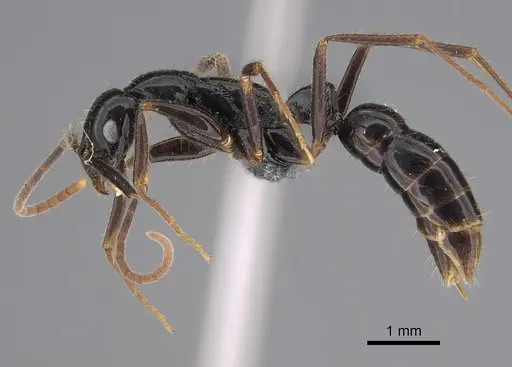
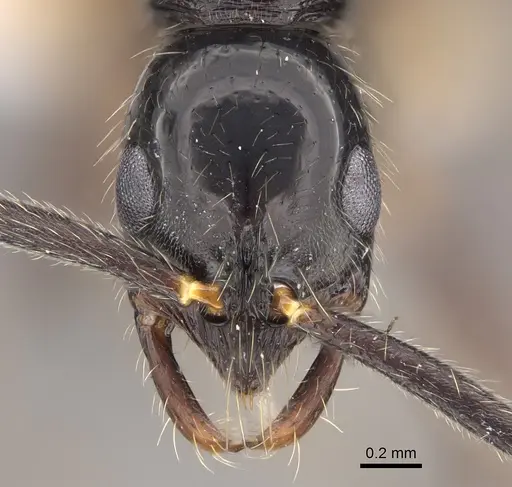
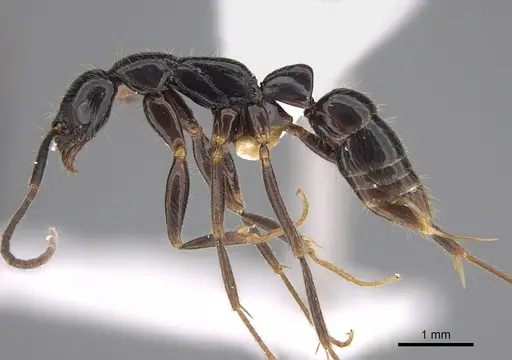
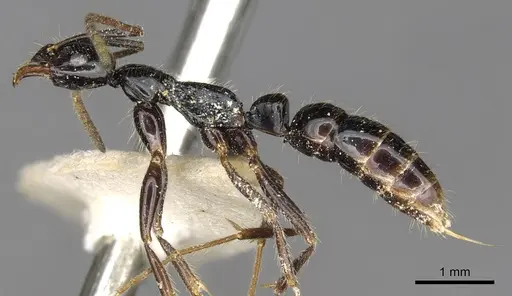
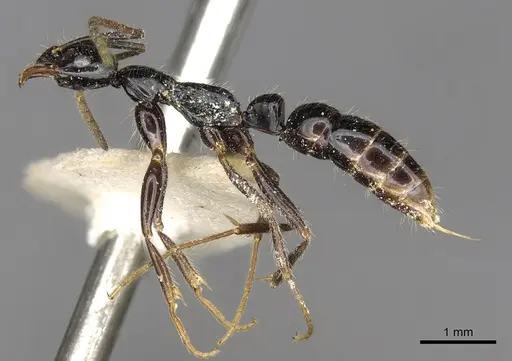
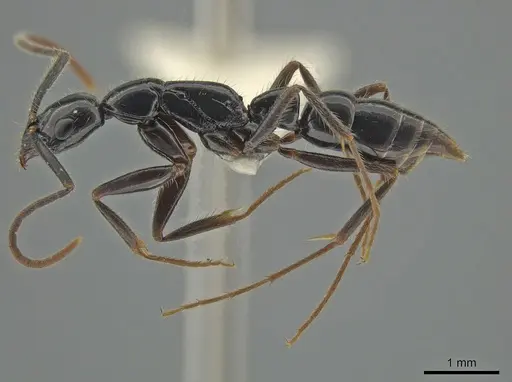
Leptogenys harmsi is a medium-sized predatory ant endemic to Christmas Island in the Indian Ocean. Workers measure 5.5 mm in total length and belong to the conigera-group, characterized by a distinct petiole shape . On Christmas Island, they are found predominantly in eastern parts, commonly near disturbed areas and roads . This species is known for its active hunting behavior and functional sting, typical of Ponerine ants.
Quick Summary
- Difficulty: Medium
- Origin & Habitat: Christmas Island (Indian Ocean), found in eastern parts in disturbed areas and roadsides [1].
- Colony Type: Unconfirmed, specific data on colony structure not available.
- Size & Growth:
- Queen: Size data unavailable, inferred from Leptogenys genus patterns to be approximately 7-9 mm.
- Worker: 5.5 mm total length [1]
- Colony: Up to 500 workers, estimated from related Leptogenys species.
- Growth: Moderate, inferred from genus patterns.
- Development: Estimated 6-10 weeks from egg to worker at optimal temperatures, inferred from related Ponerinae species. (Development time may vary with temperature.)
- Antkeeping:
- Temperature: Keep at 24-28°C, inferred from tropical habitat. [2]
- Humidity: Maintain high humidity, keep nest substrate consistently moist but not waterlogged. [2]
- Diapause: No, Christmas Island has a tropical climate with minimal seasonal variation. [1]
- Nesting: Prefer moist substrate or plaster nests with high humidity retention. [2]
- Behavior: Leptogenys harmsi is a predatory ant with a functional sting. Workers are active foragers that hunt individually or in small groups. They are not aggressive toward keepers but will defend their nest. Standard escape prevention methods work due to their moderate size.
- Common Issues: humidity drops can kill the colony, keep conditions moist., predatory diet requires regular protein input, sugar alone is insufficient., slow colony establishment may discourage beginners., wild-caught colonies may carry parasites., overheating can dry out the nest and harm the colony.
Nest Preferences
In their natural habitat, Leptogenys harmsi likely nests in soil or under stones in shaded areas. For captive care, a naturalistic setup with moist substrate works well, a mix of soil and sand that holds humidity without becoming waterlogged. These ants prefer dark nest chambers and will often occupy enclosed spaces. A nest chamber size of roughly 10-15 cm with multiple connected chambers allows for colony expansion. [1]
Feeding and Diet
Leptogenys harmsi is a predatory ant that hunts small invertebrates. In captivity, offer small live prey such as fruit flies, small crickets, and mealworms. They typically dismember prey and feed communally. Protein-rich foods should form the majority of their diet, with sugar water or honey as a supplementary energy source. [2]
Temperature and Care
As a tropical species, Leptogenys harmsi requires warm temperatures between 24-28°C. Use a heating cable on one side of the nest to create a gradient, allowing ants to self-regulate. Monitor humidity closely, mist the outworld occasionally and keep the nest substrate moist. Avoid placing the setup near air conditioning or drafts. [2]
Behavior and Temperament
Leptogenys harmsi workers are active foragers that hunt individually or in small groups. They use chemical trails to recruit nestmates to prey. As Ponerine ants, they possess a functional sting which may cause mild pain to humans. Workers are moderately sized and can navigate standard outworld setups with basic barriers. [2]
Colony Establishment
Establishing a colony from a founding queen requires patience. The queen may seal herself in a chamber, but founding behavior is unconfirmed for this species. This phase can take 6-10 weeks before first workers emerge. Minimize disturbances during this time. Once workers emerge, colony growth is slow, avoid overfeeding to prevent mold from uneaten prey. [2]
Frequently Asked Questions
How long does it take for Leptogenys harmsi to produce first workers?
Expect 6-10 weeks from egg to first worker at optimal temperatures, inferred from related Ponerinae species.
Do Leptogenys harmsi ants sting?
Yes, as a Ponerine ant they have a functional sting that can cause mild pain similar to a bee sting.
What do I feed Leptogenys harmsi?
Feed small live prey such as fruit flies, crickets, and mealworms, with protein 2-3 times per week and constant sugar water.
Are Leptogenys harmsi good for beginners?
This species is rated medium difficulty due to specific humidity and temperature needs.
What temperature do Leptogenys harmsi need?
Keep them at 24-28°C, inferred from their tropical habitat.
Do Leptogenys harmsi need hibernation?
No, they do not require hibernation due to Christmas Island's tropical climate.
How big do Leptogenys harmsi colonies get?
Colony size is up to 500 workers, estimated from related Leptogenys species.
Can I keep multiple Leptogenys harmsi queens together?
This has not been documented, Leptogenys species are typically single-queen colonies.
What humidity do Leptogenys harmsi need?
Maintain high humidity by keeping the nest substrate consistently moist but not waterlogged.
When should I move Leptogenys harmsi to a formicarium?
Wait until the colony has at least 20-30 workers before moving to a formicarium with high humidity retention.
Report an Issue
The current care sheet is based fully on literature. See inconsistencies, or something that's incorrect? Please , it will be resolved after review from an admin. Contributing to the blogs tab also helps providing information, to make us be able to further improve the caresheets. Thank you for your support!
References

Lembar perawatan ini dilisensikan di bawah CC BY-SA 4.0 .
Blog Komunitas
CASENT0284148
Lihat di AntWeb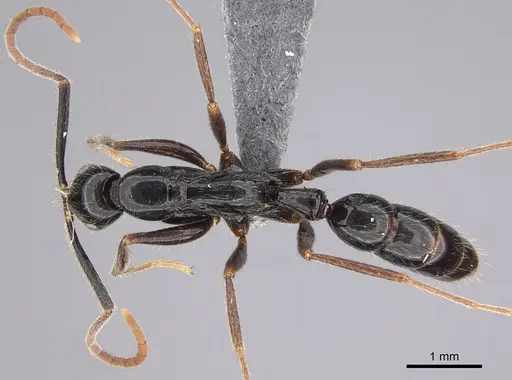
CASENT0887825
Lihat di AntWeb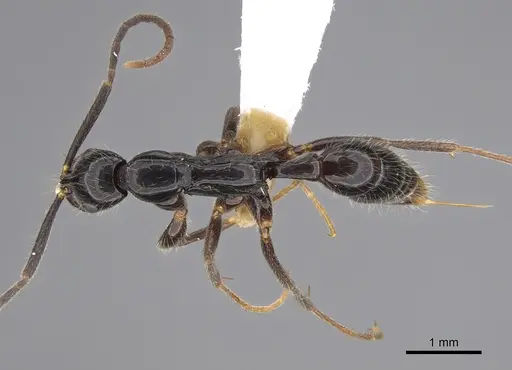
CASENT0902619
Lihat di AntWeb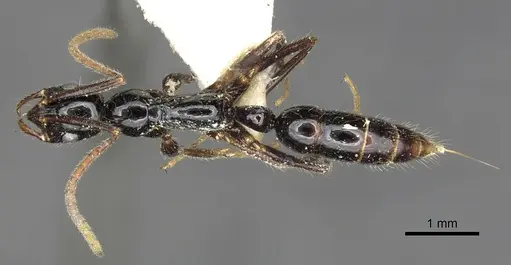
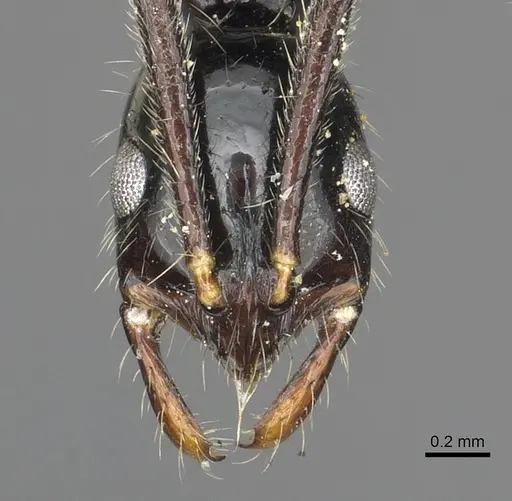
ZRC
Lihat di AntWeb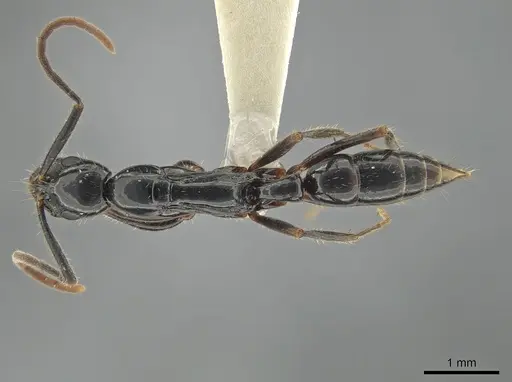
Literatur
Memuat peta distribusi...Memuat produk...