
Lasius kritikos
- Nama Ilmiah
- Lasius kritikos
- Tribe
- Lasiini
- Subfamili
- Formicinae
- Penulis
- Seifert, 2020
- Distribusi
- Ditemukan di 0 negara
Pendahuluan
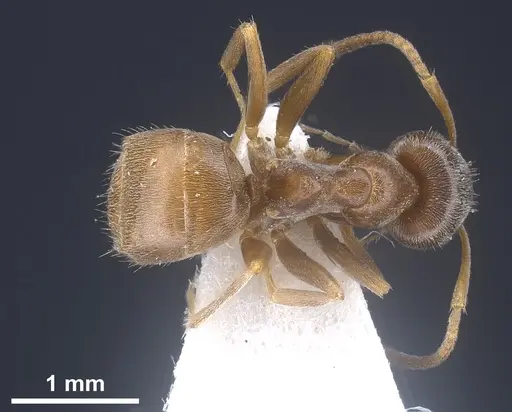
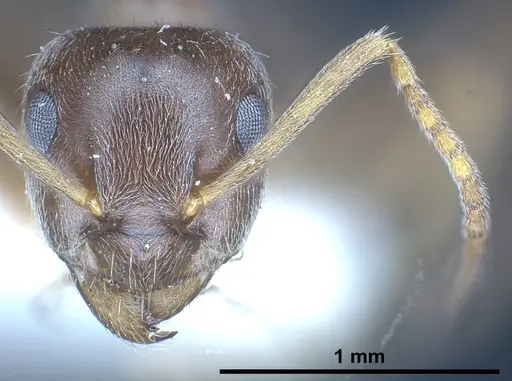
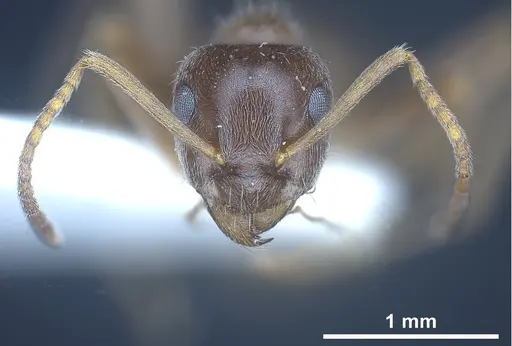
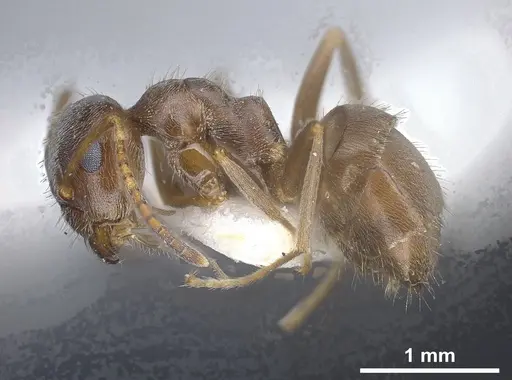
Lasius kritikos is a tiny ant species endemic to the mountains of Crete, Greece. Workers are small - inferred from the Lasius genus to be approximately 3-5mm in total length. They have a medium brown body with a yellowish tinge, lighter gaster, and very pale yellowish-brown mandibles, antennae, and leg segments. Their most distinctive feature is the extremely dense white pubescence covering their body, particularly on the clypeus (the face area near the mouth). This species belongs to the paralienus species complex, closely related to Lasius paralienus and Lasius bombycinus, from which it can only be separated using detailed morphometric measurements . This species is a true Cretan mountain endemic, found only at higher elevations (usually above 800m) in the island's mountainous regions. They nest under stones or in sandy soil in mountain plateaus, pastures, and Mediterranean oak forests. Their discovery as a separate species is quite recent (2020), meaning there is limited information available about their specific biology and captive care requirements .
Quick Summary
- Difficulty: Medium
- Origin & Habitat: Endemic to the mountains of Crete, Greece, found at elevations between 354-1450m, typically above 800m. They inhabit mountain plateaus, mountain pastures, and Mediterranean forests of small oaks (Quercus). One sample was collected in a mountainous, NW-facing Quercus forest [2].
- Colony Type: Unconfirmed colony structure. As a member of the Lasius niger clade, they likely form single-queen colonies like other Lasius s. str. species, but this has not been directly documented.
- Size & Growth:
- Queen: Size data unavailable, no queen measurements exist in the literature. Based on typical Lasius genus patterns, queens likely measure approximately 6-8mm.
- Worker: Workers are very small, inferred from the Lasius genus to be approximately 3-5mm in total length. The context provides head measurements (HL 0.834-0.951mm) but these represent head size only, not full body length [1][2].
- Colony: Not documented. Based on related species in the paralienus complex, colonies likely reach several hundred workers at most.
- Growth: Unknown, no specific growth rate data exists for this species.
- Development: Unknown, no specific development data exists for this species. (No development timeline has been documented. Related Lasius species typically take 6-10 weeks from egg to worker at warm room temperature, but this has not been confirmed for L. kritikos.)
- Antkeeping:
- Temperature: Keep at room temperature, roughly 20-24°C. Being from Cretan mountains, they likely prefer conditions cooler than tropical ants but warmer than temperate species. A gradient of 20-24°C in the nest area is a reasonable starting point.
- Humidity: Moderate humidity. They naturally nest under stones in mountain habitats, suggesting they prefer somewhat damp but not wet conditions. Keep the nest substrate slightly moist but allow some drying between water additions.
- Diapause: Unknown, this has not been directly studied for this species. As a species from temperate Crete, they may require a winter rest period, but this is unconfirmed.
- Nesting: In nature they nest under stones or in sandy soil in mountain plateaus, pastures, and oak forests. For captivity, a test tube setup works well for founding colonies. Once established, a Y-tong or plaster nest with narrow chambers scaled to their tiny size would be appropriate. Avoid large, open spaces.
- Behavior: These ants are very small and likely shy. They probably show typical Lasius behavior, moderate foraging activity, tending aphids for honeydew, and collecting small insects. Their tiny size means they cannot sting humans. Escape prevention is critical due to their small size, they can squeeze through very small gaps. Use fine mesh and tight-fitting lids. They are not aggressive and will likely retreat rather than defend [2].
- Common Issues: escape prevention is critical due to their very small size, they can slip through tiny gaps that larger ants cannot, limited information available, this is a recently described species with no published captive care data, winter conditions are uncertain, diapause requirements have not been documented for this species, potential difficulty obtaining this species, being endemic to Crete and newly described, they may not be available in the antkeeping hobby, development timeline is unknown, no data exists for egg-to-worker development time
Origin and Distribution
Lasius kritikos is a true endemic of Crete, known only from the island's mountainous regions. The type localities are in the Ida Mountains (Mount Psiloritis) at elevations of 1300-1500m. More recent surveys have found them at altitudes between 354-1450m, typically above 800m. They prefer mountain and submountain habitats including mountain plateaus, mountain pastures, and Mediterranean forests of small oaks. This makes them a rare find, they're not your typical lowland ant [1][2].
The fact that this species was only described in 2020 tells us that even professional myrmecologists had overlooked it. It's part of the paralienus species complex, which includes Lasius paralienus, Lasius bombycinus, and Lasius casevitzi. These species look very similar and can only be separated using detailed measurements. The geographic isolation of Crete allowed L. kritikos to evolve as a distinct species [1].
Identification and Morphology
Lasius kritikos workers are among the smaller Lasius species. The most distinctive feature is the very dense white pubescence that covers most of their body, especially on the clypeus (the face area near the mouth). This pubescence is so dense it almost completely covers the clypeus surface.
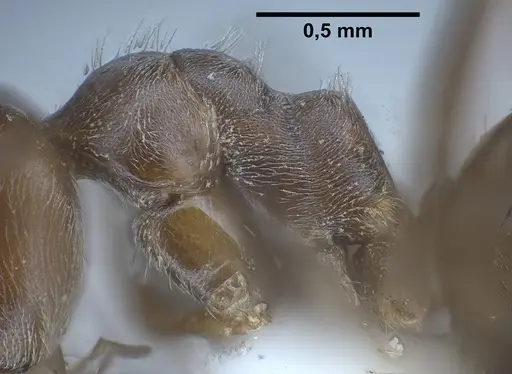
They have relatively long antennae and maxillary palps compared to their body size. The body color is medium brown with a yellowish tinge, with the gaster being slightly lighter. The mandibles, antennae, tibiae, and tarsi are pale yellowish brown. They have several long erected setae on the mesosoma (the middle body section), but very few setae on the scape and hind tibia. This combination of features helps separate them from related species in the paralienus complex [1][2].
Nesting and Habitat Preferences
In the wild, Lasius kritikos nests under stones or in sandy soil in Cretan mountain habitats. They've been found in mountain plateaus, pastures, and oak forests at elevations usually above 800m. The mountainous habitat suggests they prefer cooler, more stable conditions than lowland ants [2].
For captive care, replicate these conditions by providing a nest with moderate humidity and temperatures in the low-to-mid 20s°C range. A test tube setup works well for founding colonies. Once the colony grows, a small formicarium with narrow chambers scaled to their tiny worker size would be appropriate. The chambers should be tight-fitting, these are very small ants that can escape through surprisingly small gaps.
Feeding and Diet
Like other Lasius species, Lasius kritikos likely feeds on honeydew from aphids and small insects. In captivity, you should offer sugar water or honey water as a constant energy source, along with small protein sources like fruit flies, small mealworms, or other tiny insects. Given their very small worker size, prey items should be appropriately sized, nothing larger than they can handle.
Feed sugar water or honey water continuously, as Lasius colonies can consume it regularly. Offer protein (small insects) once or twice weekly. Remove uneaten prey after 24-48 hours to prevent mold. Since this species hasn't been kept in captivity yet, start with basic Lasius feeding protocols and adjust based on what they accept. [2]
Temperature and Seasonal Care
As a Cretan mountain endemic, Lasius kritikos likely experiences cooler temperatures than typical tropical ants. Keep them at room temperature, ideally around 20-24°C in the nest area. This is cooler than many common ant species but appropriate for a mountain species from a Mediterranean island.
Regarding winter rest: Crete has mild winters, but mountain populations would still experience cooler temperatures. The diapause requirements for this species have not been documented. Some keepers provide a slight cool period in winter (around 10-15°C) for 2-3 months, mimicking natural seasonal cycles, but this is not confirmed as necessary for this specific species. [2]
Behavior and Temperament
Lasius kritikos likely shows typical Lasius temperament, generally peaceful and not aggressive. Workers are very small and would be unable to sting humans even if they tried. They probably forage moderately and may tend aphids for honeydew, like other members of the genus.
The biggest concern for keepers is escape prevention. These are tiny ants that can squeeze through extremely small gaps. Use fine mesh on any ventilation holes, ensure all lids fit tightly, and consider using barrier methods like fluon on container rims. A small gap that would hold back a Camponotus worker will not stop these tiny ants. Check enclosures daily during the founding phase. [2]
Frequently Asked Questions
How long does it take for Lasius kritikos to produce first workers?
This has not been directly documented. No specific development timeline exists for this species. Related Lasius species typically take 6-10 weeks from egg to first worker at warm room temperature, but this is unconfirmed for L. kritikos.
What do Lasius kritikos eat?
Like other Lasius species, they likely accept sugar sources (honey water, sugar water) and small protein sources (fruit flies, tiny insects, small mealworms). Given their very small worker size, ensure prey items are appropriately sized.
Are Lasius kritikos good for beginners?
This species is not recommended for beginners. It was only described in 2020 and has no established captive care protocols. Additionally, their very small size makes escape prevention challenging. Consider starting with more established species like Lasius niger or Lasius flavus before attempting this rare Cretan endemic.
What temperature should I keep Lasius kritikos at?
Keep them at room temperature, ideally 20-24°C in the nest area. This is cooler than many ant species, appropriate for a Cretan mountain species. Avoid temperatures above 28°C.
Do Lasius kritikos need hibernation?
Unknown. Diapause requirements have not been documented for this species. As a species from temperate Crete, some keepers推测 they may require a winter rest period, but this is unconfirmed.
How big do Lasius kritikos colonies get?
Colony size has not been documented for this species. Based on related species in the paralienus complex, colonies likely reach several hundred workers at most. They are not large colony formers like some Lasius species.
Can I keep multiple Lasius kritikos queens together?
This has not been studied. Most Lasius s. str. are monogyne (single-queen colonies), so it's safest to start with one queen per colony. Combining unrelated foundresses has not been documented for this species and is not recommended.
What is the best nest type for Lasius kritikos?
Use a test tube setup for the founding colony. Once established with 20+ workers, a small formicarium with narrow chambers scaled to their tiny size works well. Y-tong nests or plaster nests with appropriately sized chambers are suitable. Ensure all connections and gaps are tiny-sealed, these small ants escape easily.
Where can I get Lasius kritikos?
This species is extremely rare in the antkeeping hobby. Being endemic to Crete and only described in 2020,they are unlikely to be available from commercial suppliers. If available at all, they would only come from specialized European antkeepers who have managed to locate and colony-founding wild-caught queens from Crete.
Report an Issue
The current care sheet is based fully on literature. See inconsistencies, or something that's incorrect? Please , it will be resolved after review from an admin. Contributing to the blogs tab also helps providing information, to make us be able to further improve the caresheets. Thank you for your support!
References

Lembar perawatan ini dilisensikan di bawah CC BY-SA 4.0 .
Blog Komunitas
ANTWEB1041445
Lihat di AntWeb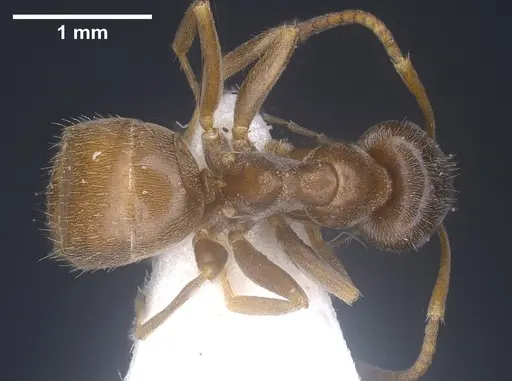
Literatur
Memuat peta distribusi...Memuat produk...