
Gnamptogenys rumba
- Nama Ilmiah
- Gnamptogenys rumba
- Tribe
- Ectatommini
- Subfamili
- Ectatomminae
- Penulis
- Lattke, 2002
- Distribusi
- Ditemukan di 0 negara
Pendahuluan
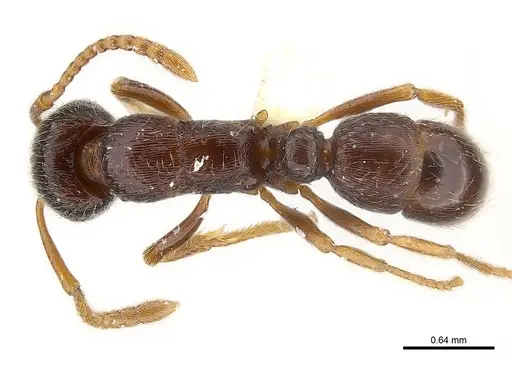
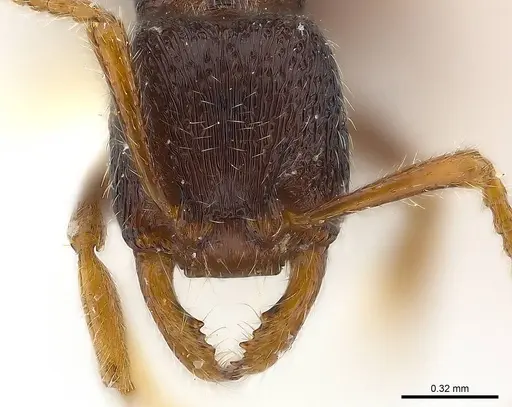
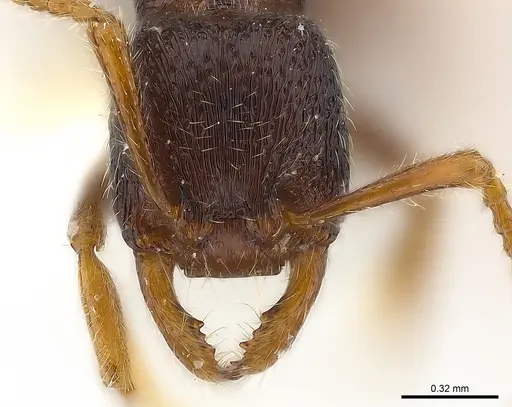
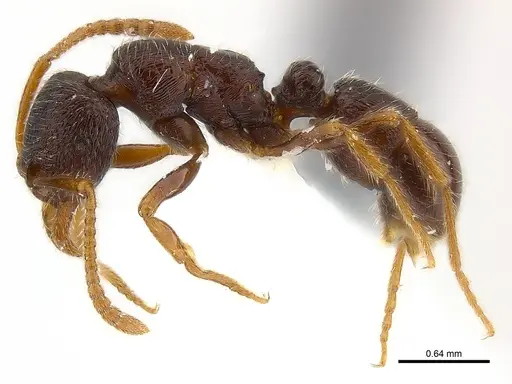
Gnamptogenys rumba is a tiny ant endemic to Cuba, specifically Isla de la Juventud (formerly Isla de Pinos). Workers are small, inferred from the Gnamptogenys genus to be around 2-4 mm in total length, with a slender brown body and reddish antennae, mandibles, and legs. The species has reduced eyes with fewer than 20 ommatidia, slender nearly sickle-shaped mandibles with irregular teeth, and two small triangular denticles on the propodeum . One specimen shows ergatoid characteristics, a wingless queen form with better-developed eyes, suggesting potential replacement reproductives within colonies .
Quick Summary
- Difficulty: Medium
- Origin & Habitat: Endemic to Cuba, found under rocks in lowland areas of Isla de la Juventud, with maximum elevation of 309m [1][3]
- Colony Type: Likely monogyne with ergatoid replacement reproductives inferred from paratype observations [1]
- Size & Growth:
- Queen: Unknown, queen not formally described, but ergatoid form may exist [1]
- Worker: Size inferred from Gnamptogenys genus (~2-4 mm total length) [2]
- Colony: Unknown, no data on colony size
- Growth: Moderate, typical for small tropical ants
- Development: Estimated 6-8 weeks at tropical temperatures, inferred from similar species (Development timeline not directly studied, estimates based on genus patterns)
- Antkeeping:
- Temperature: Keep warm, roughly 24-28°C, based on Cuban tropical habitat
- Humidity: Keep nest substrate consistently moist but not waterlogged, as they are found under rocks in humid microhabitats [1]
- Diapause: No, being a Cuban tropical species, they do not require hibernation
- Nesting: Prefer enclosed nests with small chambers, recommend test tubes, plaster, or soil nests scaled to their size. Naturally nest under stones [1]
- Behavior: Workers are cryptic and slow-moving, not aggressive, and will flee rather than attack. Escape prevention is critical due to their small size, use fine mesh barriers and ensure tight connections. They have reduced eyes, so avoid excessive light exposure.
- Common Issues: escape prevention is critical due to small size, use fine mesh over openings, slow colony growth may require patience during founding, wild-caught colonies may carry undetected parasites, reduced eyes mean stress from bright light, keep nest dark, small colony size makes them vulnerable to disturbance, minimize inspections
Housing and Nest Setup
Gnamptogenys rumba requires careful housing due to its small size. Test tubes with cotton-plugged water reservoirs work well for founding colonies, use small diameter tubes. For established colonies, use plaster or soil nests with narrow chambers scaled to their size. The nest should be dark most of the time, cover three sides with opaque material. Provide an outworld in a small container. Escape prevention is essential: use fine mesh over any openings, as these ants can slip through tiny gaps [1][2]
Feeding and Diet
Gnamptogenys species are typically predatory, feeding on small invertebrates. Offer small live prey such as springtails or fruit flies. Remove uneaten prey after 24 hours to prevent mold. Sugar water may be accepted but is not primary food [2]
Temperature and Humidity
As a Cuban tropical species, keep temperatures stable around 24-28°C. Use a heating cable on one side for gradient if needed. Humidity should be moderate, keep substrate moist but not waterlogged, with occasional misting [1]
Colony Dynamics and Growth
This species may have ergatoid queens, allowing internal replacement if queen is lost. Colony size is likely small due to their cryptic lifestyle. Growth is slow, expect several months to first workers and years to moderate size. Minimize disturbances during founding [1]
Handling and Observation
Workers are slow-moving and not aggressive, observe rather than handle. Use dim lighting and avoid vibrations. They are not suitable for keepers wanting active foragers [1]
Seasonal Care
No hibernation needed, maintain stable conditions year-round. Avoid temperature fluctuations from vents or drafts [1][3]
Frequently Asked Questions
How long does it take for Gnamptogenys rumba to produce first workers?
Estimated 6-8 weeks at optimal temperatures of 25-28°C, inferred from similar Gnamptogenys species
Can I keep Gnamptogenys rumba in a test tube?
Yes, test tubes work well for founding colonies. Ensure cotton plugs are tight and consider fine mesh for escape prevention due to their small size [1]
What do Gnamptogenys rumba ants eat?
They are predatory, feeding on small live prey like springtails and fruit flies. Sugar water may be accepted occasionally [2]
Do Gnamptogenys rumba ants sting?
As members of the Ectatomminae subfamily, they possess a functional sting used for defense, but given their tiny size, it is unlikely to penetrate human skin. They are not aggressive and will flee rather than sting.
Are Gnamptogenys rumba good for beginners?
This species is rated Medium difficulty due to small size, slow growth, and specific humidity needs. Beginners may struggle with escape prevention and patience.
How big do Gnamptogenys rumba colonies get?
Colony size is unknown, but likely small due to their minute size and cryptic lifestyle.
Do Gnamptogenys rumba need hibernation?
No, as a Cuban tropical species, they do not require diapause. Keep temperatures stable year-round [1][3]
Why are my Gnamptogenys rumba dying?
Common causes include escape through gaps, excessive dryness, light disturbance, or stress from inspections. Ensure prey is appropriately sized and substrate is moist.
When should I move Gnamptogenys rumba to a nest?
Move to a plaster or soil nest when the colony has 20-30 workers and test tube space is cramped. Ensure passages are narrow enough for the ants.
Report an Issue
The current care sheet is based fully on literature. See inconsistencies, or something that's incorrect? Please , it will be resolved after review from an admin. Contributing to the blogs tab also helps providing information, to make us be able to further improve the caresheets. Thank you for your support!
References

Lembar perawatan ini dilisensikan di bawah CC BY-SA 4.0 .
Blog Komunitas
CASENT0179954
Lihat di AntWeb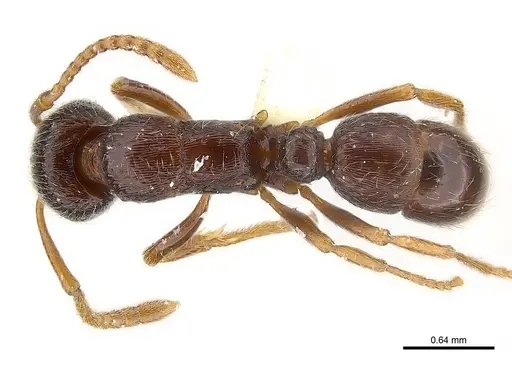
Literatur
Memuat peta distribusi...Memuat produk...