
Echinopla maeandrina
- Nama Ilmiah
- Echinopla maeandrina
- Tribe
- Camponotini
- Subfamili
- Formicinae
- Penulis
- Stitz, 1938
- Distribusi
- Ditemukan di 0 negara
Pendahuluan
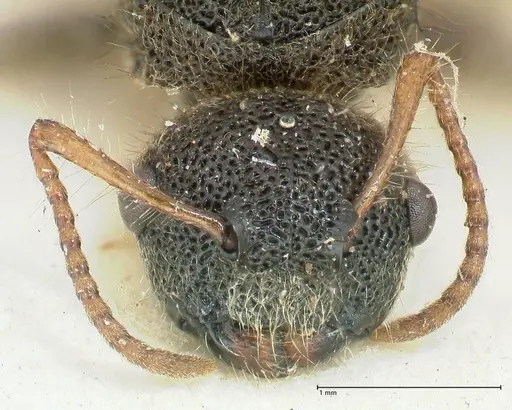
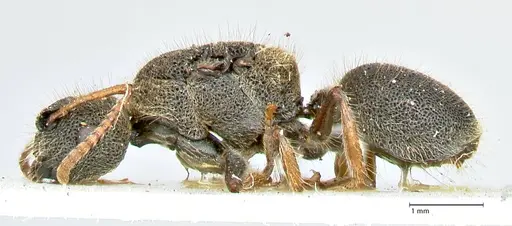
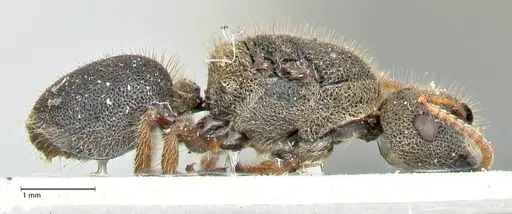
Echinopla maeandrina is an ant species native to New Guinea, belonging to the serrata species group . It has a black body with brown antennae, tibiae, and tarsi . Queens have been described, confirming a fully developed queen caste . This species is rarely kept in captivity with limited care information available. The most notable feature is its morphology, including oblongate, irregular cribrate holes on the mesosoma and lateral teeth on the mesonotum .
Quick Summary
- Difficulty: Hard
- Origin & Habitat: New Guinea in tropical rainforest environments [1][2]
- Colony Type: Unconfirmed
- Size & Growth:
- Queen: size data unavailable
- Worker: size data unavailable
- Colony: Unknown
- Growth: Unknown
- Development: Estimated 6-10 weeks based on related Formicinae species at optimal temperature (Development timeline is unconfirmed for this species, estimates are based on genus-level patterns)
- Antkeeping:
- Temperature: Keep warm, around 24-28°C, based on tropical habitat [2]
- Humidity: Keep nest substrate consistently moist but not waterlogged, based on tropical rainforest conditions [2]
- Diapause: No, tropical species do not require diapause [2]
- Nesting: In nature, likely nest in rotting wood or under stones, provide a naturalistic setup with moist substrate or a Y-tong/plaster nest [2]
- Behavior: Behavior is not well documented. Based on Formicinae patterns, they are likely moderately active foragers that spray formic acid as a defense mechanism. Escape prevention should be moderate due to their medium size, but small gaps should be avoided. They are not known to be particularly aggressive.
- Common Issues: limited availability in captivity., no established care protocols for this species., humidity control is critical for tropical species., tropical species may struggle in temperate climates without heating., wild-caught colonies may have parasites or disease.
Housing and Nest Setup
Set up a naturalistic terrarium with moist soil and rotting wood to mimic their tropical environment. Alternatively, use a Y-tong or plaster nest with a water reservoir to maintain humidity. Ensure the outworld is escape-proof and scaled to their size. Provide a water test tube for drinking and humidity.
Feeding and Diet
Offer a varied diet: sugar water or honey for energy, and small insects like fruit flies or mealworms for protein. Keep sugar water available constantly and feed protein 2-3 times per week. Remove uneaten prey after 24-48 hours to prevent mold.
Temperature and Humidity Management
Maintain temperatures between 24-28°C using a heating cable on one side of the nest. Keep humidity high by ensuring the nest substrate is consistently moist. Monitor with a digital thermometer-hygrometer and avoid placing the setup near vents that cause fluctuations.
Colony Founding and Growth
Queens have been described, confirming a fully developed queen caste [1]. Founding behavior is unconfirmed. Expect first workers after 6-10 weeks under optimal conditions. Growth rate is unknown but likely moderate. Do not disturb the queen during founding.
Seasonal Care and Activity Patterns
As a tropical species, no diapause is required. Maintain consistent warmth year-round. Nuptial flight timing is unknown, provide optimal conditions for newly mated queens.
Frequently Asked Questions
How long does it take for Echinopla maeandrina to produce first workers?
Based on related Formicinae species, expect first workers approximately 6-10 weeks after egg laying at optimal temperature. This is an estimate as no direct data exists for this species.
What do Echinopla maeandrina ants eat?
They likely accept a standard Formicinae diet: sugar water or honey for energy, and small insects like fruit flies or mealworms for protein. Offer sugar water constantly and protein prey 2-3 times per week.
What temperature and humidity do Echinopla maeandrina need?
Keep them warm at 24-28°C with high humidity by keeping the nest substrate moist. These conditions are based on their tropical rainforest habitat [2].
Is Echinopla maeandrina good for beginners?
This species is not recommended for beginners due to limited care information and specific tropical requirements. More common species are better for new antkeepers.
How big do Echinopla maeandrina colonies get?
Colony size is unknown for this species. Based on related Formicinae, they may reach several hundred workers over time, but this is unconfirmed.
Can I keep multiple Echinopla maeandrina queens together?
Colony structure is unconfirmed. Based on typical Formicinae patterns, they likely form single-queen colonies. Combining unrelated queens is not recommended without evidence of pleometrosis.
Do Echinopla maeandrina need hibernation?
No, this is a tropical species from New Guinea where temperatures remain warm year-round. They do not require hibernation or diapause.
What type of nest is best for Echinopla maeandrina?
A naturalistic setup with moist substrate or a Y-tong/plaster nest works well. The key is maintaining high humidity with appropriately sized chambers.
Where is Echinopla maeandrina found in the wild?
This species is native to New Guinea in the Australasian region [1]. They inhabit tropical rainforest environments.
Report an Issue
The current care sheet is based fully on literature. See inconsistencies, or something that's incorrect? Please , it will be resolved after review from an admin. Contributing to the blogs tab also helps providing information, to make us be able to further improve the caresheets. Thank you for your support!
References

Lembar perawatan ini dilisensikan di bawah CC BY-SA 4.0 .
Blog Komunitas
FOCOL2563
Lihat di AntWeb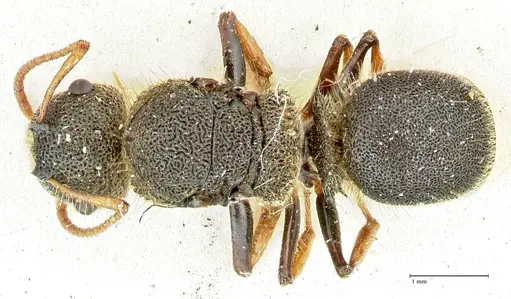
Literatur
Memuat peta distribusi...Memuat produk...